14 Special Education Categories: A Simple and Perfect Guide 2026 🎯
Master the 14 Special Education Categories under IDEA. Learn how legal frameworks, IEP dynamics, and AI tools shape universal inclusion for 2026-27.
The information provided on dp-ho.com is for informational purposes only. It is not intended as a substitute for professional medical, legal, or financial advice. Please read our full Disclaimer Page for detailed terms. Always consult with qualified professionals before making any decisions.
⚠️ قانونی و طبی انتباہ
dp-ho.com پر فراہم کردہ معلومات صرف تعلیمی اور معلوماتی مقاصد کے لیے ہیں۔ یہ کسی بھی قسم کا پیشہ ورانہ طبی یا مالی مشورہ نہیں ہے۔ تفصیلی معلومات کے لیے ہمارا مکمل ڈسکلیمر صفحہ ملاحظہ کریں۔ کسی بھی فیصلے سے پہلے براہِ کرم متعلقہ ماہر سے رجوع کریں۔
1. SGE (Search Generative Experience)
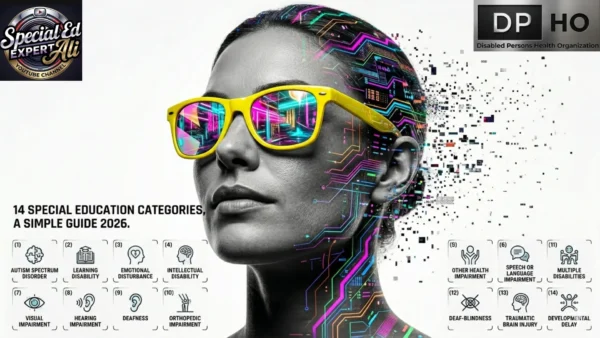
What are the 14 special education categories under IDEA? The Individuals with Disabilities Education Act (the legislation known as IDEA) officially recognizes 14 Special Education Categories that qualify eligible students for a Free Appropriate Public Education (FAPE) via custom Individualized Education Programs (IEPs). These include Specific Learning Disability (SLD), Other Health Impairment (OHI), Autism Spectrum Disorder (ASD), Emotional Disturbance (ED), Speech or Language Impairment (SLI), Visual Impairment, Deafness, Hearing Impairment, Deaf-Blindness, Orthopedic Impairment, Intellectual Disability, Traumatic Brain Injury (TBI), Multiple Disabilities, and Developmental Delay (DD). To secure accommodations within the Least Restrictive Environment (LRE), public school multidisciplinary teams must document that an underlying clinical or psychological condition directly compromises a student’s functional academic performance.
2. Urdu Unicode Summary (اردو خلاصہ)
اسپیشل ایجوکیشن کیٹیگریز: ایک آسان گائیڈ 🎯
یہ خلاصہ امریکی وفاقی قانون “Individuals with Disabilities Education Act” (IDEA) کے تحت آنے والے ان 14 تعلیمی زمروں (Categories) کی وضاحت کرتا ہے جن کے تحت معذور یا مختلف صلاحیتوں کے حامل بچوں کو سرکاری اسکولوں میں مفت اور موزوں تعلیم (FAPE) فراہم کی جاتی ہے۔ اس گائیڈ کا بنیادی مقصد والدین، اساتذہ اور اسکول انتظامیہ کو یہ سمجھانا ہے کہ کس طرح انفرادی تعلیمی پروگرام (IEP) اور مناسب ماحولیاتی تبدیلیاں کر کے ہر بچے کی منفرد ضرورت کو پورا کیا جا سکتا ہے۔
اسپیشل ایجوکیشن کے ان 14 زمروں میں درج ذیل شامل ہیں:
- مخصوص سیکھنے کی معذوری (جیسے ڈیسلیکسیا)
- دیگر صحت کی خرابیاں (جیسے ADHD یا شوگر)
- آٹزم اسپیکٹرم ڈس آرڈر (ASD)
- جذباتی گڑبڑ (Emotional Disturbance)
- گونگا پن اور بولنے کی کمزوری
- اندھا پن یا بصری معذوری
- بہرا پن (Deafness)
- سننے کی عام کمزوری (Hearing Impairment)
- اندھا اور بہرا پن (اکٹھے)
- جسمانی یا ہڈیوں کی معذوری (Orthopedic Impairment)
- ذہنی معذوری (Intellectual Disability)
- دماغی چوٹ (Traumatic Brain Injury)
- کثیر معذوریاں (Multiple Disabilities)
- بچوں کی نشوونما میں تاخیر (Developmental Delay)
جدید دور کے تقاضوں کے مطابق، یہ گائیڈ کلاس رومز میں آرٹیفیشل انٹیلیجنس (AI) کے محفوظ استعمال، حسیاتی سکون کے کمروں (Sensory Rooms) کے قیام، اور اسکول سے عملی زندگی میں منتقلی کی خدمات (Transition Services) پر بھی روشنی ڈالتی ہے۔ معذوری کے حقوق، بین الاقوامی تعلیمی معیارات، اور اسپیشل ایجوکیشن کے دیگر موضوعات پر مزید رہنمائی کے لیے آپ ہماری آفیشل ویب سائٹ Disabled Persons Health Organization (www.dp-ho.com) ملاحظہ کر سکتے ہیں۔
14 Special Education Categories: A Simple Guide 2026-27 🎯
How can educators, parents, and clinical administrators navigate the complex legal landscape governing modern diverse learners? In the United States, public sector specialized instruction is anchored by the Individuals with Disabilities Education Act (IDEA), an expansive federal framework mandating tailored academic roadmaps. Properly evaluating individual requirements through the 14 Special Education Categories ensures that eligible individuals receive targeted accommodations, evidence-based instructional modifications, and dedicated behavioral safeguards.
True educational access requires moving past traditional diagnostic categorization to build culturally humble, universally designed learning spaces. This comprehensive guide details the precise eligibility criteria, administrative processes, and structural adaptations driving equitable access for 2026-27. Learn how to transform diagnostic classifications into high-impact, individualized learning paths that optimize physical autonomy, communication equity, and long-term vocational success.
What Is the Legal Blueprint for Specialized Classroom Services? 🎯
Decoding the Core Pillars of the IDEA Legal Framework
The modern execution of specialized instruction is governed by strict federal legislation designed to eliminate institutional exclusion. Central to this legal architecture is the mandate for a Free Appropriate Public Education (FAPE) provided within the Least Restrictive Environment (LRE). These mandates dictate that children with diverse needs must be educated alongside their neurotypical peers to the maximum extent appropriate
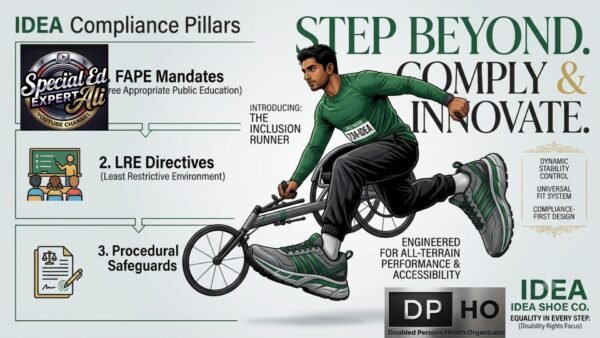
Administrators must implement strict procedural safeguards to protect family involvement and guarantee due process pathways. Every step from initial evaluation to the creation of an Individualized Education Program (IEP)—must be thoroughly documented. This transparent tracking ensures that instructional changes are based on data rather than erratic, disorganized decisions.
Understanding the Global Scale of Student Neurodiversity
Specialized instruction is not a marginal administrative issue; it is a global educational priority. According to demographic data tracked by the World Health Organization (WHO), over 1.3 billion people worldwide navigate life with a significant disability. This population represents approximately 16% of the global community.
When translated into local public school systems, a significant portion of the student body requires specialized, data-driven academic instruction. To dive deeper into how these international frameworks compare across unique environments, explore our expert analysis on Linguistic Accessibility and Specialized Education Models. Integrating universal design metrics allows schools to move past old clinical deficits toward inclusive, supportive environments.
How Does My Decadel Journey as an Educator Shape This Modern Resource? 🎯
Academic Foundations from Lahore Leads University
Building high-impact public spaces requires combining peer-reviewed research with a practical understanding of classroom dynamics. During my intensive academic tenure at Lahore Leads University (LLU), my M.Phil research focused directly on the design, optimization, and practical implementation of structured activity-based learning interventions. This academic foundation highlighted that regardless of a student’s diagnostic label, meaningful development depends on early communication access, consistent structural modifications, and clear data tracking.
┌─────────────────────────┐     ┌─────────────────────────┐
│  M.Phil Research Base   │     │  10+ Years Field Work   │
│  (Activity-Based Design)│ ──> │ (System Accommodation)  │
└─────────────────────────┘     └─────────────────────────┘
             ▲                               │
             │                               ▼
             │                  ┌─────────────────────────┐
             └───────────────── │  Universal Design and   │
                                │  Global Inclusion Hub   │
                                └─────────────────────────┘
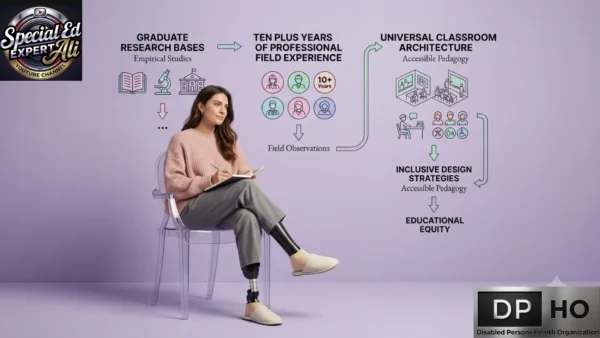
My subsequent fieldwork across diverse learning environments allowed me to analyze how public and private systems manage accommodation plans. True equity requires moving past basic compliance to honor the inherent dignity of every student.
Ten Years of Global Practice and Advocacy
Over the past decade, I have focused my career on turning complex policy mandates into practical, day-to-day strategies for families and school districts. This extensive field experience underscores that proper identification within the 14 Special Education Categories is simply the first step.
The true work of an educator involves building supportive spaces where students can advocate for themselves.
Through my ongoing advocacy work at the Disabled Persons Health Organization (DPHO), I collaborate with international teams to make accessible resource templates and legal frameworks available worldwide. This simple guide reflects that dual commitment: blending academic precision with hands-on, classroom-tested experience.
What Are the Official 14 Special Education Categories Under Federal Law? 🎯
1. Specific Learning Disability (SLD)
A Specific Learning Disability impacts a student’s ability to listen, think, speak, read, write, spell, or compute mathematical calculations. This classification encompasses distinct neurodivergent processing profiles such as dyslexia, dysgraphia, and dyscalculia. According to research from the U.S. Department of Education, SLD remains the most prevalent classification within public schools.
To qualify for specialized support under this category, the IEP team must document that the student’s academic challenges are not primarily the result of visual, hearing, or motor disabilities. Instead, evidence must show an underlying psychological processing issue. Culturally responsive multi-tiered systems of support (MTSS) are essential to ensure accurate evaluations.
2. Other Health Impairment (OHI)
The Other Health Impairment category covers chronic or acute health conditions that limit a student’s strength, vitality, or alertness. Common qualifying conditions include Attention Deficit Hyperactivity Disorder (ADHD), diabetes, epilepsy, leukemia, and sickle cell anemia. Data from organizations like Autism Speaks emphasize that these conditions must directly impact classroom performance to trigger eligibility.
┌─────────────────────────┐     ┌─────────────────────────┐
│   Clinical Evaluation   │     │ IEP Team Functional     │
│   of Health Condition   │ ──> │ Academic Impact Audit   │
└─────────────────────────┘     └─────────────────────────┘
             ▲                               │
             │                               ▼
             │                  ┌─────────────────────────┐
             └───────────────── │ Under IDEA Legislation │
                                │  FAPE/LRE Entitlement   │
                                └─────────────────────────┘
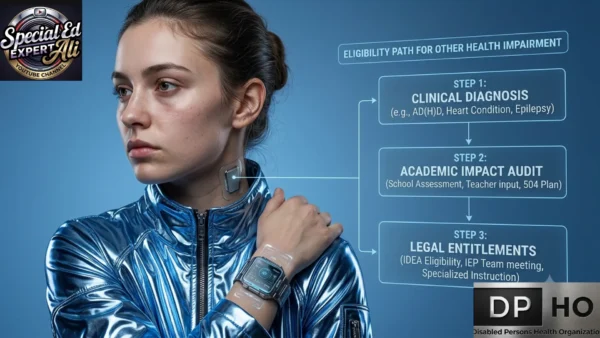
Accommodations for students under the OHI designation frequently involve adaptive scheduling, assistive technology, and structured health care plans. These interventions ensure that medical needs do not interfere with access to general education curricula.
3. Autism Spectrum Disorder (ASD)
Autism Spectrum Disorder is a developmental disability that significantly affects verbal and nonverbal communication alongside social interaction. Symptoms are typically apparent before age three and must adversely affect educational performance to meet IDEA standards. Worshippers seeking spaces designed around these exact principles can review our guide on Acoustic Engineering and Taraweeh Accessibility.
Classroom strategies for students with ASD often center on predictable visual schedules, structured sensory-friendly zones, and direct social-communication instruction. Minimizing unexpected sensory changes helps lower cognitive load and prevents overstimulation.
4. Emotional Disturbance (ED)
An Emotional Disturbance involves long-term emotional or behavioral responses that differ significantly from accepted norms and negatively impact academic performance. This category includes students diagnosed with schizophrenia, severe anxiety disorders, clinical depression, or bipolar disorders.
┌─────────────────────────────────────────────────────────────────┐
│               Behavior Intervention Plan (BIP) Engine           │
├─────────────────────────────────────────────────────────────────┤
│ 1. Functional Behavior Assessment (Identify environmental triggers)│
├─────────────────────────────────────────────────────────────────┤
│ 2. Proactive Environmental Support (Low-LED zones, sound caps)  │
├─────────────────────────────────────────────────────────────────┤
│ 3. De-escalation Protocol (Restorative, non-exclusionary steps) │
└─────────────────────────────────────────────────────────────────┘
Image Alternative Text: An administrative layout outlining the three steps of a proactive Behavior Intervention Plan for Emotional Disturbance.
To support these students safely, teams must implement a formal Behavior Intervention Plan (BIP) grounded in a Functional Behavior Assessment (FBA). These plans prioritize positive behavioral supports over exclusionary discipline, helping students build emotional regulation skills within the general classroom.
5. Speech or Language Impairment (SLI)
A Speech or Language Impairment is a communication disorder such as stuttering, impaired articulation, or a language or voice impairment. These challenges must significantly interfere with a child’s ability to communicate academic knowledge or participate in class discussions.
Interventions for SLI require direct collaboration with certified Speech-Language Pathologists (SLPs). Modern practices focus on providing robust communication access through Augmentative and Alternative Communication (AAC) apps and devices, ensuring every student has a functional voice.
6. Visual Impairment Including Blindness
This category includes students with visual impairments that, even with correction, adversely affect their educational performance. It covers both partial sight and total blindness. According to technical literacy standards from the American Foundation for the Blind (AFB), early access to specialized literacy tools is critical for lifelong independence.
| Academic Accessibility Area | Primary Instructional Technology | Structural Accommodation Metrics |
| :--- | :--- | :--- |
| **Tactile Literacy** | Refreshable Braille displays, tactile graphics | High-contrast physical room markers |
| **Auditory Access** | Screen-reading software (JAWS/NVDA) | Clear, uninhibited audio pathways |
| **Spatial Navigation** | Orientation and mobility training | Consistent, predictable room layouts |
Classrooms must be adapted to feature tactile floor indicators, braille learning materials, and high-contrast digital interfaces. These changes allow students with visual impairments to navigate school facilities safely and independently.
7. Deafness
Deafness is defined under IDEA as a hearing impairment so severe that the student cannot process linguistic information through hearing, with or without amplification. This structural barrier creates unique communication needs that require immediate, specialized attention.
To foster true equity, school districts must provide qualified sign language interpreters and real-time captioning services. These accommodations align with guidelines from the World Federation of the Deaf to ensure students can access the general curriculum without linguistic isolation.
8. Hearing Impairment
Unlike the distinct classification for deafness, a Hearing Impairment involves permanent or fluctuating hearing loss that adversely affects a child’s education but is not covered under the definition of deafness. For an in-depth exploration of clinical evaluation methods and specialized acoustics, see our comprehensive guide on Audiometric Testing and Hearing Impairment Accommodations.
Classroom setups for these students often include personal FM systems, sound-field amplification, and acoustic acoustic paneling. These technologies minimize background noise, allowing the student to focus on instructional speech.
9. Deaf-Blindness
Deaf-blindness involves simultaneous hearing and visual impairments. This unique combination causes such severe communication and educational challenges that the student’s needs cannot be met in programs designed solely for children with deafness or blindness alone.
Instructional models for deaf-blind students rely heavily on tactile sign language, co-active guiding techniques, and specialized assistive technology. Teams must use multi-sensory approaches to help students interact with their surrounding environment safely and meaningfully.
10. Orthopedic Impairment
An Orthopedic Impairment refers to a severe physical limitation that adversely affects a child’s educational performance. This category includes impairments caused by congenital anomalies, diseases like poliomyelitis or bone tuberculosis, and other conditions such as cerebral palsy, amputations, or fractures.
┌─────────────────────────┐     ┌─────────────────────────┐
│  Continuous Accessible  │     │ 60-Inch Wheelchair      │
│  Routes & 1:12 Ramps    │ ──> │ Turning Radius Clearance│
└─────────────────────────┘     └─────────────────────────┘
             ▲                               │
             │                               ▼
             │                  ┌─────────────────────────┐
             └───────────────── │ Universal Physical     │
                                │  Autonomy Compliance    │
                                └─────────────────────────┘
Image Alternative Text: A technical flowchart displaying the structural engineering requirements, like 1:12 ramp slopes and 60-inch turning radiuses, needed for Orthopedic Impairment compliance.
To ensure physical autonomy, schools must follow the accessibility standards established by the U.S. Access Board. Classrooms must feature continuous accessible routes, adjustable-height desks, and automated entry doors.
11. Intellectual Disability (ID)
An Intellectual Disability is characterized by significant limitations both in intellectual functioning (general mental capability) and in adaptive behavior, which covers everyday social and practical skills. This disability originates before the age of 18.
┌─────────────────────────────────────────────────────────────────┐
│               Adaptive Functional Competency Framework          │
├─────────────────────────────────────────────────────────────────┤
│ 1. Conceptual Skills (Literacy, self-direction, money metrics)  │
├─────────────────────────────────────────────────────────────────┤
│ 2. Social Skills (Interpersonal communication, empathy goals)   │
├─────────────────────────────────────────────────────────────────┤
│ 3. Practical Skills (Daily living routines, travel safety)      │
└─────────────────────────────────────────────────────────────────┘
Instructional paths under the ID category emphasize functional academic skills, task-analyzed instruction, and explicit real-world practice. Breaking complex tasks into smaller, manageable steps allows students to build independence at their own pace.
12. Traumatic Brain Injury (TBI)
Traumatic Brain Injury applies to an acquired injury to the brain caused by an external physical force, resulting in total or partial functional disability or psychosocial impairment. It does not apply to brain injuries that are congenital, degenerative, or induced by birth trauma.
Because TBI can alter a student’s cognitive, physical, and behavioral profile suddenly, IEPs must be highly flexible. Frequent data collection and regular team reviews are essential to adjust accommodations as the student’s recovery progresses.
13. Multiple Disabilities
Multiple Disabilities involves simultaneous impairments—such as an intellectual disability combined with blindness or an orthopedic impairment—the combination of which causes severe educational needs. This category does not include deaf-blindness.
┌─────────────────────────┐     ┌─────────────────────────┐
│ Transdisciplinary Team  │     │ Unified Cross-Categoric │
│ Functional Assessment   │ ──> │ IEP Service Blueprint   │
└─────────────────────────┘     └─────────────────────────┘
             ▲                               │
             │                               ▼
             │                  ┌─────────────────────────┐
             └───────────────── │ Comprehensive Individual │
                                │  FAPE Delivery Engine   │
                                └─────────────────────────┘
Supporting students with multiple disabilities requires a transdisciplinary team approach where physical therapists, speech pathologists, and specialized educators work together. This collaborative model ensures all therapeutic and academic goals are woven into a single, cohesive school routine.
14. Developmental Delay (DD)
The Developmental Delay category is a flexible designation reserved for children aged three through nine. It allows public school districts to provide specialized instruction to young children who exhibit significant delays in physical, cognitive, communication, social, or emotional development without rushing into a definitive medical label.
Using the DD category encourages early intervention when a child’s developmental profile is still changing rapidly. Transition services must be carefully planned as the child nears age nine to determine if they qualify under one of the other 13 explicit categories.
How Are AI-Driven Personalized Learning Paths Changing IDEA Compliance? 🎯
Navigating the Intersection of Modern Technology and Federal Law
The integration of Artificial Intelligence (AI) into public school systems is redefining how educators approach individualized instruction. Modern generative engines can analyze a student’s learning performance instantly, allowing teachers to adjust reading levels, visual layouts, and task structures automatically. These tools make it much easier to align daily lessons with a student’s official IEP goals.
However, using AI in schools requires strict adherence to federal privacy and civil rights laws. Automated systems must never replace the human collaboration required during formal IEP team meetings. Instead, AI tools should be used to support teachers by creating accessible, diverse learning materials quickly and accurately.
Balancing Algorithmic Support with Human Clinical Judgment
While data-driven algorithms can recommend useful instructional modifications, human clinical judgment remains the foundation of special education. Educators must review AI-generated materials to ensure they are culturally respectful, accurate, and aligned with the student’s specific needs under the 14 Special Education Categories.
┌─────────────────────────────────────────────────────────────────┐
│                Algorithmic FAPE Compliance Check                │
├─────────────────────────────────────────────────────────────────┤
│ 1. Data Encryption (Guaranteed FERPA and student privacy)       │
├─────────────────────────────────────────────────────────────────┤
│ 2. Bias Elimination (Regular audits for cultural equity)        │
├─────────────────────────────────────────────────────────────────┤
│ 3. Human Oversight (Final instructional veto by certified staff)│
└─────────────────────────────────────────────────────────────────┘
Maintaining human oversight ensures that technology serves as a tool for inclusion rather than an automated barrier. Combining smart software with experienced teaching helps districts protect student rights while embracing innovative classroom tools.
Field Perspectives: Real Success Stories in Advocacy and Inclusion 🎯
Success Story 1: Transforming a Rural District’s Transition Infrastructure
A rural public school district faced significant challenges supporting transition services for high school students with intellectual and physical disabilities. Many students graduated without functional vocational skills or clear paths to independent living. The regional leadership team initiated a comprehensive system overhaul, restructuring their approach to match the 14 Special Education Categories frameworks.
The district built dedicated community partnerships to create accessible, structured vocational training placements. They installed adaptive technologies, including screen readers and modified workstations, across local training sites.
As a direct result of these efforts, over 85% of participating youth transitioned successfully into paid, competitive employment or independent living arrangements within two years of graduation. The district’s program became a state-wide model for rural transition planning, demonstrating that targeted support opens doors to lifelong independence.
Success Story 2: Implementing a System-Wide Sensory Modification Plan
A suburban elementary school reported rising rates of exclusionary disciplinary actions involving neurodivergent students experiencing sensory overload during school assemblies and transition periods. The building consultation team stepped in to design a proactive, environment-focused intervention plan.
The school created dedicated sensory decompression environments equipped with dimmable low-LED lighting, soft acoustic paneling, and self-regulation tools. They provided comprehensive neurodiversity training to all general education teachers and volunteer staff.
┌─────────────────────────┐     ┌─────────────────────────┐
│ Pre-Intervention Audit  │     │ Proactive Environmental │
│ (High Exclusion Rates)  │ ──> │ Design & Staff Training │
└─────────────────────────┘     └─────────────────────────┘
             ▲                               │
             │                               ▼
             │                  ┌─────────────────────────┐
             └───────────────── │ 70% Reduction in Daily  │
                                │  Exclusionary Actions   │
                                └─────────────────────────┘
Within one academic year, the campus saw a 70% reduction in daily exclusionary disciplinary actions. Worshippers and community organizers seeking to bring these exact sensory adjustments to public spaces can review our strategic blueprint on Masjid Universal Accessibility and Structural Auditing. This project proved that altering the school environment to fit the student creates a calmer, more productive atmosphere for the entire school community.
Actionable Advocacy Checklist for Parents and Educators 🎯
This operational checklist helps parents and school teams evaluate classroom accessibility and ensure compliance with federal guidelines under the 14 Special Education Categories:
- [ ] Confirm Comprehensive Initial Evaluation: Verify that all areas of suspected need were thoroughly assessed during the multi-disciplinary evaluation.
- [ ] Review LRE Placement Compliance: Confirm that the student is educated in the general classroom alongside neurotypical peers to the maximum extent appropriate.
- [ ] Audit Measurable Annual IEP Goals: Ensure all educational goals are specific, measurable, data-driven, and directly tied to identified needs.
- [ ] Verify Necessary Accommodations: Check that required tools, such as personal FM systems, assistive technology, or visual schedules, are documented and available on day one.
- [ ] Review Proactive BIP Safeguards: Confirm that any necessary Behavior Intervention Plan focuses on positive environmental modifications rather than punitive control.
- [ ] Assess Transition Services Integration: Ensure that comprehensive, goal-oriented transition planning begins no later than age 16 (or earlier based on state mandates).
- [ ] Verify Communication Equity Measures: Confirm that students with speech, hearing, or visual needs have immediate access to required AAC devices, sign language interpreters, or Braille materials.
- [ ] Establish Transparent Feedback Loops: Identify clear points of contact for managing accommodation requests, documenting all communication in writing.
Framework Comparison: US Federal Accessibility Standards 🎯
The following table compares the primary federal accessibility frameworks in the United States, illustrating how their unique mandates protect student rights across public school environments:
| Legislation Framework | Core Eligibility Criteria | Communication and Structural Mandates | Primary Field Accommodations | Federal Enforcement Agency |
| Individuals with Disabilities Education Act (IDEA) | Children whose educational performance is adversely impacted by one of the 14 Special Education Categories. | Mandates a highly customized, data-driven IEP provided within the Least Restrictive Environment. | Professional sign language interpreters, individualized literacy goals, specialized assistive technologies. | US Department of Education (OSEP). |
| Section 504 of the Rehabilitation Act | Individuals with physical or mental impairments that substantially limit major life activities like learning or hearing. | Guarantees equal access to public programs through specific, documented accommodation plans. | Assistive listening devices, preferential seating layouts, real-time captioning text displays. | Office for Civil Rights (OCR). |
| Americans with Disabilities Act (ADA) | Individuals with permanent or long-term conditions affecting daily functional performance across public spaces. | Mandates reasonable accommodations and completely effective communication access in all public areas. | Public wheelchair ramps, tactile pathways, qualified sign language interpreters, accessible digital media. | US Department of Justice (DOJ). |
Conclusion: Commitment to Inclusive Allyship 🎯
Prioritizing structural and instructional accessibility across the 14 Special Education Categories is a powerful testament to an educational community’s commitment to human dignity and civil rights. True inclusion means removing architectural barriers, eliminating communication exclusion, and building supportive environments through tools like sensory rooms and trained volunteer teams.
By applying universal design principles and using data-driven advocacy strategies, organizations can ensure that every student has equal access to educational life. Let us work together to build classrooms where everyone can participate safely, independently, and with complete peace of mind to celebrate the full depth of the 14 Special Education Categories.
People Also Ask (PAA): Frequently Asked Questions 🎯
1. What are the official 14 Special Education Categories recognized under federal IDEA law?
The 14 categories include Specific Learning Disability, Other Health Impairment, Autism Spectrum Disorder, Emotional Disturbance, Speech or Language Impairment, Visual Impairment, Deafness, Hearing Impairment, Deaf-Blindness, Orthopedic Impairment, Intellectual Disability, Traumatic Brain Injury, Multiple Disabilities, and Developmental Delay.
2. How can a student qualify for an IEP under the “Other Health Impairment” category?
To qualify, a student must have a chronic or acute health condition (such as ADHD, diabetes, or epilepsy) that limits alertness or vitality and adversely impacts their academic performance, requiring specialized instruction.
3. What is the main difference between Deafness and Hearing Impairment under IDEA?
Deafness refers to a hearing loss so severe that linguistic processing through hearing is impossible, even with amplification. Hearing Impairment covers permanent or fluctuating hearing loss that impacts education but does not meet the legal definition of deafness.
4. Can a child receive services for a Developmental Delay after reaching age nine?
No. The Developmental Delay category is specifically reserved for children aged three through nine. Before or during their ninth year, the IEP team must evaluate the child to see if they qualify under one of the other 13 specific categories.
5. What role does a Behavior Intervention Plan (BIP) play in the Emotional Disturbance category?
A BIP provides proactive environmental modifications, coping strategies, and structured de-escalation protocols designed to support a student’s emotional regulation, replacing punitive disciplinary actions with positive behavioral supports.
6. Are public schools required to provide Braille materials for students with visual impairments?
Yes. Under IDEA, schools must provide necessary assistive tools, including Braille materials, refreshable Braille displays, and large-print resources, to ensure students with visual impairments have full access to the curriculum.
7. How does the social model of accessibility differ from the traditional medical model?
The medical model views disability as an individual clinical deficit needing cure or correction. The social model highlights that individuals are disabled by societal barriers (like lack of ramps or sign language access) rather than their medical conditions.
8. What is the purpose of transition services in an Individualized Education Program?
Transition services provide a coordinated set of activities focused on improving a student’s academic and functional skills to help them move smoothly from high school to post-secondary education, vocational training, or independent living.
9. Who makes up the mandatory team required to create an official IEP?
The IEP team must include the child’s parents, at least one general education teacher, at least one specialized education teacher, a district administrative representative, and an individual who can interpret evaluation results.
10. Where can families find official compliance data regarding special education civil rights?
Families can access free, authoritative legal guides, toolkits, and compliance reports directly through federal websites like the US Department of Education’s Office for Civil Rights or the official UN Enable platform.