Mastering Mobility: A Comprehensive Guide to White Cane Use and Independence 2026-27
Master Orientation and Mobility Training (Mastering Mobility) with our guide on white cane use. Learn how white cane tools ensure safety and independence.
Disclaimer: This article is for educational and informational purposes only and does not constitute professional medical, legal, or therapeutic advice. The content provided here is not intended to be a substitute for professional medical consultation, diagnosis, or treatment. Never disregard professional medical advice or delay in seeking it because of something you have read on this website. This information does not establish a doctor-patient relationship, nor does it imply any form of legal liability. Always seek the advice of your physician or other qualified health provider with any questions you may have regarding a medical condition or educational needs. Form more information https://dp-ho.com/disclaimer-page/

ڈس کلیمر: یہ مضمون صرف تعلیمی اور معلوماتی مقاصد کے لیے ہے۔ اس کا مقصد کسی بھی قسم کا پیشہ ورانہ طبی، قانونی، یا علاج معالجے کا مشورہ فراہم کرنا نہیں ہے۔ یہاں فراہم کردہ معلومات کسی بھی طبی ماہر سے مشاورت، تشخیص، یا علاج کا متبادل نہیں ہیں۔ اس ویب سائٹ پر پڑھی گئی کسی بھی بات کی بنا پر پیشہ ورانہ طبی مشورے کو نظر انداز نہ کریں اور نہ ہی علاج میں تاخیر کریں۔ یہ معلومات کسی بھی قسم کا ڈاکٹر اور مریض کا تعلق قائم نہیں کرتیں اور نہ ہی ان سے کوئی قانونی ذمہ داری عائد ہوتی ہے۔ طبی حالت یا تعلیمی ضروریات سے متعلق اپنے کسی بھی سوال کے لیے ہمیشہ اپنے معالج یا کسی مستند ماہر سے رجوع کریں۔ مزید تفصیل کے لیئے میری ویبسائٹ پر وزٹ کریں: https://dp-ho.com/disclaimer-page/
(Summary in Urdu)اردو خلاصہ:
سفید چھڑی (White Cane) بصارت سے محروم افراد کے لیے آزادی اور خود مختاری کی علامت ہے۔ یہ مضمون Orientation and Mobility Training کی اہمیت کو اجاگر کرتا ہے، جو کہ Independent Living Skills کا ایک بنیادی جزو ہے۔ اس تحریر میں ہم نے سفید چھڑی کی مختلف اقسام، ان کے استعمال کی تکنیکوں جیسے کہ Constant Contact Technique، اور جدید Smart Canes کے افادیت کا تفصیلی جائزہ لیا ہے۔
یہ رہنمائی خاص طور پر ان افراد کے لیے ہے جو بین الاقوامی معیار کے مطابق اپنی نقل و حرکت کو محفوظ اور خود مختار بنانا چاہتے ہیں۔ اس کے ساتھ ساتھ، ہم نے سماجی آداب اور Sighted Guide Technique پر بھی بات کی ہے، تاکہ معاشرے میں ایک نابینا یا بصارت سے محروم فرد کی عزتِ نفس اور حفاظت کو یقینی بنایا جا سکے۔ یہ تحریر آپ کو درست چھڑی کا انتخاب کرنے اور بین الاقوامی تعلیمی معیارات (IDEA/IEP) کو سمجھنے میں بہترین معاونت فراہم کرے گی۔
Mastering Mobility: A Comprehensive Guide to White Cane Use and Independence
Navigating the world with vision loss requires more than just physical movement; it demands the art of Mastering Mobility. When you focus on Mastering Mobility, you unlock a new level of autonomy. The humble white cane stands as the primary symbol of this freedom for those seeking Independent Living Skills in the modern world. Through the process of Mastering Mobility, individuals transform their daily transit into a safe and empowering experience.What is a White Cane?
A white cane is a precision-engineered Assistive Technology for the Blind designed to transmit environmental data. By scraping the ground, the cane creates vibrations that travel through the wrist to the user’s sensory nerves, which is a vital skill when Mastering Mobility.
These signals allow for rapid Environmental Orientation through real-time feedback loops during daily transit. It effectively acts as an extension of the user’s own tactile nervous system, decoding complex terrain changes instantly. Consistent practice in Mastering Mobility ensures that these signals are interpreted with precision and speed.
Field Notes: In my decade of experience in Pakistan, I have observed that mastering the cane’s feedback is the first true step toward a student’s lifelong empowerment. True Mastering Mobility comes from patience and repetition.
The Importance of White Canes

For individuals requiring Visual Impairment Rehabilitation, the white cane represents the vital link between isolation and community engagement. By prioritizing Mastering Mobility, users gain the necessary sensory input to traverse public spaces while maintaining personal dignity and physical security. Through the consistent practice of Mastering Mobility, individuals can effectively translate haptic feedback into navigational confidence.
Beyond basic safety, the cane serves as a universal signal to the public regarding a user’s specific needs. It fosters independence by reducing reliance on sighted guides, allowing users to navigate Pedestrian Safety and Intersections with the skill sets required for Mastering Mobility.
Field Notes: Providing tools is merely the start; true success comes when students transition from dependency to proactive route planning in their own neighborhoods, effectively Mastering Mobility in their daily lives.
Orientation & Mobility
Orientation & Mobility professionals, specifically O&M Specialist (COMS) experts, define this discipline as the synthesis of spatial awareness and safe movement. By focusing on Mastering Mobility, individuals learn the art of understanding exactly where they are positioned relative to the physical environment at all times. This process of Mastering Mobility is fundamental for anyone looking to navigate their surroundings with complete confidence.
Orientation & Mobility is not just about walking; it is the subsequent action of traversing complex spaces safely while avoiding obstacles. Mastering Mobility serves as a vital cornerstone of the Independent Living Skills curriculum used in specialized rehabilitation centers worldwide, ensuring that every user remains in control of their journey.
Field Notes: While environmental layouts vary between Pakistan and the USA, the fundamental principles of spatial mapping remain a universal requirement for all students who are serious about Mastering Mobility.
White Cane Training
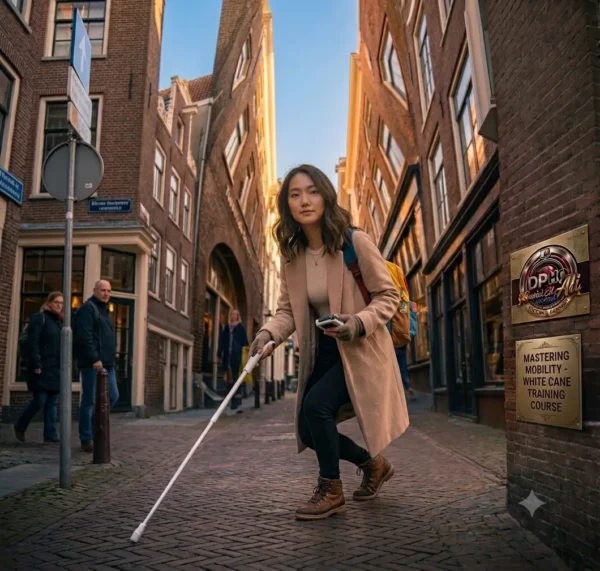
The initiation phase for a novice user focuses on the basic mechanics of cane handling and rhythm as part of their journey in Mastering Mobility. Instructors emphasize the importance of consistent sweeping motions during White Cane Training to detect changes in surface texture or sudden drop-offs effectively. By prioritizing these foundational steps, beginners set the stage for long-term success in Mastering Mobility.
Building on these basics, students eventually progress toward navigating complex urban intersections safely through specialized White Cane Training. This rigorous training ensures that users can rely on their Tactile Feedback Techniques even in high-traffic, noisy environments, which is essential for true Mastering Mobility.
Field Notes: I have found that those who practice consistent sweeping motions early on during their White Cane Training develop much faster confidence in cross-street navigation than those who rush, proving that Mastering Mobility is a steady, deliberate process.
White Canes and Dog Guides – What’s the Difference?
While both serve as essential tools for Mastering Mobility, their functional mechanisms differ significantly in terms of information gathering. A cane acts as an obstacle detector, while a guide dog functions as an intelligent obstacle avoider.
Cane users receive constant feedback about the ground surface, whereas dog users rely heavily on the animal’s guidance. This transition requires a shift in how one processes Environmental Orientation information during daily travel, presenting a new dynamic in the journey of Mastering Mobility.
Field Notes: In my practice, students often find the tactile reliability of a cane harder to replicate when they first integrate a guide dog into their ongoing process of Mastering Mobility.
Etiquette Around White Cane Users
Public education remains vital for ensuring the safety of those using Mobility Aids for Low Vision effectively. The primary rule is to never intervene physically without first obtaining clear, verbal permission from the user.
If a user requests help, the Sighted Guide Technique is the professional standard for assistance. This method ensures both the guide and the user maintain safety while navigating shared public walkways.
Field Notes: Educating the public on not grabbing the cane is a recurring lesson, as it inadvertently disrupts the user’s entire spatial map.
Where to Buy a White Cane

Selecting the right equipment often depends on the specific training program provided by a local rehabilitation agency. Organizations like Ambutech Mobility Products offer various configurations, including folding and non-folding models for different needs.
Quality is paramount, as the cane must be durable enough to withstand daily wear and tear. Prospective buyers should consult their O&M Specialist (COMS) to determine the correct length and tip type for their stature.
Field Notes: A well-fitted cane is like a tailored suit; it must match the user’s height and stride to be truly effective.
What type of cane do I need?
Choosing the correct cane is a highly individualized process based on personal travel speed and terrain. A lighter cane may be preferred for those seeking agility, while others may require heavier, more rigid models.
| Cane Feature | Best For | Technical Benefit |
| Folding Structure | Portability | Easy storage in bags |
| Rigid Construction | Daily Commuters | Increased feedback sensitivity |
| Marshmallow Tip | Beginners | Smooth ground gliding |
| Pencil Tip | Advanced Users | Precise point detection |
Field Notes: Always prioritize the feedback quality of the tip over the aesthetic appearance of the cane shaft itself.
Types of canes for vision impairment
The four primary categories of mobility canes serve distinct purposes in the Visual Impairment Rehabilitation framework. Long canes are the standard for travel, while others serve as specific indicators or support tools.
Understanding these distinctions is critical for anyone pursuing specialized Education and Training programs. Each type is engineered with specific materials, usually aluminum, to balance lightweight design with long-term structural integrity.
Field Notes: I have seen students struggle simply because they were using a symbol cane for long-distance travel, highlighting the need for correct equipment matching.
What are the different types of cane tips?

The tip is the most vital component, acting as the primary sensor for Tactile Feedback Techniques. Different shapes interact with urban surfaces in unique ways, providing varied levels of audio and haptic input.
Selecting the right tip can significantly reduce wrist strain during long hours of walking. Professionals often recommend starting with a rolling tip before transitioning to more precise touch-point tips for complex environments.
Field Notes: Replacing a worn-out tip is often the simplest fix for a student who suddenly feels they have lost their sense of ‘feel’ for the sidewalk.
Multi-terrain cane tips
Navigating environments like gravel, sand, or grass requires specialized tips designed for stability. These tools are engineered to glide over loose surfaces without snagging, which is common with standard flat tips.
The design of multi-terrain tips allows for a more continuous flow of information, even on uneven grounds. This enables users to maintain their Navigation and Wayfinding Training goals regardless of the specific outdoor environment.
Field Notes: Mastering these tips is essential for students who wish to navigate rural settings or public parks with the same confidence as paved city streets.
Smart canes
Modern advancements have introduced electronic components that enhance traditional Assistive Technology for the Blind capabilities. These devices utilize sensors to detect obstacles above the waistline, which traditional canes might miss.
While effective, they often require a learning curve to interpret the additional haptic and audio signals provided. Users must weigh the benefits of these high-tech features against the increased weight and maintenance requirements of the unit.
Field Notes: While technology is a wonderful bridge, it should never replace the fundamental spatial skills learned through basic O&M training.
What does it mean when a cane has a red band in the UK?

In certain international jurisdictions, a red band specifically indicates the user has combined vision and hearing loss. This serves as a vital safety marker for pedestrians and public transit staff.
This indicator ensures that others know to use visual or tactile cues rather than relying on verbal communication. Recognizing these universal symbols is an important aspect of fostering global DeafBlind Accessibility and inclusion.
Field Notes: Awareness of such international indicators helps us better serve students who may eventually travel or study abroad.
How do I learn to use a cane?
Learning is best achieved through a structured program led by a certified professional. These programs often align with IDEA (Individuals with Disabilities Education Act) standards in the USA to ensure consistent progress.
Students work on individualized goals that transition from indoor orientation to complex outdoor navigation. This comprehensive approach builds the physical and mental stamina required for a lifetime of independent, safe movement.
Field Notes: The most successful students are those who treat their training with the same seriousness as any professional athletic pursuit.
Cane vs. Dog: Which Is Better for the Blind?

The choice between a dog and a cane is a deeply personal decision rooted in lifestyle needs. A dog provides companionship and guided pathing, while a cane offers unmatched environmental data and self-sufficiency.
Many users eventually incorporate both into their daily lives, using the cane for its tactile feedback and the dog for its complex obstacle avoidance. Ultimately, the best tool is the one that empowers the individual to reach their specific goals.
Field Notes: I have always encouraged my students to master the cane first, as it builds the foundational spatial awareness that every traveler needs.
FAQs: –
How to use a white cane for beginners?
For beginners, Mastering Mobility involves moving the cane in an arc shape in front of your feet to scan for obstacles. You should keep the cane in contact with the ground or tap lightly, ensuring your pace remains steady and controlled to interpret environmental feedback effectively.
What is white cane training?
White cane training is a professional instructional process designed to teach individuals the skills necessary for Mastering Mobility. It covers techniques for obstacle detection, spatial awareness, and safe navigation of complex urban environments, enabling users to move with confidence and independence.
Do you need training to use a white cane?
Yes, professional training is essential for Mastering Mobility because an instructor ensures you learn the correct physical techniques and safety protocols. Without proper guidance, you may misinterpret the sensory feedback provided by the cane, which could compromise your navigation and safety.
What are cane techniques?
Cane techniques are standardized methods such as ‘constant contact’ or ‘two-point touch’ that facilitate Mastering Mobility by providing tactile data. These methods allow users to detect surface changes, drop-offs, and obstacles, ensuring that they can move through any environment with precision and ease.
What are the benefits of using a white cane?
The primary benefit of a white cane is that it empowers users with Mastering Mobility, granting them the autonomy to travel without reliance on others. It serves both as a navigational tool for physical safety and a universal signal to the public that the user has specific needs.
Which foot goes first when using a cane?
Typically, you move the foot opposite to the side where the cane is currently positioned to maintain a rhythmic, balanced gait. Coordinating your steps with the cane’s sweep is a fundamental aspect of Mastering Mobility, ensuring that your path is consistently protected as you move forward.