🚀 Special Education Transition: Empowering Students 2026-27🚀
Master special education transition and IDEA compliance in 2026. Empower students with IEP goals, transition planning, and AI tools for a successful future.
The information provided on dp-ho.com is for informational purposes only. It is not intended as a substitute for professional medical, legal, or financial advice. Please read our full Disclaimer Page for detailed terms. Always consult with qualified professionals before making any decisions.
⚠️ قانونی و طبی انتباہ
dp-ho.com پر فراہم کردہ معلومات صرف تعلیمی اور معلوماتی مقاصد کے لیے ہیں۔ یہ کسی بھی قسم کا پیشہ ورانہ طبی یا مالی مشورہ نہیں ہے۔ تفصیلی معلومات کے لیے ہمارا مکمل ڈسکلیمر صفحہ ملاحظہ کریں۔ کسی بھی فیصلے سے پہلے براہِ کرم متعلقہ ماہر سے رجوع کریں۔
What is Special Education Transition and Why is it Critical?
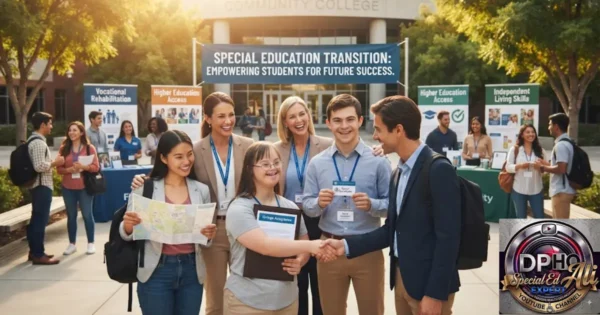
Special Education Transition: A Pathway to Independence
Special Education Transition is the structured process of preparing students with disabilities for life after high school. By bridging the gap between academic environments and the demands of adulthood, a well-planned Special Education Transition ensures success in post-secondary education, employment, and independent living. When this planning starts early, it empowers students to take ownership of their future; it is not just about graduation, but about building a lifelong foundation for self-sufficiency.
اردو خلاصہ (Urdu Summary)
خصوصی تعلیم میں Special Education Transition (منتقلی کا عمل) ان طلباء کے لیے انتہائی اہم ہے جو کسی بھی معذوری کے ساتھ زندگی گزار رہے ہیں۔ یہ عمل ہائی اسکول کے بعد کی زندگی، جیسے کہ اعلیٰ تعلیم، ملازمت، اور آزادانہ زندگی گزارنے کی تیاری کے لیے ایک پل کا کام کرتا ہے۔ 2026 کے تعلیمی منظرنامے میں، Special Education Transition کے تحت انفرادی تعلیمی پروگرام (IEP) اور قانون IDEA کے تحت ہر طالب علم کا حق ہے کہ اسے اس کے مستقبل کے لیے مناسب مدد فراہم کی جائے۔
اس مضمون میں ہم نے امریکی تعلیمی نظام کے اصولوں، جیسے کہ FAPE اور LRE، کو تفصیل سے بیان کیا ہے تاکہ والدین اور اساتذہ Special Education Transition کے جدید طریقوں کا استعمال کر سکیں۔ خاص طور پر، خود مختاری (Self-determination) اور کیریئر کی تیاری پر توجہ مرکوز کرنا اس بات کو یقینی بناتا ہے کہ طلباء پڑھائی مکمل کرنے کے بعد معاشرے میں باوقار مقام حاصل کریں۔ ہمارا مقصد ہے کہ ہر بچہ Special Education Transition کے ذریعے اپنی صلاحیتوں کو پہچانے اور اسے اپنی ضروریات کے مطابق تعلیمی سہولیات مل سکیں۔
How Does the IDEA Act Shape Special Education Services?
The Individuals with Disabilities Education Act (IDEA) is the federal law that guarantees all eligible children with disabilities receive a free, appropriate public education. It mandates that schools identify and provide customized services, which are often integrated into the Special Education Transition planning process. By standardizing these requirements, IDEA ensures that every student has a legal right to access the general education curriculum, setting the stage for a smoother Special Education Transition journey.
Field Note: In my 10+ years of experience, I have seen that clear legal frameworks are the bedrock of student advocacy; applying this IDEA-based rigor to the USA context ensures that Special Education Transition efforts are never derailed by administrative oversight.
Understanding FAPE and LRE
- FAPE (Free Appropriate Public Education): Entitles students to specialized instruction at no cost to parents, ensuring that education is tailored to achieve meaningful progress during the Special Education Transition phase.
- The Role of LRE (Least Restrictive Environment): Dictates that students should be educated alongside their non-disabled peers, fostering the social skills necessary for a successful Special Education Transition into broader society.
What are the Core Components of an Effective IEP?
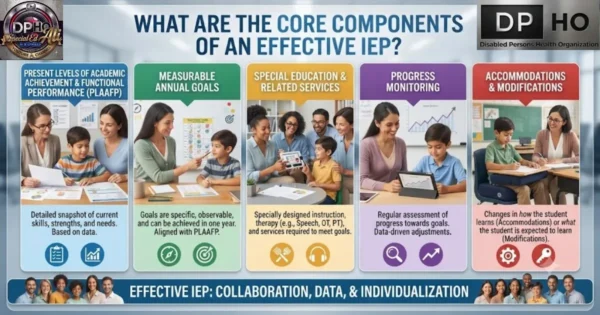
An Individualized Education Program (IEP) acts as a legally binding document that details specific goals, including those related to Special Education Transition.
| Component | Purpose | Focus Area |
| Present Levels | Baseline data | Academic & Functional |
| Annual Goals | Measurable milestones | Special Education Transition |
| Accommodations | Removing barriers | Access to Curriculum |
| Related Services | Therapeutic support | Speech, OT, PT |
Incorporating Behavior Intervention Plans (BIP)
A Behavior Intervention Plan (BIP) provides proactive strategies to address challenging behaviors, which is vital for maintaining stability throughout the Special Education Transition process.
How Can Self-Determination Improve Post-School Outcomes?
Self-determination involves students understanding their own strengths and limitations, allowing them to advocate for their needs effectively during their Special Education Transition. Research shows that students with strong self-advocacy skills are significantly more likely to gain employment. Building these skills requires educators and parents to allow students to make choices, transforming them from passive recipients into active participants in their own life path.
What are the Future Trends in AI-Driven Personalized Learning?
AI is currently transforming how we implement multi-tiered system of supports (MTSS) by analyzing student performance data in real-time. These systems can pinpoint exactly where a student is struggling, allowing educators to offer targeted interventions without delay.
While technology is a powerful aid, it remains a tool in the hands of the expert educator. Personalization, in its true form, is the combination of smart data and human compassion.
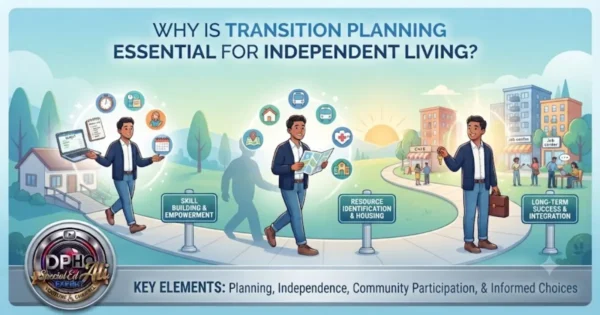
Special Education Transition: A Path to Independence
Special Education Transition planning is the essential roadmap that guides a student from school-based services to a fulfilling adult life, with a primary focus on vocational rehabilitation and independent living. Without a formal Special Education Transition strategy, many students face a “services cliff” upon graduation, where critical support systems suddenly disappear.
Effective Special Education Transition planning should begin well before high school ends to ensure all stakeholders—teachers, parents, and community members—are fully aligned. This collaborative process includes connecting students with specialized community-based programs that facilitate long-term success and community integration.
Field Note: Mastering Special Education Transition from a school-based setting to the workforce requires the same structured approach I have used to coordinate sports for special athletes; identifying the goal first makes the path much clearer and more achievable for every learner.
Which Assistive Technologies are Revolutionizing Inclusive Classrooms?
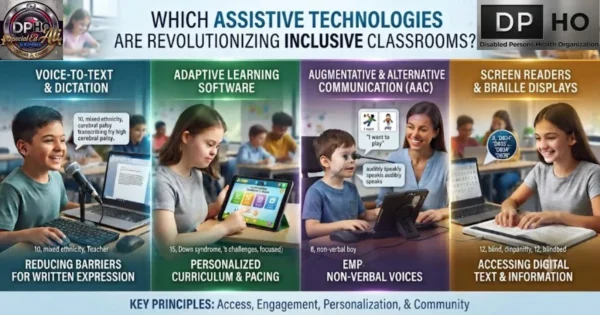
The landscape of assistive technology tools, often integrated into a student’s Special Education Transition plan, has shifted toward smart, adaptive solutions that reduce task load and increase autonomy. In 2026, these tools are no longer just “add-ons” but are integrated into the daily fabric of the classroom via Universal Design for Learning (UDL), supporting students as they prepare for the next phase of their journey.
| Technology Type | Benefit for Student | Application |
| AAC Systems | Enables communication | Speech generation |
| Predictive AI | Reduces writing fatigue | Task assistance |
| Visual Schedules | Increases predictability | Routine management |
| Smart Home Apps | Fosters independence | Daily living support |
By leveraging these technologies, we ensure that Special Education Transition becomes a seamless experience, empowering our students to navigate the adult world with confidence and the right digital toolkit.
How Can Parents Collaborate with IEP Teams Effectively?
Parents are equal partners in the IEP process, and their input is essential for creating a plan that works outside the classroom. By maintaining open lines of communication and requesting reports ahead of time, parents can ensure their voice is heard during meetings.
Understanding procedural safeguards protects your child’s rights, ensuring you are always informed and involved in key decisions. A collaborative team approach is the most reliable way to achieve consistent progress.
[Download our latest parental checklist here: Parental IEP Planning Tools.]
When Should Students Begin Career Discovery and Vocational Training?
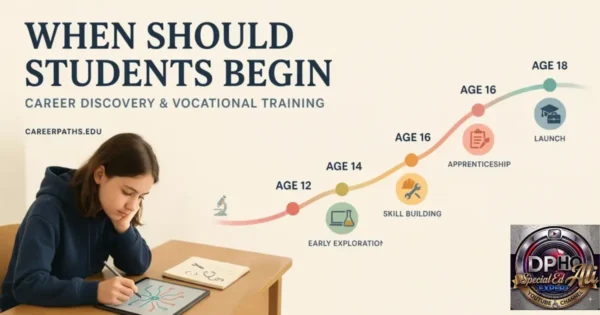
Career discovery should be a gradual process that starts as early as middle school, allowing students to explore interests and develop a realistic understanding of the workforce. By the time they reach their final years of high school, they should have engaged in internships or hands-on transition services.
Early exposure reduces the anxiety associated with the unknown and allows for the adjustment of accommodations in real-world environments.
How Do We Measure Success Beyond Graduation?
Success is not measured solely by a diploma, but by the student’s ability to participate in their community and live as independently as possible. Data from sources like the National Center for Education Statistics highlight that social integration and vocational engagement are the true metrics of a high-quality transition program.
Continuous support and self-advocacy enable individuals to navigate the complexities of adulthood with confidence. For more deep-dive resources on policy, visit OSERS IDEA or NTACT-C.
Explore our full archive of special education articles: Special Ed Authority Resources.
FAQs: –
What country is best for special needs education? 🌍
When exploring international benchmarks for [Special Education Transition: Empowering Students], countries like Finland, Denmark, and the Netherlands stand out for their comprehensive inclusive frameworks. These nations excel by integrating early intervention, robust teacher training, and legislative support that ensures every student transitions smoothly into adulthood. Studying these models helps us advocate for similar systemic improvements and high-quality inclusive practices in our own educational settings.
Why is transition important in special education? 🔄
The process of [Special Education Transition: Empowering Students] is critical because it prepares learners for life beyond the classroom, ensuring they achieve independence and community integration. Without a structured transition, students often struggle to navigate the shifts between school, work, and daily living environments. By focusing on this bridge, we provide the stability and direction necessary for students to confidently pursue their personal and professional goals.
What are the transition skills for special education students? 🛠️
Key skills for successful [Special Education Transition: Empowering Students] include self-advocacy, independent living capabilities, social communication, and vocational readiness. These functional skills empower students to navigate the workforce and community environments with self-assurance and autonomy. My goal as an educator is to foster these essential competencies through personalized, goal-oriented instruction that builds real-world confidence in every learner.
What is the main theme of supporting students in special education? 🤝
The core theme of [Special Education Transition: Empowering Students] is the commitment to promoting equity, agency, and meaningful participation for every neurodivergent learner. We strive to shift from a medical model of disability to a strengths-based approach that focuses on individual potential rather than limitations. By centering our support on personal dignity and self-sufficiency, we create a roadmap that helps students thrive throughout their educational journey.
What are the two major goals of a transition plan? 🎯
The two primary objectives of a successful [Special Education Transition: Empowering Students] plan are facilitating academic and vocational success while ensuring seamless social inclusion in the community. These goals are designed to provide a structured pathway that connects current educational achievements to future life opportunities. By aligning personalized goals with post-secondary aspirations, we ensure that students are fully equipped for their next chapter in life.
What are the 5 types of goals? 📈
In the framework of [Special Education Transition: Empowering Students], we typically define goals as academic, social-emotional, vocational, independent living, and self-advocacy goals. These five categories provide a holistic structure to address the diverse needs of students as they prepare for adult life. A balanced IEP (Individualized Education Program) integrates these types of goals to ensure comprehensive development and long-term success across all areas of a student’s life.
What is the main purpose of a transition? 🧩
The main purpose of [Special Education Transition: Empowering Students] is to bridge the gap between educational services and the realities of adult life, promoting self-sufficiency. It serves as a purposeful period of preparation where students develop the tools and networks needed to transition effectively into the workforce or higher education. This structured support is essential for transforming potential into reality, ensuring that no student is left behind after graduation.
What are the 4 types of special needs children? 🧩
Understanding the four main domains—physical, developmental, emotional/behavioral, and sensory impairments—is crucial for effective [Special Education Transition: Empowering Students]. Categorizing these needs allows us to design tailored strategies and accommodations that address the specific challenges each student faces. My evidence-based approach ensures that these diverse profiles are managed with professional expertise to guarantee equitable outcomes for all learners.
What are the 5 importance of learning in education? 📚
Learning in the context of [Special Education Transition: Empowering Students] is vital for cognitive growth, self-discovery, social empowerment, emotional regulation, and future independence. Education provides the foundational knowledge and problem-solving skills necessary for navigating the complexities of modern life. When we emphasize these values, we inspire students to embrace learning not just as a duty, but as a lifelong journey toward personal excellence and active citizenship.
How to motivate special education students? 🌟
To effectively facilitate [Special Education Transition: Empowering Students], we motivate students by setting achievable, high-interest goals and recognizing their unique neurodivergent strengths. By utilizing activity-based learning and positive reinforcement, we create an environment where students feel encouraged to take risks and persist through challenges. My practice focuses on fostering intrinsic motivation, ensuring that every learner feels energized and confident in their ability to succeed and grow.
🚀 References
- U.S. Department of Education (OSERS): Official federal guidelines on transition services.
- Google Scholar: Peer-reviewed evidence on self-determination predictors.
- WHO Disability Data: Global prevalence and health impacts of disability.
- Special Ed Authority: Expert resources for inclusive education and transition.
- UNESCO Inclusive Education: Global standards for inclusive teaching practices.
U.S. Department of Education (IDEA): Official guidance on transition services and legal mandates.
- UNESCO Inclusive Education: Global standards for accessible learning environments.
- World Health Organization (WHO): Disability prevalence and rehabilitation statistics.
- Special Ed Authority Resources: Specialized articles on research and practical teaching strategies.
Note: For further insights into hearing impairment and instructional methodologies, explore the educational archives on www.dp-ho.com. ۔
To learn more about my 10-year journey and research in Special Education, visit my About Me page.