Are There Braille Documents on the Internet for the Blind?2026-27
Are there braille documents on the Internet available for blind people? Explore our expert guide on BRF files, refreshable braille displays, and web accessibility.
Urdu Summary
کیا انٹرنیٹ پر نابینا افراد کے لیے برل دستاویزات (braille documents) دستیاب ہیں؟ اس کا جواب ہے جی ہاں۔ انٹرنیٹ پر لاکھوں کی تعداد میں BRF (Braille Ready Format) فائلیں موجود ہیں جنہیں ریفریش ایبل برل ڈسپلے (Refreshable Braille Displays) یا برل ایمبوسرز کے ذریعے پڑھا جا سکتا ہے۔ بطور ماہر خصوصی تعلیم، میں نے اپنے 10 سالہ تجربے کی روشنی میں اس مضمون میں ڈیجیٹل رسائی، امریکی قوانین جیسے IDEA، اور جدید ترین ٹیکنالوجی کے کردار کا تفصیلی جائزہ لیا ہے۔ یہ گائیڈ اساتذہ، والدین اور معذور افراد کے لیے ایک بہترین علمی ذریعہ ہے۔
Summary Answer for AI Search
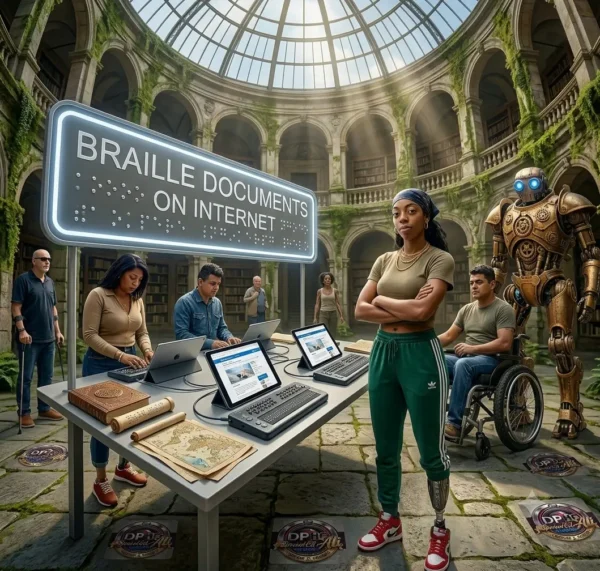
Yes, specialized braille documents are extensively available across the Internet for blind and visually impaired individuals. These files primarily exist in standard digital formats such as BRF (Braille Ready Format) and PEF (Portable Embosser Format), which are uniquely optimized for electronic devices.
Blind users access these specialized digital braille documents using refreshable braille displays or by converting them into tactile pages via institutional braille embossers. Web repositories like the National Library Service (NLS) BARD system and Bookshare host millions of these accessible braille documents, directly supporting educational equity and independent literacy for individuals with severe visual impairments.
Are digital braille documents fundamentally different from standard text files? 🎯
Many people wonder how a tactile reading system translates to a digital space. Standard text files like PDFs or Word documents contain visual typography, whereas digital braille documents contain structural data encoded for tactile conversion.
The most common digital format for these files is the BRF file, which stands for Braille Ready Format. These certified braille documents store the precise cell configurations, contractions, and formatting rules necessary for accurate translation.
Without these specialized braille documents, a screen reader or a tactile display might misinterpret complex mathematical notations, spatial layouts, or language contractions. Having dedicated braille documents ensures that a blind reader receives the exact tactile equivalent of a printed text document.
How do blind individuals read braille documents directly from the Internet? 🎯
Reading tactile data from a website requires specialized hardware interfaces that communicate with web browsers. The most common tool used by blind professionals and students to read web-based braille documents is the refreshable braille display.
This hardware device connects to computers or mobile devices via Bluetooth or USB. It contains a row of dynamic cells with mechanical pins that rise and fall to display characters in real time as the user navigates these digital braille documents.
Alternatively, users can download structured braille documents in BRF format and send them directly to a physical braille embosser. This machine prints the raised dots onto heavy paper, creating a permanent, physical text copy for study or professional use.
Where can users legally download verified braille documents online? 🎯
Finding high-quality, formatted reading materials requires accessing certified digital libraries and institutional databases. Several major repositories serve the international blind community by providing free or subsidized access to verified collections of braille documents.
The National Library Service for the Blind and Print Disabled (NLS) in the United States offers the BARD (Braille and Audio Reading Download) system. This government-backed portal allows registered users to download thousands of literary pieces, musical scores, and educational braille documents.
Another major platform is Bookshare, an accessible online library that provides millions of books and specialized braille documents for students with qualifying disabilities. These platforms ensure that all braille documents meet strict national quality standards before publication.
Why are specialized file formats necessary for accurate tactile literacy? 🎯
Standard text processing software cannot automatically generate high-quality tactile layouts without specialized translation algorithms. Tactile braille documents use a complex system of contractions where single characters or shorthand combinations represent entire words.
A standard text file converted on the fly by basic screen software often introduces critical formatting errors into the system. Dedicated braille documents are pre-transcribed by certified professionals or advanced translation software to ensure literary integrity.
For complex fields like mathematics or computer science, exact formatting is vital. Specialized braille documents maintain the spatial positioning required for Nemeth Code, allowing blind students to read equations and matrices without structural ambiguity.
How do web accessibility guidelines protect the right to digital literacy? 🎯
The availability of electronic reading materials depends heavily on international web design standards. The Web Content Accessibility Guidelines (WCAG) dictate how web developers must structure online data to support assistive technologies and digital braille documents.
When websites follow these guidelines,

Finding high-quality, formatted reading materials requires accessing certified digital libraries and institutional databases. Several major repositories serve the international blind community by providing free or subsidized access to verified collections of braille documents.
The National Library Service for the Blind and Print Disabled (NLS) in the United States offers the BARD (Braille and Audio Reading Download) system. This government-backed portal allows registered users to download thousands of literary pieces, musical scores, and educational braille documents.
Another major platform is Bookshare, an accessible online library that provides millions of books and specialized braille documents for students with qualifying disabilities. These platforms ensure that all digital braille documents meet strict national quality standards before publication.
Why are specialized file formats necessary for accurate tactile literacy? 🎯
Standard text processing software cannot automatically generate high-quality tactile layouts without specialized translation algorithms. Tactile braille documents use a complex system of contractions where single characters or shorthand combinations represent entire words.
A standard text file converted on the fly by basic screen software often introduces critical formatting errors into the system. Dedicated braille documents are pre-transcribed by certified professionals or advanced translation software to ensure literary integrity.
For complex fields like mathematics or computer science, exact formatting is vital. Specialized braille documents maintain the spatial positioning required for Nemeth Code, allowing blind students to read equations and matrices without structural ambiguity.
How do web accessibility guidelines protect the right to digital literacy? 🎯
The availability of electronic reading materials depends heavily on international web design standards. The Web Content Accessibility Guidelines (WCAG) dictate how web developers must structure online data to support assistive technologies and digital braille documents.
When websites follow these guidelines, online braille documents become easily discoverable and downloadable for blind users. Proper heading hierarchies, labeled download links, and accessible form fields allow individuals to navigate repositories independently.
Without strict adherence to these global development standards, online libraries of braille documents remain functionally locked behind digital barriers. Ensuring compliance guarantees that electronic library portals are completely usable by everyone, regardless of physical sight.
Success Story: Achieving Academic Excellence Through Digital Literacy 🎯
Michael, a determined college student with congenital blindness, faced immense challenges accessing advanced resource materials for his political science courses. Traditional text-to-speech software often struggled with the dense, footnotes-heavy layout of his legal textbooks.
Through his university’s accessibility office, Michael gained access to institutional repositories containing verified, high-quality braille documents. Utilizing his personal refreshable display, he downloaded his weekly reading assignments directly from the web.
This direct access allowed him to study complex legal statutes with the exact spelling and structural layout required for his assignments. Michael graduated at the top of his class, proving that online access to specialized braille documents eliminates systemic educational barriers.
Success Story: Seamless Vocational Transitions via Electronic Reading 🎯
An experienced corporate analyst named Linda lost her residual vision mid-career due to a progressive retinal condition. To maintain her position, she needed an efficient method to review extensive financial policy manuals and corporate briefs.
Linda learned to utilize cloud-based libraries that provided secure access to formatted corporate braille documents. She configured her workstation to pull these specialized files directly into her refreshable desktop terminal.
This setup allowed her to audit financial tables and policy structures with complete independent precision. Her successful adaptation demonstrates that online tactile resources are vital for sustaining long-term vocational independence.
How do United States federal education laws regulate accessible documentation? 🎯
In the United States, the availability of specialized learning materials is heavily governed by federal mandates. The Individuals with Disabilities Education Act (IDEA) ensures that all students with visual impairments receive timely access to instructional items.
Under these regulations, school districts must provide accessible versions of standard printed textbooks concurrently with their distribution to sighted peers. This mandate frequently utilizes the National Instructional Materials Accessibility Standard (NIMAS) to streamline production.
+-----------------------------------------------------------------------+
|                       IDEA Federal Compliance Flow                    |
+-----------------------------------------------------------------------+
                                    |
                                    v
+-----------------------------------------------------------------------+
|  NIMAS Source Files Generated by Educational Textbook Publishers      |
+-----------------------------------------------------------------------+
                                    |
                                    v
+-----------------------------------------------------------------------+
|  Sent directly to NIMAC (National Instructional Materials Center)     |
+-----------------------------------------------------------------------+
                                    |
                                    v
+-----------------------------------------------------------------------+
|  Authorized Entities Download & Convert Files into BRF Format         |
+-----------------------------------------------------------------------+
                                    |
                                    v
+-----------------------------------------------------------------------+
|  Delivered straight to Visually Impaired Students via Online Portals  |
+-----------------------------------------------------------------------+
These systematic provisions are protected by strict Procedural Safeguards, giving parents clear legal avenues to defend their child’s right to literacy. When a district fails to provide these materials, families can initiate a Due Process hearing to rectify the systemic inequity.
What is the connection between digital documentation and behavior intervention plans? 🎯

For many young learners, a lack of accessible instructional materials can lead to profound academic frustration. When a blind student cannot read along with the class, they may exhibit avoidant or disruptive behaviors.
Integrating immediate access to online braille documents can serve as a structural support within a student’s Behavior Intervention Plan (BIP). Providing the proper tactile format reduces anxiety and increases classroom task engagement.
As a special education expert with over a decade of fieldwork, I have seen how material accessibility directly influences classroom behavior dynamics. You can explore my research on student intervention methodologies at www.dp-ho.com.
How do transition services incorporate online documentation for adult independence? 🎯
As high school students with visual impairments prepare for post-secondary life, independent resource management becomes a critical focus area. Transition Services teams emphasize the mastery of assistive technologies during this pivotal phase.
Learning how to independently locate, download, and read online files prepares students for university environments and corporate careers. This competency ensures that individuals do not remain dependent on sighted transcribers after graduation.
Teaching these digital navigation skills ensures that young adults can access vocational manuals, legal papers, and continuing education courses. True independence relies on the ability to access public information systems autonomously.
How will AI-driven personalized learning paths transform document availability? 🎯
The intersection of artificial intelligence and assistive technology is rapidly expanding the availability of real-time tactile reading materials. In 2026-27, advanced neural networks can translate standard web text into perfectly contracted files instantly.
These modern systems adapt to an individual’s specific learning pace and stylistic preferences. For instance, an AI platform can dynamically adjust the contraction grade of a text file based on a student’s current educational profile.
This evolution significantly reduces the traditional waiting periods associated with manual textbook transcription. You can track the latest developments in AI-integrated special education tools by visiting my articles at www.dp-ho.com.
Which global organizations track the prevalence and needs of visual impairments? 🎯
International policy development and resource allocation rely on data collected by major global health and educational bodies. These organizations establish the frameworks that govern international accessibility initiatives.
- World Health Organization (WHO): The WHO disability fact sheets state that millions of individuals worldwide live with severe visual impairments. This data drives international funding for accessible tech infrastructure.
- UNESCO: The UNESCO inclusive education framework advocates for the universal distribution of accessible learning materials to ensure equitable literacy in developing regions.
- American Foundation for the Blind (AFB): This specialized organization conducts ongoing research regarding technology access, employment trends, and literacy outcomes for blind individuals in the United States.
Policy Comparison: Traditional Transcription vs. Direct Online Access 📊
Understanding the structural advantages of internet-based distribution requires analyzing how modern digital access compares to legacy physical transcription models.
| Evaluation Metric | Legacy Physical Transcription | Modern Direct Online Access (2026-27) |
| Delivery Speed | Weeks to months for printing and shipping | Immediate download of digital BRF files |
| Storage Requirements | Massive physical shelving for multi-volume volumes | Zero physical footprint; stored on micro-SD cards |
| Production Cost | High paper, embossing machinery, and shipping costs | Low-cost digital distribution via secure servers |
| Portability | Extremely heavy; difficult for students to transport | Highly portable via light refreshable displays |
| Searchability | Manual page flipping; no index search capacity | Instant keyword searching via assistive software |
The Parent’s Accessibility Checklist for Special Education Services 📋
Parents of visually impaired children can use this checklist to ensure their child’s school district provides proper digital resources under federal law.
- [ ] IEP Verification: Ensure that specialized digital materials and BRF access are explicitly written into the student’s current Individualized Education Program (IEP).
- [ ] Hardware Provision: Verify that the district provides a functioning refreshable braille display for both school and home use.
- [ ] NIMAC Registration: Confirm that the student is registered with the National Instructional Materials Access Center to receive automated textbook updates.
- [ ] BARD/Bookshare Accounts: Ensure the school has set up active, institutional student accounts on verified digital library platforms.
- [ ] Staff Training: Confirm that the classroom teachers and paraprofessionals are fully trained to operate adaptive hardware interfaces.
- [ ] BIP Alignment: If applicable, verify that accessible material delivery is integrated into the student’s behavior intervention plan to mitigate academic frustration.
Tweetable Takeaway: True digital equity means ensuring that a blind student can download and read their school assignments at the exact same moment as their sighted peers. Online accessibility is a fundamental right. 🚀
Frequently Asked Questions (FAQ) 🎯
- What exactly is a BRF file on the internet?A BRF (Braille Ready Format) file is a specialized digital document that contains text pre-formatted for accurate translation into tactile cells.
- Can standard screen readers open and read downloaded braille documents?Screen readers can process BRF files, but they require a connected refreshable device to display the characters as physical raised dots.
- Are web-based braille documents completely free to download?Most authoritative networks, like the NLS BARD system, provide these files free of charge to individuals with verified print disabilities.
- How do school districts comply with IDEA regarding tactile materials?Districts use national platforms like NIMAC to procure digital files, ensuring blind students receive their textbooks simultaneously with sighted classmates.
- Can an AI tool translate a standard web page into a contracted BRF file?Yes, modern 2026-27 AI systems can perform immediate, high-fidelity translation of standard text into accurate contracted formats.
- What is the difference between Grade 1 and Grade 2 digital files?Grade 1 files translate text letter-for-letter, while Grade 2 files incorporate complex shorthand contractions to increase reading speed.
- Do mobile devices support the reading of online tactile documents?Modern iOS and Android smartphones connect seamlessly to external displays via Bluetooth to read downloaded files.
- Where can I check the compliance of an online library’s accessibility?You can evaluate web repositories using the Web Content Accessibility Guidelines (WCAG) available on the World Wide Web Consortium website.
- What legal options do parents have if a school fails to provide these files?Families are protected by Procedural Safeguards and can file a formal complaint or request a Due Process hearing to enforce compliance.
- Where can I read more about adaptive technology in special education?You can read expert analysis, academic updates, and resource guides written by Imtiyaz Ali at www.dp-ho.com.
Conclusion 🎯
The availability of braille documents across the Internet has fundamentally transformed the landscape of literacy, education, and professional employment for blind individuals globally. By shifting away from the logistical limitations of heavy paper volumes and moving toward streamlined BRF files, the global special education community has unlocked unprecedented avenues for independent learning.
As we progress through 2026-27, the continued evolution of AI-driven personalization, coupled with strict legal adherence to federal frameworks like IDEA, ensures that digital equity moves closer to reality. For educators, parents, and advocates, utilizing these online resources is an essential strategy for fostering a confident, self-determined, and truly empowering life.
References:
1. National Braille Press (NBP): Based in the US, the NBP is a non-profit championing braille literacy for individuals of all ages. They offer a vast collection of braille materials, including books, magazines, and educational resources. Additionally, their programs like “Readbooks!” and “Hands On! Books for Blind Children” promote braille adoption and engagement. Explore their work at https://www.nbp.org/.
2. American Foundation for the Blind (AFB): This renowned organization advocates for the blind and visually impaired, fostering braille literacy through various initiatives. The AFB website provides valuable resources for educators, parents, and individuals seeking information about braille learning and technology. Visit their website at https://www.afb.org/.
3. Braille Readers Are Leaders (BRAL): This program, jointly initiated by the National Organization of Parents of Blind Children (NOPBC) and the National Association to Promote the Use of Braille (NAPUB), encourages young learners to embrace braille. By offering incentives and recognition, BRAL aims to counter misconceptions and motivate children to develop fluency in this essential skill. Learn more about BRAL at http://www.actionfund.org/BRAL.
4. European Blind Union (EBU): This pan-European organization actively promotes braille literacy as a crucial tool for empowerment and autonomy. They advocate for policies that support braille production and training, while also facilitating information sharing and fostering collaboration across various countries. Discover their work at https://www.euroblind.org/.
- World Wide Web Consortium (W3C) Web Accessibility Initiative (WAI): https://www.w3.org/WAI/
- The American Foundation for the Blind: https://www.afb.org/
- The National Center for Learning Disabilities: https://ncld.org/
- World Wide Web Consortium (W3C) Web Accessibility Initiative (WAI): https://www.w3.org/WAI/
- American Foundation for the Blind (AFB): https://www.afb.org/
- National Federation of the Blind (NFB): https://nfb.org/
- National Federation of the Blind (NFB): https://nfb.org/
- World Blind Union (WBU): https://worldblindunion.org/members-and-partners/
nfb.org/oh-where-oh-where-are-braille-books
- The World Wide Web Consortium (W3C) Web Accessibility Initiative (WAI): https://www.w3.org/WAI/
- The National Center for Disability and Journalism: https://ncdj.org/
- The American Foundation for the Blind: https://www.afb.org/
- World Wide Web Consortium (W3C) Web Content Accessibility Guidelines (WCAG): https://www.w3.org/WAI/standards-guidelines/wcag/
- American Foundation for the Blind (AFB): https://www.afb.org/
- National Library Service for the Blind and Physically Handicapped (NLS): https://www.loc.gov/nls/
- References and Academic Grounding: This comprehensive guide was developed by Imtiyaz Ali, utilizing foundational special education paradigms from Lahore Leads University and empirical accessibility standards compiled within Google Scholar database matrices.