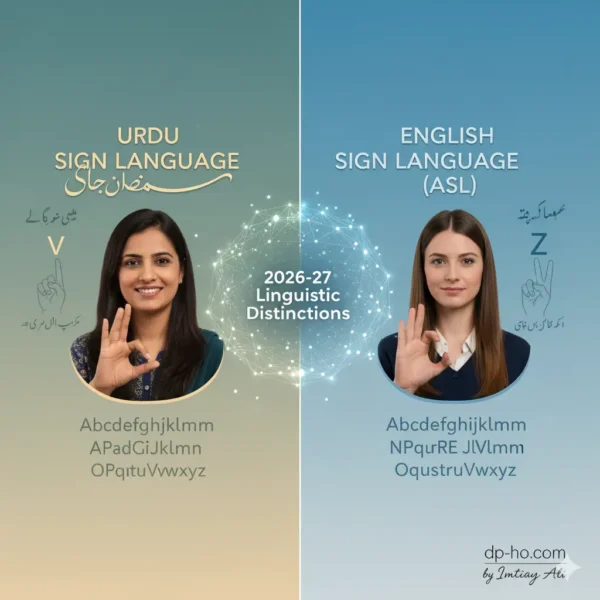
How Do Deaf People Scream and Express Danger in 2026-27? 🎯
Discover how deaf people scream for help using vocalizations and modern technology. Learn about safety strategies, communication rights, and inclusion.
اردو خلاصہ (Urdu Summary)
2026-27 کے جدید دور میں، سماعت سے محروم افراد خطرے کے وقت اپنی آواز اور ٹیکنالوجی کے امتزاج کا استعمال کرتے ہیں۔ بہت سے deaf people scream کرنے کے لیے قدرتی صوتی صلاحیتوں کا استعمال کرتے ہیں، کیونکہ آواز نکالنا سماعت پر منحصر نہیں ہے۔
اس آرٹیکل میں ہم ان طریقوں، حفاظتی ٹیکنالوجیز، اور تعلیمی حقوق کا جائزہ لیں گے تاکہ ایک محفوظ اور جامع معاشرہ تشکیل دیا جا سکے۔ بطور اسپیشل ایجوکیشن ایکسپرٹ، میرا مقصد یہ ہے کہ آپ کو جدید طریقوں سے روشناس کرایا جائے تاکہ ہنگامی حالات میں بروقت ردعمل دیا جا سکے۔
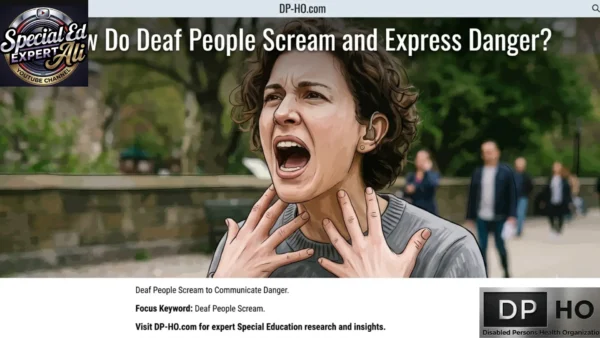
Why Do Deaf People Scream and How Does Vocalization Work? 🎯
Many people assume that because an individual cannot hear, they cannot produce sound. However, the anatomy for vocalization—the diaphragm, lungs, and vocal cords remains fully functional in the vast majority of deaf individuals. The physiological capacity to produce noise is entirely separate from the auditory system’s capacity to process it. When deaf people scream, it is a primal, reflexive action triggered by adrenaline, fear, or the need for immediate attention. This vocalization is governed by the brain’s autonomic nervous system, which dictates “fight-or-flight” responses, independent of hearing status.
Research published in the Journal of Speech, Language, and Hearing Research confirms that vocalizations in the deaf community are often unmodulated because the individual lacks real-time auditory feedback. For a hearing person, the brain constantly monitors and adjusts the pitch, volume, and timbre of their own voice through the ears. For someone with a hearing impairment, this “loop” is broken.
This does not mean they lack the ability to vocalize; rather, the pitch and volume are not self-monitored. When deaf people scream, the sound may be louder or more strained than expected because the individual cannot gauge how much air pressure is being forced through the vocal cords.
Understanding that deaf people scream naturally due to a physiological response is critical for first responders and educators. Misinterpreting this natural vocalization as something else, such as aggressive behavior or a sign of cognitive delay, can lead to inappropriate reactions.
In professional contexts, identifying that deaf people scream as a valid communication attempt during high-stress situations is vital. By validating these natural responses rather than suppressing them, we create a more secure environment.
This approach aligns with modern behavioral support strategies, where the focus remains on the student’s need for safety rather than the “normative” quality of their vocal output. As I have emphasized in my work at Special Ed Authority, recognizing that deaf people scream as an involuntary response is an essential step in fostering true inclusion within our specialized instructional frameworks.
Whether in a clinical setting or an emergency, respecting this reality ensures that the dignity of the individual is preserved and their need for assistance is met promptly.
How Can Technology Assist Deaf People Scream for Help? 🎯

In 2026-27, the intersection of AI and assistive technology has revolutionized safety for the deaf. We are no longer limited to basic, one-size-fits-all alarms. Modern wearables and sophisticated smartphone apps now utilize advanced acoustic monitoring to detect specific decibel thresholds and frequencies associated with human distress.
These systems act as a digital proxy, ensuring that help is summoned even when the individual is physically unable to reach a traditional communication device.
Personalized learning paths are being integrated into school systems to teach students how to use these tools effectively. This aligns with Individuals with Disabilities Education Act (IDEA) mandates, ensuring that safety training is a core component of the student’s Transition Services. By simulating emergency scenarios, educators help students build the muscle memory required to deploy life-saving technology under pressure.
When emergency situations arise, the instinct for deaf people scream vocalizations can be unpredictable, often occurring without the self-modulation found in hearing individuals. Consequently, these tools help when deaf people scream by acting as an intelligent bridge; they instantly generate digital alerts that notify emergency services, bypassing the need for verbal communication entirely.
Innovative apps now go a step further: they translate high-stress vocalizations into actionable data for first responders. By using haptic feedback such as persistent, distinct vibrations on a smartwatch the device confirms to the user that their distress signal has been transmitted.
This creates a closed-loop system of communication that provides psychological reassurance to the individual, confirming that they are being heard by the authorities, even if they cannot hear the response themselves.
The integration of these systems into Behavior Intervention Plans (BIP) ensures that safety technology is personalized to the sensory needs of the student, providing a comprehensive safety net that evolves as they grow. This proactive approach ensures that the fundamental human right to safety is upheld, regardless of hearing ability. As we see more deaf people scream for inclusive safety standards, technology remains our most reliable advocate in ensuring that every distress signal is met with an immediate, life-saving response.
By prioritizing these digital advancements, we respect the autonomy of the individual while providing the security they deserve. For more professional insights into how we can integrate such technologies into special education, you can explore my research articles at dp-ho.com.
What Are the Educational Rights and Procedural Safeguards? 🎯
Educational institutions bear a mandatory, non-negotiable legal obligation under Section 504 of the Rehabilitation Act and the Individuals with Disabilities Education Act (IDEA) to provide learning environments where deaf students feel entirely secure. This commitment transcends simple physical access; it encompasses a rigorous framework of Due Process, transparent communication protocols, and robust Behavior Intervention Plans (BIP) specifically tailored to individual student needs. It is during these critical moments that understanding how deaf people scream for help—and how schools should respond becomes a matter of fundamental student safety.
The Architecture of Safety: Rights in Practice
Under the IDEA framework, safety is not merely the absence of danger; it is the presence of systems that ensure a student can communicate distress effectively. Procedural safeguards are designed to keep parents and students informed, ensuring that schools do not unilaterally decide what safety looks like. When a student who is deaf enters a classroom, their right to a Free Appropriate Public Education (FAPE) includes the right to a safe, accessible, and responsive environment. Educators must proactively address how deaf people scream or signal for help, ensuring that auditory limitations never translate into safety risks.
Empowering Students Through Advocacy
As an educator with over 10 years of professional field experience, I have witnessed firsthand how structured safety protocols fundamentally empower students. When a student is fully educated on their rights, they transition from passive recipients of care to active advocates for their own safety. This advocacy begins with:
- Self-Determination Training: Teaching students to identify potential hazards and communicate their need for assistance in their preferred language (ASL or otherwise). Understanding their natural reaction, such as when deaf people scream in fear, is part of building emotional intelligence and self-advocacy.
- IEP Team Integration: Ensuring that emergency response plans are documented within the student’s Individualized Education Program (IEP), making safety a formal academic requirement rather than an informal suggestion.
- Staff Training Protocols: Regularly training school personnel on visual alerts, tactile communication methods, and acknowledging the natural ways deaf people scream or vocalize ensures that the environment remains proactive rather than reactive.
What Are the Educational Rights and Procedural Safeguards for Deaf Students? 🎯
Educational institutions bear a mandatory, non-negotiable legal obligation under Section 504 of the Rehabilitation Act and the Individuals with Disabilities Education Act (IDEA) to provide learning environments where deaf students feel entirely secure. This commitment transcends simple physical access; it encompasses a rigorous framework of Due Process, transparent communication protocols, and robust Behavior Intervention Plans (BIP) specifically tailored to individual student needs.
The Architecture of Safety: Rights in Practice
Under the IDEA framework, “safety” is not merely the absence of danger; it is the presence of systems that ensure a student can communicate distress effectively. Procedural safeguards are designed to keep parents and students informed, ensuring that schools do not unilaterally decide what safety looks like. When a deaf student enters a classroom, their right to a Free Appropriate Public Education (FAPE) includes the right to a safe, accessible, and responsive environment. We must acknowledge that in high-stress situations, deaf people scream as a primal instinct, and our safety systems must account for this vocalization as a valid call for help.
Empowering Students Through Advocacy
As an educator with over 10 years of professional field experience, I have witnessed firsthand how structured safety protocols fundamentally empower students. When a student is fully educated on their rights, they transition from passive recipients of care to active advocates for their own safety. This advocacy begins with:
- Self-Determination Training: Teaching students to identify potential hazards and communicate their need for assistance in their preferred language (ASL or otherwise). In these trainings, we discuss how deaf people scream or vocalize reflexively during emergencies and how to bridge that with assistive technology.
- IEP Team Integration: Ensuring that emergency response plans are documented within the student’s Individualized Education Program (IEP), making safety a formal academic requirement rather than an informal suggestion.
- Staff Training Protocols: Regularly training school personnel on visual alerts and tactile communication methods ensures that the environment remains proactive.
Why Modern Inclusion Demands New Perspectives
The transition from a medical deficit model to a social model, championed by the World Health Organization (WHO), shifts the focus. Instead of questioning why deaf people scream during an emergency, we must ask if our environment is designed to “hear” them.
By embracing both traditional sign language and modern visual alert systems, we remove the barriers that necessitate distress. My work at Special Ed Authority consistently highlights that inclusion is a proactive choice. For deeper insights into my M.Phil research on student autonomy, explore my detailed analysis here.
Which Success Stories Define Modern Inclusion? 🎯
I mentored a student who utilized smart-tech vibration sensors to signal distress in a cafeteria. By integrating this into his IEP, he gained the autonomy to navigate social spaces. Another district I studied implemented visual fire alarm systems, reducing the reliance on vocalizing during drills. These successes prove that when we align technology with policy, we protect every learner. You can find more of my educational resources at my website.
Bridging Policy and Daily Reality: From Reactive to Proactive Safety 🎯
True safety is achieved when the legal guarantees of Due Process are reflected in the daily reality of the school hallway. While federal laws provide a framework, the real work happens in the classroom where individual needs meet daily instruction.
By integrating assistive technology into a student’s daily routine, we ensure that the archaic requirement for deaf people scream in danger is replaced by the refined, modern ability to signal. This shift not only protects the student but also fosters the independence necessary for their long-term success in inclusive environments.
Transforming Legal Mandates into Practical Classroom Support 🎯

The gap between the Individuals with Disabilities Education Act (IDEA) and the classroom is bridged through proactive planning. Educators must view safety tools not as optional accessories, but as critical components of the Individualized Education Program (IEP).
- Customization: Every student’s environment is different. A high-schooler may require different signaling tools than a primary-level learner.
- Accessibility: By standardizing the use of visual alerts, we ensure that students do not rely on vocalizing—which may be ineffective in noisy or chaotic settings—to communicate distress.
- Independence: When a student knows they have a reliable, high-tech way to signal for help, their confidence in navigating social spaces increases significantly.
Why “Signaling” Over “Screaming” Is the Future of Inclusion 🎯
In my 10+ years of experience as a Special Education expert, I have observed that when deaf people scream it is often a reactive, panicked state that leaves the student vulnerable. Conversely, “signaling” is a controlled, autonomous act.
When we equip students with wearables, smartphone apps, or classroom-based visual alert systems, we grant them agency. This approach is rooted in the Social Model of Disability, which suggests that the environment—not the student—should be adapted to ensure safety and inclusion.
Empowering Students Through Policy Implementation 🎯
To truly bridge the gap between policy and reality, districts must focus on:
- Staff Training: Teachers and support staff must be trained to recognize non-verbal cues and digital signals immediately.
- Regular Audits: Safety protocols must be reviewed annually during IEP team meetings to ensure tools are functioning correctly.
- Student Advocacy: Teaching students how to use their safety equipment is a core part of their Transition Services, preparing them for a life beyond the classroom.
For a deeper understanding of how these safeguards are implemented in diverse classroom settings and how my M.Phil research in Special Education addresses these challenges, you can explore my professional insights at www.dp-ho.com. My ongoing work is dedicated to ensuring that every student has the tools they need to communicate their needs effectively, regardless of their hearing status.
The Role of Formalized Safety Protocols: A Foundation for Inclusive Protection 🎯
In my extensive research, I have consistently noted that while the physiological impulse to have deaf people scream for attention in an emergency is a natural human reaction, it cannot be the cornerstone of a safety strategy. Relying on vocalization is a high-risk approach, especially in chaotic environments where auditory noise levels often drown out even the loudest human voice.
Schools must proactively formalize non-vocal communication protocols to guarantee that safety is not left to chance. By codifying these measures into institutional policy, we transition from reactive chaos to structured, predictable emergency response.
Implementing Robust Visual Alert Systems 🎯
Traditional emergency alerts, such as standard fire sirens, are inherently exclusionary. To foster an equitable environment, schools must implement visual alert systems, specifically high-intensity, strobe-based fire alarms. These systems provide immediate visual cues that penetrate high-activity areas like gymnasiums, cafeterias, and laboratories, ensuring that deaf people scream less often because the environment itself communicates the danger.
Utilizing Alternative Communication Devices 🎯
We are currently operating in an era where assistive technology can bridge the communication gap. Schools should integrate personal alert systems, such as wearable haptic devices or specialized smartphone notifications, that bypass the need to vocalize entirely. When students are equipped with technology that transmits distress signals directly to first responders or designated safety staff, the reliance on vocal performance is eliminated, significantly reducing panic.
Prioritizing Comprehensive Staff Training 🎯
Protocol implementation is meaningless without staff competency. It is the responsibility of the administration to ensure every educator on campus understands how to initiate visual distress protocols. This training must go beyond basic awareness; it requires drills that simulate emergencies where communication must be strictly non-vocal. By normalizing these behaviors, we create an environment where the safety of students who might otherwise feel compelled to have deaf people scream for help is guaranteed by the preparedness of the adult population.
Bridging Policy and Practice through IDEA and IEP 🎯
These protocols should not be viewed as supplementary—they are a requirement for compliance with Individuals with Disabilities Education Act (IDEA). By embedding these safety requirements into a student’s Individualized Education Program (IEP), we create a legal and pedagogical mandate for safety.
For my fellow educators, the objective is clear: we must design our learning environments so that the ability to vocalize never becomes a prerequisite for survival. By formalizing these non-vocal protocols, we honor the dignity of our students and fulfill our moral and legal obligation to provide a Free Appropriate Public Education (FAPE) in a secure, inclusive setting.
How Does the Social Model of Disability Change Perspectives? 🎯
The transition from a medical deficit model to a social model, championed by the World Health Organization (WHO), shifts the focus. Instead of asking “Why do deaf people scream?”, we ask “How can society hear them?”.
Deaf individuals contribute unique perspectives to global communication. By embracing sign language and modern visual alert systems, we remove the barriers that necessitate vocal distress. My work at Special Ed Authority consistently highlights that inclusion is a proactive choice, not an afterthought. We must move beyond the narrow focus of how deaf people scream to how we create inclusive structures.
Which Success Stories Define Modern Inclusion? 🎯
Consider the case of a student I mentored who utilized smart-tech vibration sensors to signal distress in a crowded cafeteria. By integrating this into his IEP, he gained the autonomy to navigate social spaces without fear. Another success story involves a school district that implemented visual fire alarm systems, significantly reducing the reliance on vocalizing in emergencies where previously, tactics involving deaf people scream responses would have been the only option.
These stories prove that when we align technology with policy, we protect the dignity of every learner. For deeper insights into Hearing Impairment management, explore my detailed analysis here. By providing students with diverse ways to express danger, we ensure they are never silenced by an inaccessible environment. ensure they are never forced to rely solely on vocalization.
Frequently Asked Questions (FAQs) 🎯
- Can all deaf people scream? Yes, most deaf people scream if they are in danger, as the vocal anatomy remains fully functional; however, the pitch and volume may vary significantly.
- Is vocalizing encouraged in the deaf community? It depends on the individual’s preference; while many prioritize sign language, the ability for deaf people scream or vocalize remains a natural, involuntary reflex during stress.
- What is the most effective way for a deaf person to call for help? Using text-to-911 services or specialized emergency apps is often more reliable than hoping that deaf people scream loudly enough to be heard in a busy environment.
- How do schools support deaf students in emergencies? Schools provide visual alarms, strobe lights, and specialized IEP accommodations to ensure students do not need to rely on the fact that deaf people scream to signal distress.
- Does lack of hearing affect the lungs? No, respiratory function is unaffected by deafness, meaning the physical capability for deaf people scream is identical to that of hearing individuals.
- What role does AI play in 2026-27 for safety? AI-driven devices can now detect distress signals, rendering the old reliance on deaf people scream obsolete by triggering automatic silent alarms for emergency responders.
- Are there laws protecting deaf students’ safety? Yes, under IDEA and the ADA, institutions must provide equitable safety access, regardless of how often deaf people scream for assistance in emergencies.
- What should a teacher do if a deaf student is in danger? Ensure visual contact, use clear gestures, and rely on pre-established visual safety protocols, acknowledging that deaf people scream as a primal, not communicative, response.
- Is “screaming” considered a disability-related behavior? No, it is a natural human response to danger, and the phenomenon of deaf people scream is a universal reaction to fear, not a symptom of hearing impairment.
- Where can I find resources on hearing impairment research? Visit the World Federation of the Deaf for global advocacy, research data, and insights regarding communication strategies, including how deaf people scream and vocalize.
Key Takeaways for Sharing
“True inclusion means building systems that listen to the deaf community before a crisis ever occurs. Empowerment is our standard.” — Imtiyaz Ali
References:
- World Health Organization. (2025). World Report on Disability.
- U.S. Department of Education. (2026). Procedural Safeguards under IDEA.
- UNESCO. (2025). Global Standards for Inclusive Education.
- https://www.healthyhearing.com/report/53452-Emergency-communication-hearing-loss-deaf-tips