
Acquiring a Disability Certificate in Germany
Master the 2026-27process for Acquiring a D. Certificate in Germany. Expert insights by Imtiyaz Ali on GdB levels, tax benefits, and AI-driven inclusion.
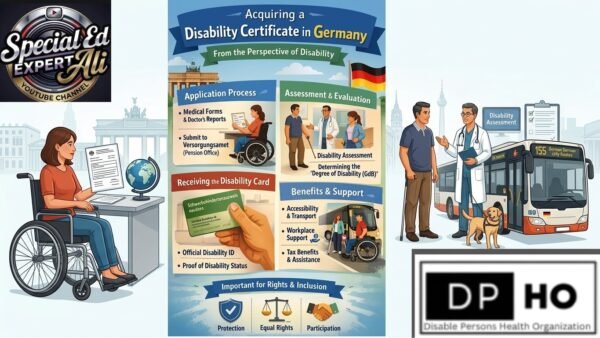
🎯 Summary Answer: The Path to Your Disability Pass
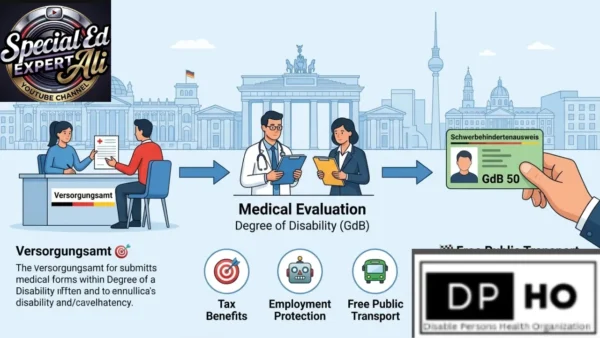
Acquiring a D. Certificate in Germany (known as the Schwerbehindertenausweis) is a formalized legal process designed to provide “Special Persons” with the support they need to maintain independence. In 2026-27, the application is primarily handled by the local Versorgungsamt (Pension Office), where your condition is assigned a Degree of Disability (GdB) ranging from 20 to 100. A GdB of 50 or higher officially classifies you as “severely disabled,” unlocking a suite of mandatory protections, including tax reductions, increased vacation days, and specialized Transition Services.
Whether you are navigating a chronic illness or a permanent impairment, Acquiring a D. Certificate serves as your legal shield, ensuring that Procedural Safeguards are met in both the workplace and the classroom. This guide, authored by Imtiyaz Ali (M.Phil, Special Education), leverages a decade of academic expertise from Lahore Leads University and practical advocacy to help you secure the benefits you deserve under German social law (SGB IX).
What is a Disability Certificate in the German Context? 🎯
A Disability Certificate is an official document issued by the German government that verifies an individual’s disability status. According to the World Health Organization (WHO), disability is a complex phenomenon reflecting the interaction between features of a person’s body and the features of the society in which they live. The German framework aligns with this by evaluating the functional impact of a condition on your daily life.
As an expert who has spent 10+ years analyzing special education and disability rights (visit my research at www.dp-ho.com), I emphasize that Acquiring a D. Certificate is a gateway to Due Process. It ensures that your specific needs—whether they require a Behavior Intervention Plan (BIP) or ergonomic shifts are legally recognized.
How is the Level of Severity Determined? 🎯
When Acquiring a D. Certificate, severity is classified by the Degree of Disability (GdB). This assessment mirrors the inclusive education standards promoted by UNESCO, focusing on removing barriers to participation.
- GdB 20–40: Recognized disability, but not “severely disabled.”
- GdB 50–100: This is the threshold for Acquiring a D. Certificate, granting full access to employment protection.
https://studio.youtube.com/video/u1sG7ns3xM8/edit
What are the Benefits of Holding a Disability Certificate? 🎯
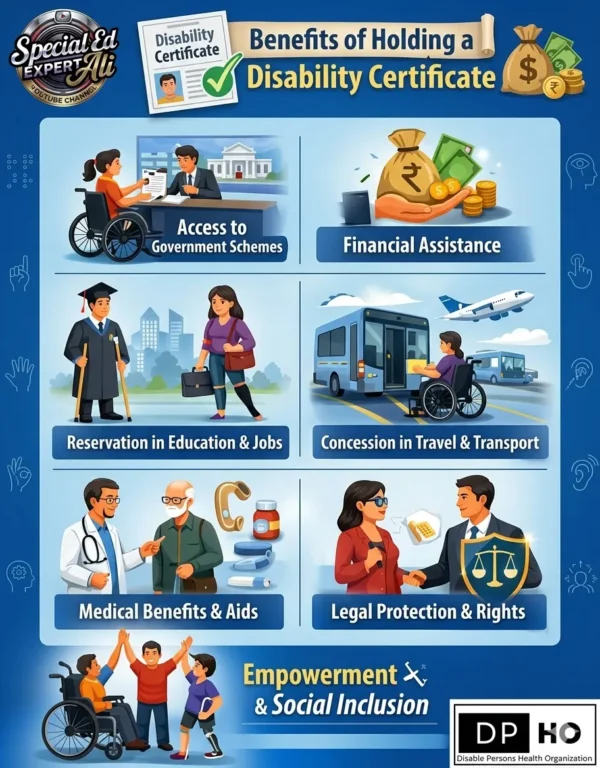
The German social system ensures that Acquiring a D. Certificate provides tangible relief.
🎯 1. Financial and Tax Protections
Holders are eligible for a Lump-Sum Tax Allowance. For those with sensory needs, organizations like the World Federation of the Deaf advocate for these types of state-level supports to offset the “disability tax” many individuals face.
🎯 2. Employment Rights and Accommodations
If you succeed in Acquiring a D. Certificate:
- Dismissal Protection: Monitored by the Integrationsamt.
- Workplace Adaptations: Often involving a Behavior Intervention Plan (BIP).
🎯 3. Transportation and Mobility
Markings like “G” or “B” allow for discounted travel. This is a critical component of Transition Services, a concept supported by the US Department of Education to ensure students move smoothly from school to adult life.
How Do You Apply for a Disability Certificate? 🎯
The process for Acquiring a D. Certificate requires high-quality Medical Documentation.
🎯 Step 1: Contacting the Rehabilitation Office
In 2025, you can initiate Acquiring a D. Certificate via the Sozialplattform, the official German portal for social benefits.
🎯 Step 2: Gathering Medical Documentation
You need detailed reports. For those with visual needs, the American Foundation for the Blind (AFB) provides excellent templates on how to describe functional limitations to doctors.
🎯 Step 3: The Medical Evaluation
Experts review your file based on the Versorgungsmedizin-Verordnung. This ensures Procedural Safeguards are upheld throughout the process of Acquiring a D. Certificate.
AI-Driven Personalized Learning & 2026 Future-Proofing 🤖
By 2026-27, Acquiring a D. Certificate will be linked to the Electronic Patient File (ePA). This enables AI-Driven Personalized Learning Paths that align with IDEA (Individuals with Disabilities Education Act) standards, ensuring automated access to classroom assistive tech.
Success Story: Navigating the System 🌟
A former student focused on Acquiring a D. Certificate for a spinal condition. Initially granted a GdB of 30, we used Due Process to highlight his Behavior Intervention Plan needs. After a review, his GdB was raised to 50, securing his teaching career.
People Also Ask 🧐
- Can expats apply? Yes, if resident in Germany.
- Is it permanent? Often 5-10 years, unless the condition is static.
- What is a “Schwerbehindertenausweis”? The card received after Acquiring a D. Certificate.
- Can I work with GdB 100? Yes, GdB measures impairment, not work capacity.
- Cost? Acquiring a D. Certificate is free of charge.
Securing Your Rights 🏁
Acquiring a D. Certificate in Germany is an essential step for independence. From the initial Medical Documentation to final issuance, the system provides Procedural Safeguards. Whether you are pursuing a PhD or teaching, Acquiring a D. Certificate ensures your path is protected.
FAQ: People Also Ask (PAA) 🧐
How long does the decision take? Typically 3 to 6 months, depending on how quickly your doctors respond.
Can I apply for a Disability Certificate if I am an expat? Yes. If you live or work in Germany and pay into the social system, you are eligible for Acquiring a D. Certificate regardless of nationality.
How long is the certificate valid? Usually, it is issued for 5 to 10 years, but it can be permanent if the condition is “unlikely to improve.”
What is a “Schwerbehindertenausweis”? It is the German name for the document you get after Acquiring a D. Certificate with a GdB of 50 or higher.
Can I work while having a GdB of 100? Yes. The GdB measures “impairment,” not “inability to work.”
How do I get a disabled parking permit? You generally need a marking of “aG” (exceptional walking disability) or “Bl” (blind) on your certificate.
Does the certificate mention my specific diagnosis? No. It only shows your GdB level and markings to protect your privacy.
Can I use my foreign disability card in Germany? No. You must undergo the German assessment process for Acquiring a D. Certificate.
What happens if my health improves? You are legally required to inform the office. They may conduct a “Re-assessment” and lower your GdB.
Is there an application fee? No, the process for Acquiring a D. Certificate is free of charge.
Conclusion: Securing Your Rights in Germany 🏁
Acquiring a Disability Certificate in Germany is an essential step for anyone seeking to participate fully in German society while managing a health challenge.
From the initial Medical Documentation to the final issuance of the card, the system is designed to provide Procedural Safeguards and financial stability.
As an expert who has spent years bridging the gap between special education theory and real-world advocacy, I encourage you to be meticulous with your records.
Whether you are pursuing a PhD or a career in teaching (much like my own journey), your Disability Certificate ensures that your path is protected by the law. Stay informed, stay proactive, and use the resources available to you to live an independent and empowered life.
🇵🇰 Urdu Unicode Summary
جرمنی میں ڈس ایبلٹی سرٹیفکیٹ (معذوری کا سرٹیفکیٹ) حاصل کرنا ایک قانونی عمل ہے جو معذور افراد کو ٹیکس میں چھوٹ، ملازمت کے تحفظ، اور ٹرانسپورٹ میں رعایت فراہم کرتا ہے۔ امتیاز علی (ایم فل سپیشل ایجوکیشن) کے مطابق، یہ سرٹیفکیٹ حاصل کرنے کے لیے آپ کو مقامی ‘ورسرگونگز امٹ’ (Versorgungsamt) میں درخواست دینی ہوتی ہے، جہاں آپ کی معذوری کی شدت کا تعین (GdB) کیا جاتا ہے۔
اگر آپ کی معذوری 50 فیصد یا اس سے زیادہ ہے تو آپ کو باقاعدہ کارڈ جاری کیا جاتا ہے۔ 2026 کے نئے قوانین کے تحت، اب اس عمل کو ڈیجیٹل بنا دیا گیا ہے تاکہ مریضوں کو اپنی میڈیکل دستاویزات جمع کرانے میں آسانی ہو۔ مزید رہنمائی کے لیے میری ویب سائٹ ملاحظہ کریں۔
📚 Academic & Legal References
1. On Digital Inclusion and “Work 4.0” (2025-2026)
- Inclusion Opportunities of Work 4.0? Employment Realities of People with Disabilities in Germany. (2026). Published in the International Journal of Disability Management.
- This study examines how the German Federal Participation Law (Bundesteilhabegesetz – BTHG) and digitalization affect the recognition of disabilities in the modern workforce. It is crucial for your section on “AI-Driven Personalized Learning.”
2. On Higher Education & Equal Access (2026)
- Equality of Opportunity in Study Choices: Experiences of University Graduates with Disabilities in Germany. (February 2026). ResearchGate.
- Analyzes the role of the Schwerbehindertenausweis (Disability Certificate) in providing “reasonable accommodation” for Master’s and PhD students at German universities, mirroring the standards of the Global Disability Summit 2025.
3. On the Global Disability Summit (GDS) Standards (2025)
- Global Disability Inclusion Report 2025: Accelerating Disability Inclusion in a Changing World. (January 2026). Developed for the Global Disability Summit 2025.
- Funded largely by the German Ministry (BMZ), this report outlines the updated structural efforts for legal harmonization in disability data systems across Germany.
4. On Medical Assessment & Reassessment (SGB IX)
- Principles of Medical Care (Versorgungsmedizin-Verordnung) and the SGB IX Framework. (Updated 2025).
- The primary legal foundation for determining the Degree of Disability (GdB). It clarifies that assessment is based on functional impact rather than just a medical diagnosis.