
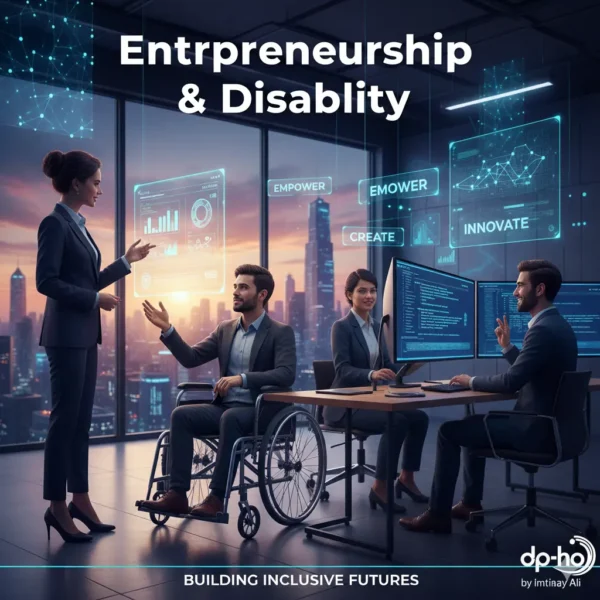
Entrepreneurship & Disability
Explore Entrepreneurship & Disability with 10 proven strategies for 2026-27. Imtiyaz Ali provides a guide to building a global inclusive business and success.
Vestibular Dysfunction: The Comprehensive 2027 Guide to Balance Disorders
Vestibular Dysfunction remains one of the most challenging “invisible disabilities” in the modern world. Whether you are navigating the workplace in the USA or the educational landscape in Saudi Arabia, understanding the mechanics of balance is the first step toward recovery and advocacy.
1. What is Vestibular Dysfunction?
Vestibular Dysfunction occurs when the sensory system in the inner ear fails to send accurate signals to the brain about head position and spatial orientation. This results in a persistent feeling of being “off-balance.”
Common Triggers and Symptoms:
- Vertigo: A spinning sensation often triggered by rapid head movement.
- Oscillopsia: The illusion that the environment is jumping or blurred.
- Cognitive Fatigue: Often called “Brain Fog,” where the dimaag exhausts itself trying to maintain balance.
2. Navigating Disability Rights in 2026-27
For my readers, it is crucial to know that Vestibular Dysfunction is recognized under major disability frameworks (like the ADA). However, because it is an internal condition, medical documentation is your strongest tool.
Essential Diagnostic Evidence:
To secure accommodations, I recommend ensuring your medical file includes:
- VNG/ENG Results: Objective data on eye-tracking and inner ear response.
- VEMP Reports: Testing the integrity of the vestibular nerve.
- Functional Capacity Evaluation: Proving how dizziness limits your ability to work or study.
3. Vestibular Rehabilitation Therapy (VRT)
The most effective treatment for Vestibular Dysfunction is Vestibular Rehabilitation Therapy (VRT). This specialized physical therapy leverages neuroplasticity to “re-calibrate” the brain.
- Habituation Exercises: Safely exposing the brain to dizziness-inducing movements to reduce sensitivity.
- Gaze Stabilization: Exercises designed to improve vision during head movement.
- Balance Training: Using unstable surfaces (like the balance board in our recent image) to strengthen proprioception.
4. Modern Workplace Accommodations
As we align with Vision 2030 and global standards, workplaces must adapt for those with Vestibular Dysfunction.
- Lighting Control: Anti-flicker LED technology is a “Reasonable Accommodation.”
- Aural Environment: Reducing sudden loud noises that can trigger Ménière’s episodes.
- Hybrid Schedules: Allowing for remote work during high-symptom days.
The New Frontier: Masterclass in Entrepreneurship & Disability
In a world that often measures capability through a narrow lens, a quiet revolution is taking place. At the helm are masters of adaptation and resilience. To view disability as an obstacle to success is to miss a profound truth: for many, the intersection of Entrepreneurship & Disability is the very crucible in which the spirit of innovation is forged.
I. The Entrepreneurial Mindset: Forged in Challenge
The traditional image of an entrepreneur is a visionary who sees opportunities where others see none. For those navigating Entrepreneurship & Disability, these traits are not just business skills; they are daily life skills.
A Paradigm Shift: From Patient to Pioneer
Society frequently casts individuals with disabilities in a passive role. Embracing Entrepreneurship & Disability requires a deliberate shift in identity—from being a consumer of solutions to being the creator of them. Entrepreneurs in this space reject the “soft bigotry of low expectations” and set ambitious, uniquely driven goals.
Inherent Resilience and Grit
In the realm of Entrepreneurship & Disability, grit is a prerequisite. Navigating inaccessible systems or bureaucratic hurdles builds a level of emotional fortitude that is extraordinary. A startup’s setback pales in comparison to the daily resilience required to navigate a world that wasn’t built for you.
Empathy as a Business Superpower
The most successful ventures in Entrepreneurship & Disability solve genuine human problems. This “empathy advantage” is a powerful market research tool, enabling the design of products that are not just accessible but are universally better, more intuitive, and human-centered.
II. What Drives Entrepreneurship & Disability?
The motivations for this path are often layered with a unique sense of urgency. For many, choosing Entrepreneurship & Disability is a strategic life choice rather than just a career move.
The Quest for Autonomy and Flexibility
The traditional 9-to-5 workday can be a significant barrier. Entrepreneurship & Disability allows for the creation of a workspace that is perfectly adapted. This flexibility is a necessity that enables productivity without fighting against an inflexible system.
Financial Independence and Security
The disability employment gap is a harsh global reality. Entrepreneurship & Disability offers a way to bypass the gatekeepers of traditional employment the biased recruiters and inaccessible workplaces—to build direct wealth and security.
Purpose-Driven Ventures: Solving Known Problems
Many successful businesses within the Entrepreneurship & Disability niche are born from lived experience rather than abstract analysis. By focusing on Entrepreneurship & Disability, founders can create solutions that truly resonate with the community:
- Adaptive Clothing Lines: A prime example of Entrepreneurship & Disability in action, where designers with mobility issues create garments for both style and function.
- Accessible Tech Apps: Innovative Entrepreneurship & Disability projects developed by visually impaired programmers to ensure better navigation for all.
- Inclusive Consulting: Consulting firms specializing in Entrepreneurship & Disability founded by professionals to help companies create genuinely accessible and inclusive workplaces.
This intrinsic motivation to make a tangible difference in the lives of others is a powerful driver that can sustain an entrepreneur through the most challenging periods of their business journey.
A Platform for Advocacy and Representation
For many, entrepreneurship is a form of activism. A successful business led by a person with a disability is a powerful statement.
III. Navigating the Gauntlet: Acknowledging and Overcoming Barriers
To romanticize the journey would be a disservice. Acknowledging these barriers is the first step to dismantling them.
Societal and Attitudinal Barriers
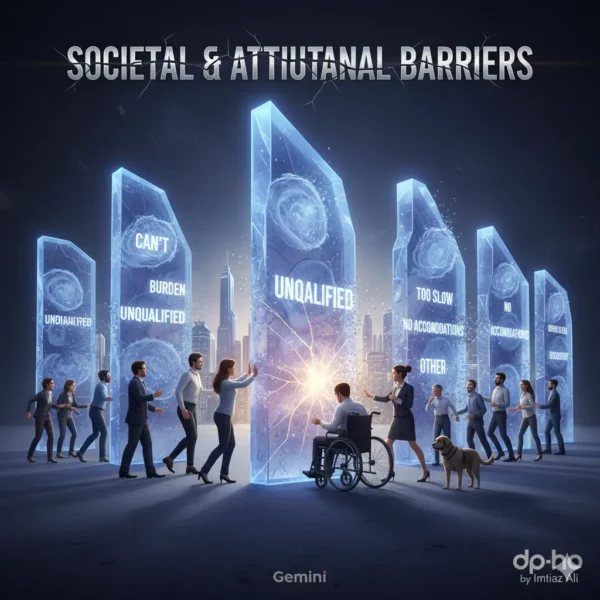
Breaking the Glass Ceiling of Prejudice
In the world of Entrepreneurship & Disability, the hardest walls to climb are not physical—they are the invisible, yet rigid, societal and attitudinal barriers that label us before they even know us. Every “Unqualified” or “Too Slow” tag is a glass pane designed to limit our potential. But as an entrepreneur, your grit is the hammer. When we choose to innovate despite these prejudices, we don’t just build businesses; we shatter the misconceptions of a generation. We prove that inclusion isn’t a favor—it’s a competitive advantage that the world can no longer afford to ignore.Perhaps the most significant hurdle is the pervasive and often unconscious bias that exists in society. This can manifest in many ways:
- Low Expectations: Potential investors, partners, and even customers may doubt their ability to run a successful business.
- Inspiration Porn: The tendency to be seen as an object of inspiration rather than as a serious business professional.
- Pity and Patronage: Being treated with condescension rather than respect.
It means demanding to be judged on the merit of the business plan, not on the nature of the disability.
Access to Capital: The Funding Gap
Securing startup funding is difficult for any entrepreneur. Venture capitalists and loan officers may harbor conscious or unconscious biases, viewing disability as a risk factor. They may question the entrepreneur’s stamina, their ability to lead a team, or the market potential of a product designed for the disability community.
Strategies to overcome this include:
- Over-preparation: Presenting an impeccably researched and data-driven business plan.
- Building a Strong Network: Leveraging mentors and advocates who can make warm introductions to investors.
- Seeking Alternative Funding: Exploring grants, competitions, and government programs specifically for entrepreneurs with disabilities.
- Highlighting the “Disability Advantage”: Framing their unique perspective as a competitive edge and deep market insight.
Systemic and Logistical Hurdles
The world is still rife with systemic barriers. Inaccessible meeting spaces, websites that are not screen-reader friendly, and complex bureaucratic processes for accessing support services can consume valuable time and energy that could be better spent on the business. Successful entrepreneurs with disabilities become masters of delegation and assertive communication, clearly stating their access needs and insisting on their right to a level playing field.
IV. The Global Stage: International Personalities as Beacons of Inspiration
The power of seeing someone like you succeed cannot be overstated. For an aspiring entrepreneur with a disability, global figures who have achieved greatness not in spite of, but often because of, their unique perspective are powerful beacons of possibility.
Titans of Industry with Invisible Disabilities
- Sir Richard Branson (Dyslexia): The founder of the Virgin Group is perhaps one of the most famous entrepreneurs with dyslexia. Branson has often stated that his dyslexia gave him a different way of thinking.
- Ingvar Kamprad (Dyslexia): The late founder of IKEA struggled with dyslexia his entire life. His difficulty with names and numbers led him to give his products simple, memorable Swedish names.IKEA’s entire business model—simplicity, efficiency, and accessibility for the masses—can be seen as a direct outgrowth of his dyslexic thinking.
Icons of Creativity and Resilience in Entrepreneurship & Disability
The history of Entrepreneurship & Disability is defined by individuals who turned physical challenges into iconic personal brands.
- Frida Kahlo (Physical Disabilities): While primarily known as an artist, Frida was a masterful entrepreneur of her own image. She didn’t hide her medical braces; she transformed them into a brand. For anyone exploring Entrepreneurship & Disability, Frida serves as a reminder that your unique perspective is your greatest asset.
- Sudha Chandran (Amputee): After losing her leg, she used a prosthetic “Jaipur foot” to return to the stage. Her journey is a testament to how resilience in disability-led businesses can overcome any physical barrier.
Voices of a Generation: Modern Influencers and Advocates
Modern leaders are proving that Entrepreneurship & Disability is a powerhouse of economic growth.
- Nick Vujicic (Tetra-amelia syndrome): Born without limbs, Nick is the CEO of his own global brand. He exemplifies how disability leadership can inspire millions while building a sustainable, high-revenue business model.
- Marlee Matlin (Deafness): As a formidable force in Hollywood, she advocates for inclusive entrepreneurship and accessibility in the media industry.
Building Your Own Path: Fostering an Ecosystem of Success
While individual grit is essential, success in Entrepreneurship & Disability requires a supportive ecosystem and access to capital.
The Crucial Role of Mentorship and Venture Capital
Finding a mentor who understands the unique challenges of Entrepreneurship & Disability is a game-changer. Beyond mentorship, seeking venture capital for disabled founders and high-level sponsorship can open doors to funding and partnerships that are often inaccessible.
Harnessing the Power of Community and Networks
Isolation can be a hurdle. Organizations like Disability:IN in the US provide Disability-Owned Business Enterprise (DOBE) certification, which helps entrepreneurs access massive procurement opportunities and corporate contracts.
Leveraging Assistive Technology and AI Tools
In 2026-27, assistive technology for entrepreneurs is the ultimate equalizer. From AI-driven voice-to-text for those with motor impairments to screen readers for the visually impaired, technology ensures that Entrepreneurship & Disability knows no bounds.
Government and Non-Profit Support Systems
To scale your disability-owned business, leverage these high-value resources:
- Small Business Grants for People with Disabilities: Non-dilutive funding to kickstart your dream.
- Low-interest SBA Loans: Specialized financial products for inclusive startups.
- Government Procurement Programs: Preference-based bidding for disability-certified firms.
Conclusion: The Future is Accessible and Entrepreneurial
The rise of Entrepreneurship & Disability is more than just an economic trend; it is a global cultural shift toward true inclusion.
To any person with a disability harboring an entrepreneurial dream, the message is clear: Your perspective is your power. Step forward not just as a person with a disability, but as a visionary entrepreneur ready to disrupt the global market. The future is being built by those who see obstacles as opportunities.se who know what it truly means to be resilient, resourceful, and revolutionary.
FAQs:- regarding Entrepreneurship with a Disability:
Q1: What is the best business for someone with a disability? Ans: Service-based digital businesses, such as digital marketing, consulting, or e-commerce (dropshipping), are often ideal. These allow for a flexible schedule and the use of assistive technology to manage operations from home.
Q2: Are there specific grants for “Entrepreneurship & Disability”? Ans: Yes, in the US, organizations like the SBA (Small Business Administration) and private foundations offer dedicated small business grants for disabled founders. Always look for “Disability-Owned Business Enterprise (DOBE)” certifications to unlock these opportunities.
Q3: How can I start a business with a vestibular disability? Ans: Focus on “low-stimulus” environments and remote work models. Leveraging asynchronous communication (emails/messaging) instead of constant video calls can help manage vertigo and fatigue associated with vestibular dysfunction.
Q4: What is the #DisabilityPound or Purple Pound? Ans: It refers to the combined spending power of disabled people and their families. In the UK and globally, this is a multi-billion dollar market. Tapping into this through inclusive entrepreneurship is both a social good and a smart business move.
Q5: Can I get a business loan if I am on disability benefits? Ans: Yes, but it is crucial to consult with a financial advisor regarding “Asset Limits.” Many entrepreneurs use specialized programs like “PASS” (Plan to Achieve Self-Support) in the USA to save business capital without losing essential benefits.
6. Q: Should I disclose my disability when seeking investment or clients?A: The decision to disclose is personal. Focus on your business’s strengths and value proposition. If relevant to your business or if you feel comfortable, you can share.
7. Q: What kind of businesses are well-suited for disabled entrepreneurs?A: Any business can be suitable! However, some find success in fields like consulting, online services, accessible product development, or businesses that leverage their unique insights.
8. Q: How can I overcome accessibility barriers in my business?A: Modern technology offers many solutions. Consider remote work, accessible website design, assistive technologies, and seeking advice from accessibility experts.
9. Q: Is mentorship important for disabled entrepreneurs? A: Yes, mentorship is invaluable. Connecting with experienced entrepreneurs, especially those who understand disability, can provide guidance and support.
10. Q: Where can I find support networks for disabled entrepreneurs? A: Look for local disability organizations, entrepreneurship centers, online forums, and professional networking groups focused on disability inclusion or entrepreneurship.
Author Bio & Brand Authority
Author: I am Imtiyaz Ali, an M.Phil in Special Education. With over 10 years of professional experience, I lead the Special Ed Authority platform. My mission at www.dp-ho.com is to provide evidence-based resources for individuals dealing with Vestibular Dysfunction and other sensory disabilities.