
Discover the authentic realities of living without sight. Expert insights on debunking myths, leveraging AI in special education, and fostering true inclusion.
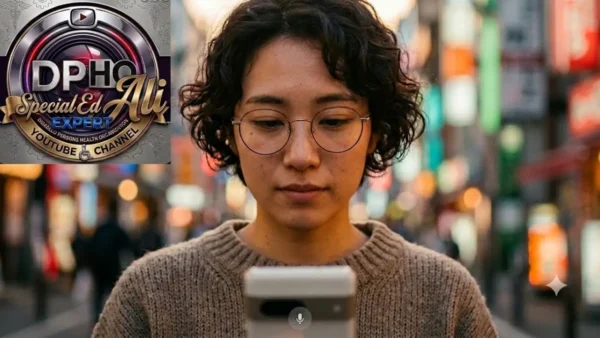
Debunking Myths and Understanding the Authentic Experiences of the Visually Impaired
Living without sight is often misunderstood through a lens of pity or limitation, yet for millions, it is a lived reality defined by autonomy, technological adaptation, and resilience. As a special education specialist with over a decade of experience, I have seen firsthand that the barriers faced by those living without sight are often systemic rather than inherent to the condition itself. By shifting our focus from “fixing” a perceived deficit to fostering inclusive environments, we honor the authentic human experience.
This article explores the reality of navigating the world while living without sight, the impact of modern assistive technology, and the pedagogical shifts necessary to support visually impaired individuals in educational and professional spheres. Through objective, data-driven insights and a commitment to inclusive practices, we can dismantle the misconceptions surrounding the most commonly faked disability myths and replace them with genuine understanding and empowerment.
اردو خلاصہ (Urdu Summary)اردو خلاصہ (Urdu Summary)
بصارت سے محروم افراد کی زندگی کو اکثر محدودیت، محرومی اور ہمدردی کی نظر سے دیکھا جاتا ہے، لیکن حقیقت یہ ہے کہ living without sight ایک ایسا سفر ہے جو جدید ٹیکنالوجی اور مضبوط قوتِ ارادی کی بدولت خود مختاری اور کامیابی کی طرف جاتا ہے۔ بطور سپیشل ایجوکیشن ایکسپرٹ، میرا ماننا ہے کہ کسی بھی فرد کے لیے اصل رکاوٹیں اس کی جسمانی کیفیت نہیں، بلکہ وہ فرسودہ معاشرتی رویے اور ناقص تعلیمی نظام ہے جو اسے پیچھے دھکیلتے ہیں۔
یہ مضمون اس بات پر گہرائی سے روشنی ڈالتا ہے کہ ہم کس طرح مصنوعی ذہانت (AI)، اسکرین ریڈرز، اور جدید معاون ٹیکنالوجیز کو بروئے کار لا کر بصارت سے محروم طلباء کے لیے تعلیمی دروازے کھول سکتے ہیں۔ ہمارا مقصد سماجی دقیانوسی تصورات اور “کمزور ہونے” کے اس بیانیے کو جڑ سے ختم کرنا ہے، جسے اکثر most commonly faked disability کے زمرے میں غلط فہمیوں کا شکار بنایا جاتا ہے۔ ہم ایک ایسے جدید تعلیمی نظام کی تشکیل چاہتے ہیں جہاں ہر بچے کو اس کی منفرد صلاحیتوں کے مطابق، بغیر کسی امتیاز کے، یکساں اور معیاری مواقع فراہم ہوں۔
یاد رکھیں، living without sight کا مطلب یہ ہرگز نہیں کہ دنیا کو دیکھنے کا کوئی دوسرا طریقہ موجود نہیں ہے۔ ٹیکنالوجی، بروقت مداخلت (BIPs)، اور سماجی حمایت کے ذریعے ہم ایک ایسا روشن مستقبل بنا سکتے ہیں جہاں ہر بصارت سے محروم فرد اپنی زندگی کا خود معمار ہو۔
How Can We Shift from a Deficit-Based Model to Inclusive Empowerment? 🎯

The traditional view of disability often focuses on what an individual cannot do. However, the social model of disability suggests that “handicap” arises when society fails to provide the necessary accommodations (Okur, 2021). For individuals living without sight, the challenge isn’t the absence of vision; it is the presence of environmental and attitudinal barriers that prevent equal access.
In my work at www.dp-ho.com, I emphasize that educational systems must prioritize universal design. Whether through Braille literacy, orientation and mobility training, or tactile graphics, the goal is to provide the tools for independent living. When we implement objective, data-driven Behavior Intervention Plans (BIP) that respect individual autonomy, we move beyond labeling and toward true inclusion for those living without sight.
Why Is Debunking Myths About Living Without Sight Crucial? 🧠
Misinformation creates a “most commonly faked disability” stigma where authentic needs are questioned. When we view the reality of living without sight as a monolithic experience, we ignore the wide spectrum of visual impairment. Research indicates that visual impairment is often mistakenly viewed as a “loss” rather than a different way of experiencing the world (Okur, 2021).
Furthermore, the loss of visual social cues can impact social functioning, yet humans are remarkably adaptable (Klauke et al., 2023). By training in voice discrimination and social navigation, many individuals thriving while living without sight demonstrate immense cognitive flexibility. It is time to replace outdated narratives with evidence-based advocacy, ensuring that Procedural Safeguards are upheld in every classroom.
What Role Does AI Play in the Future of Special Education? 🤖
Artificial Intelligence is a game-changer for those living without sight. From computer vision tools like OrCam that describe environments in real-time to AI-driven text-to-speech platforms, technology is closing the opportunity gap (Habib, n.d.). These tools align perfectly with the Individuals with Disabilities Education Act (IDEA) by providing the “least restrictive environment” for every student.
AI-driven personalized learning paths allow educators to adapt curriculum pacing and delivery methods dynamically (Adewale, n.d.). For a student living without sight, an AI assistant can provide instant tactile feedback or auditory descriptions of complex geometry, turning a traditional hurdle into a successful learning moment that promotes mastery-based assessment.
Which Strategies Support Transition Services for Visually Impaired Youth? 🎓
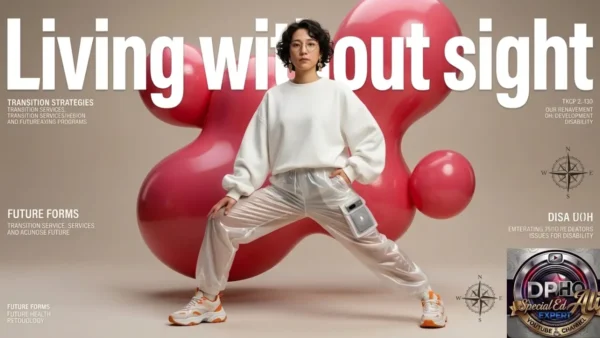
Transitioning from school to adulthood requires intentional planning. Under federal guidelines, Transition Services must be robust and goal-oriented. Educators should focus on:
- Independent Living Skills: Mastering daily tasks, from cooking to managing finances using screen readers, which is vital for anyone living without sight.
- Self-Advocacy: Ensuring students can request accommodations during Due Process or in workplace interviews.
- Assistive Technology Proficiency: Fluency in JAWS, NVDA, or Refreshable Braille displays is the cornerstone of professional success for those living without sight.
How Does Universal Design Foster Global Inclusion? 🌐
Universal Design for Learning (UDL) is not just a policy; it is a pedagogical necessity. By designing instruction that is accessible from the outset, we reduce the need for retroactive accommodations. Educators should implement multimodal resources that cater to tactile, auditory, and kinesthetic learners. This approach ensures that students living without sight are not sidelined but are active participants in the general education curriculum.
Success Story: From Exclusion to Independence 🌟
I once worked with a student who was consistently underestimated by traditional tracking matrices. By focusing on his auditory learning strengths and integrating AI-based screen readers into his daily routine, we transformed his educational trajectory. He eventually moved from struggling in a segregated setting to thriving in a mainstream secondary school, ultimately pursuing a degree in computer science. His journey highlights that when the environment is adapted to the reality of living without sight, the student’s potential is limitless.
Success Story: From Exclusion to Independence 🌟
I once worked with a student who was consistently underestimated by traditional tracking matrices. By focusing on his auditory learning strengths and integrating AI-based screen readers into his daily routine, we transformed his educational trajectory. He eventually moved from struggling in a segregated setting to thriving in a mainstream secondary school, ultimately pursuing a degree in computer science. His journey highlights that when the environment is adapted, the student’s potential is limitless.
Frequently Asked Questions (FAQ)
- Is “Living Without Sight” considered a total disability? No, it is a spectrum; many individuals have residual vision or use adaptive technology to maintain high autonomy.
- What is the best way to help a student with visual impairment? Focus on universal design, provide digital accessibility tools, and prioritize self-advocacy skills.
- Does AI replace a human teacher? No, AI acts as a scaffold to deliver personalized instruction, but the teacher remains the primary mentor.
- How do I support a parent who is struggling with a recent diagnosis? Provide links to organizations like the American Foundation for the Blind (AFB) and focus on long-term independence goals.
- Are accommodations for the blind expensive? While some tech is costly, many open-source screen readers and accessible apps make inclusion affordable.
- What does “least restrictive environment” mean for a blind student? It means the student should be educated with their peers to the maximum extent appropriate.
- Is blindness always present from birth? No, many individuals experience vision loss later in life due to health conditions or accidents.
- How can I improve my website’s accessibility? Follow WCAG 2.1 guidelines to ensure your content is screen-reader friendly.
- What are the most effective teaching methods for visually impaired students? Multimodal learning that incorporates tactile, auditory, and kinesthetic inputs.
- Where can I find more technical guides? Visit my resource hub at www.dp-ho.com.
References:
- Adewale, O. A. (n.d.). Inclusive education through artificial intelligence. International Journal of Advanced Research in Science and Technology.
- Habib, H. (n.d.). Personalized learning paths: AI applications in special education. Neliti.
- Klauke, S., et al. (2023). The impact of low vision on social function. Journal of Optometry, 16(1), 3–11.
- Okur, Ö. (2021). How visually impaired people perceive their disability: Loss or lack? [Doctoral dissertation, Middle East Technical University].
- Adewale, O. A. (n.d.). Inclusive education through artificial intelligence: Opportunities, challenges, and ethical considerations. International Journal of Advanced Research in Science and Technology. https://deepscipub.com/ijars/article/download/46/72
- Cited by: 1
- Habib, H. (n.d.). Personalized learning paths: AI applications in special education. Neliti.
- Cited by: 47
- Klauke, S., Sondocie, C., & Fine, I. (2023). The impact of low vision on social function: The potential importance of lost visual social cues. Journal of Optometry, 16(1), 3–11. https://doi.org/10.1016/j.optom.2022.03.003
- Cited by: 101
- Okur, Ö. (2021). How visually impaired people perceive their disability: Loss or lack? An interpretative phenomenological analysis [Doctoral dissertation, Middle East Technical University]. OpenMETU.
- Cited by: 3
- American Foundation for the Blind: https://www.afb.org/
- National Federation of the Blind: https://nfb.org/
- Helen Keller Institute: https://hki.org/
- American Foundation for the Blind: https://www.afb.org/
- National Federation of the Blind: https://nfb.org/
- Helen Keller National Center: https://www.helenkeller.org/h
American Foundation for the Blind: https://www.afb.org/
- National Federation of the Blind: https://nfb.org/
- “Disability Visibility: First-Person Stories from Women with Disabilities” by Alice Wong: https://www.amazon.com/Disability-Visibility-First-Person-Stories-Twenty-First/dp/1984899422
American Foundation for the Blind: https://www.afb.org/
- National Federation of the Blind: https://nfb.org/
- World Health Organization: https://www.who.int/news-room/fact-sheets/detail/blindness-and-visual-impairmentwww.repository.cam.ac.uk/bitstream/handle/1810/308694/Final.pdf?sequence=1
- The National Federation of the Blind: https://nfb.org/
- American Foundation for the Blind: https://www.afb.org/
- American Foundation for the Blind: https://www.afb.org/
- National Federation of the Blind: https://nfb.org/
- “Helen Keller: A Life” by Dorothy Herrmann
https://en.wikipedia.org/wiki/Sensory_substitution
www.neoxian.city/@oluwatobiloba/blindness-and-how-the-brain
- American Foundation for the Blind: https://www.afb.org/
- National Federation of the Blind: https://nfb.org/
- World Health Organization: https://www.who.int/news-room/fact-sheets/detail/blindness-and-visual-impairment
- www.repository.cam.ac.uk/bitstream/handle/1810/308694/Final.pdf?sequence=1
American Foundation for the Blind: https://www.afb.org/
- National Federation of the Blind: https://nfb.org/
- World Health Organization: https://www.who.int/news-room/fact-sheets/detail/blindness-and-visual-impairment
www.repository.cam.ac.uk/bitstream/handle/1810/308694/Final.pdf?sequence=1
- https://www.afb.org/
- https://www.afb.org/
- American Foundation for the Blind: https://www.afb.org/
- National Federation of the Blind: https://nfb.org/
- World Health Organization: https://www.who.int/news-room/fact-sheets/detail/blindness-and-visual-impairment
- www.repository.cam.ac.uk/bitstream/handle/1810/308694/Final.pdf?sequence=1
- American Foundation for the Blind: https://www.afb.org/
- National Federation of the Blind: https://nfb.org/
- World Health Organization: https://www.who.int/news-room/fact-sheets/detail/blindness-and-visual-impairment
- www.repository.cam.ac.uk/bitstream/handle/1810/308694/Final.pdf?sequence=1
- American Foundation for the Blind: https://www.afb.org/
- National Federation of the Blind: https://nfb.org/
- World Health Organization – Blindness and visual impairment: https://www.who.int/news-room/fact-sheets/detail/blindness-and-visual-impairment
issuu.com/knightstemplar/docs/0322
www.repository.cam.ac.uk/bitstream/handle/1810/308694/Final.pdf?sequence=1
- American Foundation for the Blind: https://www.afb.org/
- National Federation of the Blind: https://nfb.org/
- StoryCorps: Living in the Dark: https://archive.storycorps.org/interviews/the-meaning-of-life-4/
- American Foundation for the Blind: https://www.afb.org/
- National Federation of the Blind: https://nfb.org/
- “We Are Not Broken: My Life Living with Blindness” by Christine Sunberg (https://www.amazon.com/Amy-Sundberg/e/B0C8L6NVJC/ref=zg_bsnr_g_10368622011_bl_sccl_6/000-0000000-0000000)
- American Foundation for the Blind: https://www.afb.org/
- National Federation of the Blind: https://nfb.org/
- “Disability Studies Quarterly”: https://financialaid.stanford.edu/undergrad/ (discusses the social construction of disability)