

disabled people fast
Exemption from fasting for sick persons
🌙 Fasting & Disability: Is It Compulsory in Islam?
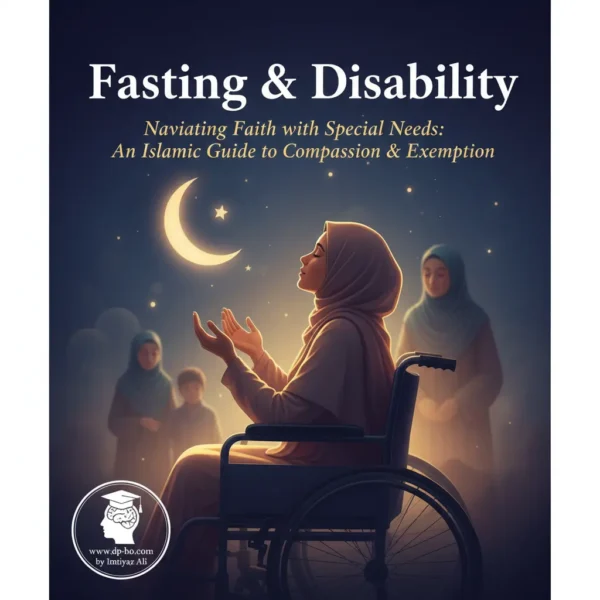
Disabled people fast. No, fasting is not compulsory for those whose disability makes it physically or mentally harmful.
The Islamic legal framework prioritizes the preservation of life and health over the performance of rituals. Here is the evidence from the primary sources:
Allah explicitly grants an exemption to those who are unwell or have physical limitations:
“And whoever is ill or on a journey, then [he may fast] an equal number of other days. Allah intends for you ease and does not intend for you hardship…” (Surah Al-Baqarah, 2:185)
For those with permanent disabilities that prevent fasting, the Quran provides the alternative of Fidya (charity):
“And upon those who are able [to fast, but with hardship] – a ransom [as substitute] of feeding a poor person [each day].” (Surah Al-Baqarah, 2:184)
2. From the Hadith
The Prophet Muhammad (peace be upon him) emphasized that religious obligations are tied to a person’s actual capacity:
- On Capacity: “If I command you to do something, then do as much of it as you can.” (Sahih Bukhari & Muslim)
- On Mental Disability: “The pen has been lifted from three [their deeds are not recorded]: …from the one who is mentally deranged until he recovers his mind.” (Sunan Abi Dawud)
- On Mercy: “Allah loves that His concessions (Rukhsah) be taken, just as He hates that acts of disobedience be committed.” (Musnad Ahmad)
Summary Table for Disability & Fasting
| Situation | Ruling | Action Required |
| Physical/Sensory Disability (e.g., Blind, Deaf) | Compulsory | Fast as normal if healthy. |
| Temporary Illness/Recovery | Exempt | Make up the days later (Qada). |
| Permanent/Chronic Condition (e.g., requiring daily meds) | Exempt | Feed one poor person per day (Fidya). |
| Profound Cognitive Disability | Exempt | No fasting or Fidya required. |
As per the recent announcement by the Council of Islamic Ideology (CII) for Ramadan 2026 in Pakistan, the rates for Fidya (the compensation for not fasting due to permanent health reasons or disability) have been updated.
Since you are in Pakistan and managing specific health conditions with daily medication, here is the breakdown of what you would need to contribute if you are unable to fast:
How does the expression of crying differ for people who are blind in 2025?
🌙 Fidya Rates for Pakistan (Ramadan 2026)
The amount of Fidya is calculated based on the cost of feeding one needy person two meals a day for each missed fast.
| Commodity | Rate Per Day (1 Fast) | Total for 30 Days |
| Wheat Flour (Regular) | Rs. 300 | Rs. 9,000 |
| Govt. Subsidized Flour | Rs. 200 | Rs. 6,000 |
| Barley (Jau) | Rs. 1,100 | Rs. 33,000 |
| Dates (Khajoor) | Rs. 1,600 | Rs. 48,000 |
| Raisins (Kishmish) | Rs. 3,800 | Rs. 114,000 |
💡 Guidance for Your Specific Case
- Medical Advice: As a person with an M.Phil and 10+ years of experience, you understand the importance of expert consultation. Because you take Normitab (25mg), Lipirex, and Amtalao (5/40) daily, along with Amelene at night, it is highly recommended that you speak with your doctor. If fasting interferes with these life-essential medications, you fall under the category of people who should pay Fidya.
- Choosing the Amount: The minimum is Rs. 300 per day (wheat). However, Islamic scholars (including Dr. Raghib Naeemi of the CII) suggest that if your financial status allows (for example, working on a BPS-16 scale), you may choose a higher category (like Barley or Dates) to provide better support to the needy.
- Recipients: You can give this money to a local needy family in Hafizabad, a reputable charity (like Edhi or Alkhidmat), or use it to feed someone directly.
🕌 Ramadan Rules: Can People with Disabilities Fast?
Yes, they can, but only if it does not harm their health. Islam emphasizes that physical fasting is secondary to the preservation of life.
Here is the concise answer based on the primary Islamic sources:
1. The Quranic Principle: Ease over Hardship
The Quran explicitly removes the burden of fasting from those who are physically or mentally unable to bear it.
“Allah intends for you ease and does not intend for you hardship.” — (Surah Al-Baqarah, 2:185)
For those with permanent disabilities or chronic illnesses (especially those requiring regular medication like your daily doses of Normitab or Amtalao), the Quran offers a clear alternative:
“And upon those who are able [to fast, but with hardship] — a ransom [as substitute] of feeding a poor person [for each day].” — (Surah Al-Baqarah, 2:184)
2. The Hadith: Capacity and Mercy
Prophetic tradition reinforces that religious duties are scaled to a person’s ability.
- On Physical Limits: The Prophet Muhammad (peace be upon him) said: “When I command you to do something, do of it as much as you are able.” — (Sahih Bukhari & Muslim)
- On the “Lifted Pen”: For those with significant cognitive or intellectual disabilities, the Prophet (peace be upon him) stated that the “pen is lifted” (meaning they are not held accountable for ritual obligations) until they regain their mental faculty. — (Sunan Abi Dawud)
Summary Checklist for Disability
| Disability Type | Can they fast? | Requirement |
| Physical/Sensory (e.g., Blind/Deaf) | Yes | If otherwise healthy. |
| Chronic Illness (Requires meds) | No/Optional | Pay Fidya (charity) instead. |
| Cognitive/Mental | No | No obligation; no penalty. |
| Temporary Flare-up | No | Make up the days later (Qada). |
- 🩺 Medical Exemptions: When Fasting Isn’t Required
In Islam, medical exemptions are not just a “permission” but are often considered a mandatory protection of the life Allah gave you.
1. The Quranic Basis
The Quran makes it clear that health takes precedence over the ritual of fasting when the two conflict:
“And do not kill yourselves [or one another]. Indeed, Allah is to you ever Merciful.” (Surah An-Nisa, 4:29)
Furthermore, the specific verse regarding Ramadan states:
“…And whoever is ill or on a journey, then [he may fast] an equal number of other days. Allah intends for you ease and does not intend for you hardship…” (Surah Al-Baqarah, 2:185)
2. The Hadith Perspective
The Prophet Muhammad (peace be upon him) taught that maintaining the body’s strength is a religious duty:
- Accepting the Concession: The Prophet (PBUH) said: “Indeed, Allah loves that His concessions (Rukhsah) be accepted, just as He hates that acts of disobedience be committed.” (Musnad Ahmad). This means if you are medically exempt, refusing to eat can actually be seen as disregarding Allah’s mercy.
- The Body’s Right: He also famously said: “Verily, your body has a right over you.” (Sahih Bukhari). This includes providing it with necessary medicine and nutrition.
3. When is Fasting Not Required?
According to Islamic scholars and medical ethics, an exemption is granted if:
- Direct Harm: Fasting will worsen a current disease or delay recovery.
- Medication Dependency: The condition requires medication at specific times during the day (such as your Amtalao or Normitab).
- Severe Weakness: Fasting causes such intense physical or mental exhaustion that the person cannot perform basic daily tasks or their health collapses.
Summary Table: Medical Scenarios
| Medical Condition | Ruling | Solution |
| Acute Illness (e.g., Fever, Infection) | Temporary Exemption | Fast later (Qada). |
| Chronic Condition (e.g., Diabetes, Heart, BP) | Permanent Exemption | Pay Fidya (charity). |
| Mental Health (e.g., Severe Depression/Anxiety) | Exempt | Depends on recovery. |
- 🤲 Disability in Islam: The Beauty of the “Fidya”
In simple terms, Fidya is a beautiful “safety net” provided by Allah for those who truly want to fast but physically cannot due to permanent disability or chronic illness.
It is a way to stay spiritually connected to Ramadan without harming your health.
📖 In the Light of the Quran
Allah says in the Quran:
“And upon those who are able [to fast, but with hardship] — a ransom [Fidya] of feeding a poor person [for each day].” (Surah Al-Baqarah, 2:184)
This verse is the foundation of Fidya. It shows that Islam is a religion of mercy. If your body is unable to bear the hunger (due to your age, disability, or a medical condition like the ones you manage with Amtalao and Lipirex), Allah accepts the act of feeding someone else as your “fast.”
📜 In the Light of Hadith
The companions of the Prophet (PBUH) applied this rule with great compassion. For example:
- Anas bin Malik (RA): When he became very old and could no longer fast, he used to gather thirty poor people and feed them meat and bread until they were full.
- The Principle of Ease: The Prophet (PBUH) said: “Religion is very easy and whoever overburdens himself in his religion will not be able to continue in that way.” (Sahih Bukhari).
✨ The “Beauty” in Simple Words
Fidya turns your limitation into a blessing for someone else.
- It removes guilt: You don’t have to feel “lesser” for not fasting; you are following a direct command of Allah to protect your health.
- It feeds the hungry: Your medical exemption becomes the reason a hungry person gets a meal.
- It keeps you included: You are still a “performer of Ibadah” (worship), just through charity instead of hunger.
- ✨ Spiritual Ramadan Without Fasting: A Guide
Even if you cannot fast for medical reasons. Islam teaches that the intention (Niyyah) is more important than the physical act. If your heart wants to fast but your body cannot, Allah records the reward for you as if you did!
Here is how you can have a beautiful Ramadan, grounded in the Quran and Hadith:
1. The Quran: A Month of “Dhikr” (Remembrance)
Ramadan is primarily the “Month of the Quran,” not just the month of hunger.
- The Verse: “The month of Ramadhan [is that] in which was revealed the Qur’an…” (Surah Al-Baqarah, 2:185).
- The Action: Spend time reading, listening to, or reflecting on the Quran. For someone with your M.Phil background, deep study of the text is a high form of worship.
2. The Hadith: Reward for the Intention
If you are prevented from an act by a valid excuse (like your health or medications), your reward is safe.
- The Prophet (PBUH) said: “When a servant [of Allah] falls ill or travels, the same reward is recorded for him as was recorded for the good deeds he used to do when he was healthy and at home.” (Sahih Bukhari).
- The Action: Be at peace. Taking your Normitab or Amtalao to stay healthy is actually an act of obedience to Allah’s command to preserve your life.
3. Focus on “Itaam al-Ta’am” (Feeding Others)
If you cannot skip meals, you can earn the reward of those who do.
- The Hadith: “Whoever feeds a fasting person will have a reward like that of the fasting person…” (Sunan al-Tirmidhi).
- The Action: Since you are working on a 16-scale job, you can use a small portion of your income to provide Iftar for someone in need in Hafizabad. You get their reward without any physical strain.
4. Constant Remembrance (Dhikr)
Worship isn’t limited to a specific time or physical state.
- The Quran: “…and remember Allah much that you may be successful.” (Surah Al-Jumu’ah, 62:10).
- The Action: Keep your tongue moist with SubhanAllah and Alhamdulillah while you work or manage your website/YouTube channel.
Here is a short, human-centered guide for these topics, strictly following the wisdom of the Quran and Hadith.
💊 Medication & Suhoor: A Special Education View
In Special Education, we know consistency is key. Islam agrees. If your life-essential meds (like those for BP or neurological stability) must be taken during the day, the Quran says: “Allah intends for you ease and does not intend for you hardship” (2:185).
- Hadith: “Your body has a right over you.” Protecting your health is a form of worship.
🧠 Cognitive Disability: Are They Obligated to Fast?
Islam is a religion of “Aql” (intellect). If someone’s cognitive disability prevents them from understanding the fast, they are exempt.
- Hadith: The Prophet (PBUH) said the “pen is lifted” (no accountability) for the one whose mind is overcome, until they recover.
🌍 Global Ramadan: Disability Inclusion in 2026
In 2026, inclusion means making mosques accessible. The Prophet (PBUH) specifically showed kindness to those with disabilities, ensuring they were never excluded from the community.
- Quran: “There is not upon the blind any guilt, nor upon the lame any guilt, nor upon the ill any guilt” (24:61).
⚖️ The Balance of Faith: Health vs. Religious Duty
Faith isn’t about suffering; it’s about obedience. If fasting makes you sicker, the “duty” shifts from fasting to protecting your life.
- Quran: “Do not throw [yourselves] with your own hands into destruction” (2:195).
🥘 Beyond Hunger: The Meaning of Fidya in Islam
If you can’t fast, you feed the poor. This keeps you connected to Ramadan’s spirit of charity.
- Quran: “And upon those who are able [to fast, but with hardship] – a ransom [as substitute] of feeding a poor person” (2:184).
📜 Islamic Jurisprudence on Special Needs Fasting
Scholars agree: capacity determines obligation. If a disability makes fasting “unbearable” (Mashaqqah), the obligation is lifted.
- Hadith: “Religion is very easy… whoever overburdens himself in his religion will not be able to continue in that way.”
🤝 Supporting Disabled Muslims During Ramadan
Inclusion is a sunnah. We must ensure those not fasting aren’t shamed.
- Hadith: “Allah has no mercy on one who has no mercy for others.” Be the support, not the judge.
♿ Physical Limits vs. Spiritual Strengths in Islam
A wheelchair or a physical limit doesn’t limit your soul. You can gain the same reward through Dhikr (remembrance) as someone fasting.
- Hadith: Actions are judged by intentions (Niyyah). If you wish you could fast but can’t, Allah records the reward for you anyway.
🧬 Genetic Conditions & Ramadan: Expert Advice
For chronic genetic issues, medical safety is the priority.
- Quran: “Allah does not burden a soul beyond that it can bear” (2:286).
🏥 Chronic Illness: Should You Fast This Year?
If your condition is stable, consult a doctor. If it’s risky, don’t.
- Hadith: “Indeed, Allah loves that His concessions (Rukhsah) be taken.” Accepting the excuse is an act of love for Allah.
🕊️ Compassion Over Hunger: The Essence of Ramadan
Ramadan is about Taqwa (God-consciousness), not just an empty stomach.
- Hadith: “He who does not give up false speech and evil deeds, Allah has no need of his leaving his food and drink.”
🥗 Nutrition for Disabled Fasting: Safe Practices
If fasting with a disability, eat “Tayyib” (pure and healthy).
- Quran: “Eat of the good things which We have provided for you” (2:172). Avoid salts/sugars that spike BP.
🚶♂️ Mobility & Metabolism: Ramadan Considerations
Reduced mobility changes how your body burns energy. Adjust your Iftar accordingly.
- Hadith: The Prophet (PBUH) advised filling the stomach with 1/3 food, 1/3 water, and 1/3 air.
🕋 Does Allah Require Fasting if You are Ill?
Simply, no. Allah is Ar-Rahman (The Most Merciful).
- Quran: “He has chosen you and has not placed upon you in the religion any difficulty” (22:78).
💡 5 Things to Know About Disability and Ramadan
- Health is an Amanah (Trust).
- Intentions matter more than actions.
- Exemption is a gift from Allah.
- Charity (Fidya) replaces the fast for the permanently ill.
- Every soul is valued equally.
FAQs
- Can I give Fidya in advance? Yes, or day by day.
- Does an injection break the fast? Nutritional injections do; medical ones usually don’t.
- What if I forget and eat? Your fast is still valid (Hadith).
- Is depression a reason to not fast? Yes, if it requires meds or causes physical breakdown.
- Can I use an inhaler? Most scholars say yes for life-saving breath.
- Can I pay Fidya to a relative? Yes, if they are truly needy and not your direct dependents.
- Does dialysis break the fast? Yes, as it involves blood filtering and fluids.
- Should I feel guilty? No, the Quran says Allah wants ease for you.
- Can I pray Taraweeh on a chair? Yes, absolutely.
- Is my reward less? No, Allah rewards based on your heart.
The Intersection of Faith and Physical Ability 🕌
Ramadan is a season of profound spiritual rejuvenation, yet for millions of Muslims living with disabilities, the month brings unique questions regarding religious obligation. In the Islamic tradition, the sanctity of life and health is paramount—often superseding the ritual of the fast itself. This isn’t just about a “get out of jail free card”; it is about a theological framework designed for human preservation. When we look at the lived experiences of individuals in places like Hafizabad or even the diverse Muslim diaspora in the USA, the application of Sharia (Islamic law) shows remarkable flexibility.
The core principle remains: Deen-ul-Fitra (the natural religion) does not demand what the body cannot sustain. For someone with a Master’s in Special Education, it’s clear that “disability” is a broad spectrum. A person with a visual impairment may find no physical barrier to fasting, whereas someone managing a metabolic disorder or requiring precise medication schedules—like taking Lipirex or Amtalao—faces a different reality. The goal of Ramadan is Taqwa (God-consciousness), which can be achieved through prayer, charity, and kindness, not just the absence of food.
# Defining “Al-Ibadah” Beyond the Physical ♿
True worship in Islam, or Ibadah, is often misunderstood as strictly ritualistic. However, for a person with a disability, the very act of managing their health with the intention of pleasing the Creator is a form of worship. If a doctor advises against fasting because it would lead to a decline in health or impede recovery, following that medical advice becomes the “halal” or correct path. This is a crucial counterpoint to the “struggle at all costs” mentality.
# The Psychological Impact of Exemption 🧠
For many, being unable to fast leads to “Ramadan FOMO” (Fear Of Missing Out). It is essential to emphasize that the exemption is a Rukhsa (concession) from Allah. Accepting this gift is actually an act of humility. In my years of observing special education dynamics, I’ve seen that inclusion means ensuring those who don’t fast still feel like a vital part of the Iftar table. Their presence is a reminder of the diversity of the Ummah.
# Navigating Social Stigma in the Community 🤝
Despite clear religious guidelines, social pressure often lingers. Neighbors or family members might inadvertently make disabled individuals feel “lesser” for eating during the day. Education is the only remedy here. We must normalize the sight of a disabled person taking necessary medication or nutrition during daylight hours as an act of health preservation, which is a sacred duty in itself.
The Legal Framework: Who is Exempt? 📜
Islamic jurisprudence provides a very structured hierarchy regarding who should fast. This isn’t a “one size fits all” decree. The Quran explicitly mentions: “And whoever is ill or on a journey, then [he may fast] an equal number of other days” (2:185). For the disabled community, this “illness” category expands into chronic conditions and permanent disabilities that make fasting hazardous.
Expert research in Islamic bioethics suggests that “capacity” is the deciding factor. If fasting causes a “significant hardship” (Mashaqqah), the obligation is lifted. For instance, individuals on 16-scale government jobs in Pakistan or professionals in the West must balance their professional output with their physical safety. If your medication, such as Normitab, is required at specific intervals to maintain neurological stability, skipping it to fast would be religiously discouraged.
# Permanent Disability and the Fidya System 🍲
When a disability is permanent—meaning the person is unlikely to ever be able to make up the fasts—Islam introduces the Fidya. This is a beautiful social safety net where the individual feeds one poor person for every day missed. It turns a personal “inability” into a community “benefit.” Instead of feeling like they are failing a ritual, the person becomes a provider for the less fortunate.
# Mental Health and Cognitive Capacity 🕊️
In special education, we distinguish between physical and cognitive disabilities. From a legal Islamic perspective, Taklif (responsibility) is based on Aql (intellect). Those with profound cognitive impairments are generally not “Mukallaf” (held responsible) for ritual obligations. Their spirit is considered pure, and they are exempt from the rigors of the fast without any penalty or guilt.
# Making Up the Fast (Qada) 📅
For those with temporary disabilities—perhaps someone recovering from surgery or a temporary flare-up of a condition—the “Qada” system allows them to fast those days later in the year. The winter months, with their shorter days and cooler temperatures, often provide a much more accessible window for those with lower stamina or physical challenges to complete their religious goals.
Practical Tips for a Soulful Ramadan 💡
If you or a loved one are living with a disability and cannot fast, the “spirit of the month” is still very much accessible. Ramadan is about the Quran, the night prayers (Taraweeh), and internal reflection. Here is how to maximize the month without the physical fast.
# Specialized Nutrition and Medication Timing 💊
For those who can fast but have a disability, consultation with a doctor is non-negotiable. If you are taking meds like Amelene at night, ensure your hydration levels at Suhoor are optimal to prevent kidney stress. Use semantic SEO logic here: it’s not just about “not eating,” it’s about “optimal fueling” for a body that has different requirements.
# Digital Spirituality and Community 💻
If physical mobility limits your ability to go to the Masjid, use technology. Following scholars on YouTube (like the “BOLO Hafizabad” style of community engagement) or attending virtual Quran circles can provide the communal feeling of Ramadan. The digital space has become a “digital mosque” for many with disabilities.
# Acts of Charity as Primary Worship 🤲
Shift the focus from “what I can’t do” to “what I can do.” Volunteering, donating to local causes, or even sharing knowledge online (like through a website such as dp-ho.com) are powerful ways to earn the rewards of Ramadan. Helping another person understand the nuances of special education is, in itself, a high form of charity.
FAQs
- Can I fast if I take daily blood pressure medication?
Only if your doctor confirms that the timing can be adjusted to Suhoor and Iftar without risk. - What is the amount of Fidya in 2026?
It is generally the cost of two average meals per day, roughly matching local prices. - Are blind or deaf people exempt from fasting?
Usually no, unless they have an underlying health condition, as sensory disabilities don’t typically affect the physical ability to fast. - Is it a sin to not fast due to a disability?
No, it is actually following the command of Allah to protect your health. - Can I give Fidya even if I’m not rich?
Fidya is only for those who can afford it. If you are poor and disabled, you are exempt from both. - Does “mental health” count as a disability for exemption?
Yes, severe depression or anxiety that requires medication or is worsened by fasting is a valid exemption. - Can I break my fast if I feel sudden weakness?
Yes, if you feel your health is in danger, you must break the fast immediately. - What if my disability is invisible (like Crohn’s)?
You are still exempt. You don’t owe anyone an explanation except your Creator. - Can I pray Taraweeh sitting down?
Absolutely. Islam allows for any physical accommodation during prayer. - How can I explain my exemption to my kids?
Explain that Allah loves us and wants us to be healthy, and different people worship in different ways.
Remote Work and Mental Health: A Strategic Outline
I. The Autonomy Revolution: Control Over Environment
- Customized Workspace: Reducing sensory overload and anxiety.
- Elimination of the Commute: Reclaiming time and reducing stress hormones.
- Flexibility in Scheduling: Aligning work with natural circadian rhythms.
II. The Social Paradox: Connection vs. Isolation
- Intentional Communication: Moving from water-cooler gossip to purposeful syncs.
- Digital Fatigue: Managing the “always-on” culture of Slack and Teams.
- The Rise of Co-working: Finding a balance between home and social life.
III. Work-Life Integration: Setting New Boundaries
- Physical Separation: The importance of a “closed-door” policy at home.
- The Power of the Mid-day Break: Using “home time” for exercise or meditation.
- Ending the Day: Rituals to “log off” mentally when the office is in the living room.
IV. Inclusion and Accessibility: A Win for Diverse Minds
- Neurodiversity: Why remote work is a game-changer for ADHD and Autism.
- Physical Disabilities: Removing the barrier of inaccessible office buildings.
- Anxiety Management: Feeling safe in a controlled environment.
V. Employer Responsibility in the Remote Age
- Mental Health Benefits: Providing digital therapy and wellness stipends.
- Trust-Based Management: Moving away from micromanagement to output-based goals.
- Checking In, Not Checking Up: The art of the empathetic 1-on-1.
Read more: https://alhidaayah.com/lessons/lesson-4-when-is-fasting-obligatory-and-exempted/
Conclusion
In summary, disabled people do not “have” to fast if it endangers their health or exceeds their capacity. Islam is a religion of ease, not hardship. Whether through Fidya, Qada, or simply focusing on other forms of Ibadah, the disabled Muslim is fully embraced by the spirit of Ramadan. Health is a trust (Amanah) from God, and protecting it is the highest form of worship.