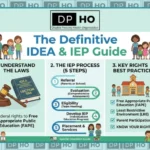

Understand your rights under IDEA Law and IEP guidelines. Discover how to craft SMART goals, leverage AI in 2026, and ensure student success in the classroom. Read our comprehensive guide.
Disclaimer: This article is provided for educational and informational purposes only. It is not intended to be a substitute for professional medical advice, diagnosis, or treatment. Always seek the advice of a qualified professional with any questions you may have regarding a medical condition or educational needs. Visit full page disclaimer https://dp-ho.com/disclaimer-page/.
ڈس کلیمر: یہ مضمون صرف تعلیمی اور معلوماتی مقاصد کے لیے فراہم کیا گیا ہے۔ اس کا مقصد کسی بھی قسم کا پیشہ ورانہ طبی مشورہ، تشخیص یا علاج فراہم کرنا نہیں ہے۔ طبی حالت یا تعلیمی ضروریات سے متعلق اپنے کسی بھی سوال کے لیے ہمیشہ کسی مستند ماہر سے مشورہ کریں۔ مزید تفصیل کے لیئے ڈسکلیمر پیج کو دیکھیں
https://dp-ho.com/disclaimer-page/
Master the IEP process with this 2026 guide by Special Ed expert Imtiyaz Ali (M.Phil). Learn about IDEA law, SMART goals, and FAPE for USA students.
IDEA Law and IEP, Master the complexities of IDEA Law and the IEP process with insights from a Special Education expert. Explore FAPE, LRE, SMART goals, and the 2026 role of AI in IEP documentation for USA and Saudi Arabian contexts.
📑The Step-by-Step IDEA Law and IEP Process for Parents and Educators 👣
The IEP Process is often described as a journey, not a destination. It is a legal framework designed to ensure that the child’s unique needs are met through a collaborative approach. As a Special Education expert, I believe that understanding each phase—from the first concern to the final signature—is crucial for effective advocacy. In 2026, this process has become more data-driven, yet the core remains the same: the child’s best interest.
IDEA Law and IEP/From Referral to Evaluation: The Initial Stages 🔍
The journey begins with a referral. This can come from a teacher who notices a gap in learning or from a parent who observes developmental delays. Once a referral is made, the school district has a legal obligation under IDEA Law to conduct a comprehensive evaluation.
This isn’t just a simple IQ test; it involves assessing the child’s cognitive, physical, emotional, and social health. In my experience, the most successful evaluations are those where parents share “at-home” observations that clinical tests might miss.
IDEA Law and IEP/Eligibility Determination: Who Qualifies Under IDEA? 📋
Not every child who struggles in school qualifies for an IEP. To be eligible, a student must meet two criteria: they must have a disability that falls under one of the 13 categories defined by IDEA, and that disability must adversely affect their educational performance.
During the eligibility meeting, the team (including you, the parent) reviews the evaluation data. If a child does not qualify for an IEP, they might still be eligible for a 504 Plan, which provides accommodations without specialized instruction.
The Annual IEP Meeting: Collaboration and Advocacy 🤝
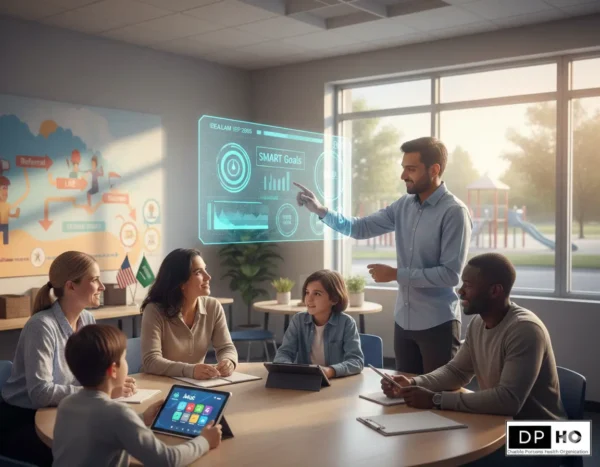
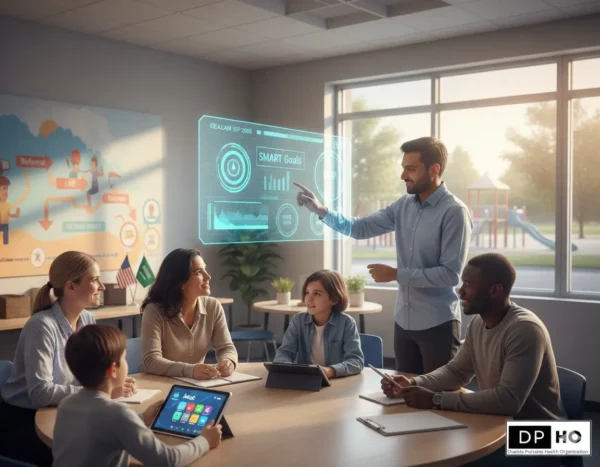
“The IEP meeting is where the “magic” happens a collaborative gathering of teachers, therapists, administrators, and parents. As an M.Phil professional, I always emphasize that the parent is the most important member of this team.”
“In 2026, these meetings often incorporate digital dashboards to show real-time student progress. Advocacy here means ensuring the student’s LRE is prioritized and services are sufficient to provide FAPE.”
⚖️ The Concept of LRE (Least Restrictive Environment)
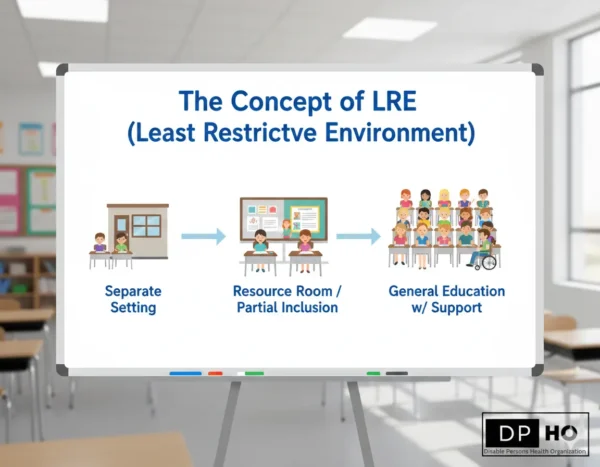
A core component of IDEA is the LRE. IDEA Law and IEP, the law mandates that students with disabilities should be educated with their non-disabled peers to the maximum extent appropriate.
- Inclusion is the default: Removal from the general education classroom should only occur when the nature or severity of the disability prevents successful learning even with supplementary aids.
- Continuum of Services: LRE is not a place; it is a principle. It ranges from full inclusion in general education to specialized residential programs.
📑Crafting High-Impact SMART Goals for Student Success 🎯
An IEP without clear goals is like a ship without a compass. High-impact goals are the engine that drives student progress. Over my 10+ years in Special Education, I have seen that the difference between a student “staying stagnant” and “thriving” often lies in how their goals are written.
The Anatomy of a SMART Goal: Specific and Measurable 📏
A goal must be SMART: Specific, Measurable, Achievable, Relevant, and Time-bound. For example, instead of saying “Ali will improve his reading,” a SMART goal would state: “Ali will read 40 words per minute from a second-grade level text with 90% accuracy over 4 consecutive trials.” Being specific removes ambiguity, while being measurable ensures that every teacher and therapist is on the same page regarding what “success” looks like for that child.
H3: Baseline Data: The Starting Point for Every IEP 📊
You cannot know where you are going if you don’t know where you are starting. Baseline data is the student’s current level of performance before any new intervention begins. When I review IEPs, the first thing I look for is a solid baseline. It provides the “Ground Zero” from which we measure growth. Without accurate baseline data, SMART goals are merely guesses rather than professional targets.
Progress Monitoring: How to Track Real Growth 📉
In 2026, we have moved beyond simple checkmarks. Progress monitoring involves collecting data points regularly—weekly or bi-weekly—to see if the student is on track to meet their annual goal. If the data shows a “plateau,” the IEP team should reconvene to adjust strategies. This proactive approach ensures that we don’t wait until the end of the year to realize a teaching method isn’t working for a specific student.
📑Modern Tools: Assistive Technology and AI in 2026 🤖
The digital revolution has transformed Special Education. As we navigate 2026, technology is no longer an “extra”—it is a fundamental bridge to inclusion.
Leveraging AI for Precise IEP Documentation 💻
Artificial Intelligence is now helping educators manage the massive paperwork load associated with IDEA Law. AI tools can analyze months of progress monitoring data and suggest draft goals or highlight areas where a student is struggling. For teachers, this means less time behind a desk and more time in front of the students. However, the legal and ethical responsibility for the content remains with the human experts on the team.
Top Assistive Technology Trends for Non-Verbal Students 🎙️
Assistive Technology (AT) has evolved from bulky devices to sleek, AI-integrated apps. For non-verbal students, Eye-Gaze technology and advanced AAC (Augmentative and Alternative Communication) devices now use “predictive intent,” making communication faster and more natural. In 2026, wearable AT—like haptic feedback vests—is also helping students with sensory processing needs stay regulated in the general education classroom.
Balancing Automation with Human Expertise (The M.Phil Perspective) 🧠
While AI can draft a goal, it cannot feel the breakthrough a child makes when they finally make eye contact or tie their shoes. My M.Phil research focused on activity-based learning because I believe education is a human connection. Technology should support the teacher, not replace them. In my 10 years of practice, the best results always come from a high-tech tool used by a high-touch, empathetic educator.
📑Career Insights: Special Education in the USA and Saudi Arabia 🌍
For professionals like me, the world is becoming smaller. There is a massive demand for expert Special Education teachers in both the West and the Middle East.
Comparing Educational Standards: From Hafizabad to Riyadh ✈️
Whether I am working in my hometown of Hafizabad, Punjab, or looking toward Riyadh, the principles of Special Education remain universal. However, the standards vary.
The USA relies heavily on the legal protections of IDEA, while Saudi Arabia is rapidly building its infrastructure under “Vision 2030.” Saudi Arabia is currently adopting many Western models, creating a unique hybrid system that values both modern science and cultural tradition.
Opportunities for Expats: Transitioning Your Expertise to Saudi Arabia 🇸🇦/IDEA Law and IEP
If you are a teacher with an M.Phil or Master’s in Special Education, Saudi Arabia offers incredible opportunities. The Kingdom is looking for “Subject Matter Experts” to lead their new inclusive centers. Relocating requires an understanding of how to adapt IEP processes to a new cultural context. For expat teachers, the focus is often on training local staff and implementing high-level Assistive Technology solutions in the classroom.
📑 Strategic Action Plan for Special Educators/IDEA Law and IEP 🚀
To excel in the modern landscape of Special Education, I recommend the following steps:
- Master the Law: Regularly review updates to IDEA Law and state-specific regulations.
- Refine Your Goals: Shift from “vague” to SMART. Use your baseline data to justify every service requested.
- Adopt Tech: Familiarize yourself with AI-driven documentation tools to save time and improve accuracy.
- Advocate with Empathy: Remember that behind every IEP document is a child with potential. Use your expertise to be their voice.
IDEA Law and IEP Process: A Comprehensive 2026 Guide
The landscape of special education in the United States is governed by a powerful mandate known as the IDEA Law and IEP (Individuals with Disabilities Education Act). As an educator with an M.Phil and over 10 years of experience in the field, I have seen firsthand how a well-structured IEP (Individualized Education Program) can transform a student’s trajectory. Understanding the intersection of legal rights and pedagogical strategy is not just a professional requirement; it is a moral imperative to ensure every child receives the support they deserve.
📝 Crafting IDEA Law and IEP: From Assessment to SMART Goals
The Individualized Education Program (IEP) is a roadmap. Having developed hundreds of these documents over the last decade, I can tell you that an IEP is only as strong as its SMART Goals.
🎯 Defining SMART Goals in Special Education
To ensure accountability and progress, every goal in an IEP must be:
- Specific: Clearly defined behavior or skill.
- Measurable: How will we track progress? (e.g., 80% accuracy over 5 trials).
- Achievable: Realistic given the student’s current baseline.
- Relevant: Directly tied to the student’s disability-related needs.
- Time-bound: Usually set for a one-year duration.
🛠️ The Power of Assistive Technology (AT)
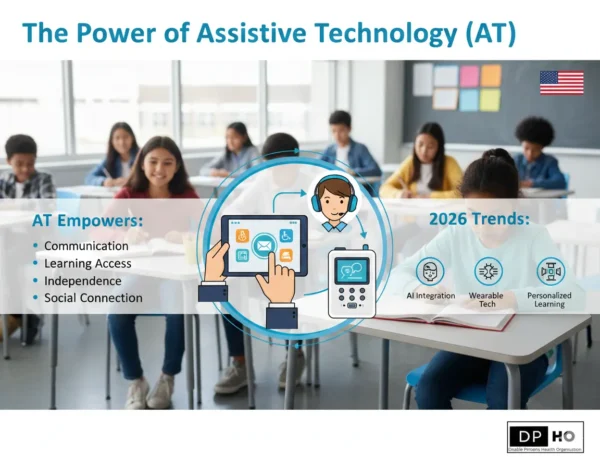
In 2026, Assistive Technology is no longer just “extra” support; it is often the bridge to the curriculum. Whether it is high-tech speech-generating devices or low-tech graphic organizers, AT must be considered by the IEP team for every student.
🤖 The Role of AI in IEP Documentation (2026 Trends)/IDEA Law and IEP
As we move further into 2026, Artificial Intelligence is revolutionizing how we handle special education paperwork. However, expertise remains irreplaceable.
📈 Efficiency vs. Empathy regarding IDEA Law and IEP
AI tools can now assist teachers in drafting initial goal suggestions by analyzing student data and past performance. This helps in:
- Data Synthesis: Quickly summarizing months of progress monitoring data.
- Drafting Compliance: Ensuring all legal phrasing required by the state is present.
- Consistency: Reducing human error in complex documentation.
Expert Note: While AI can draft a goal, it cannot “know” the child. IDEA Law and IEP, as an M.Phil specialist, I advocate for AI-assisted drafting followed by rigorous human review to maintain the “Individualized” part of the IEP.
🌍 Global Perspectives: USA vs. Saudi Arabia
For professionals looking toward Saudi Arabia, the special education landscape is evolving rapidly. Under “Vision 2030,” the Kingdom is investing heavily in inclusive education.
- USA Focus: Heavy emphasis on legal litigation and procedural safeguards.
- Saudi Arabia Focus: Rapid infrastructure building and adoption of international best practices, often mirroring IDEA principles but adapted for cultural nuances.
If you are a teacher planning to relocate to Saudi Arabia, understanding the IEP process is your greatest asset, as many international schools in Riyadh and Jeddah follow the US-based IDEA framework.
📖 Case Study: The Transition Success
Consider “Sarah,” a 14-year-old with ASD (Autism Spectrum Disorder). By focusing on Transition Services early, her IEP team integrated Vocational Training and Independent Living goals. By using Assistive Technology for communication, Sarah moved from a self-contained classroom to a partial inclusion model (LRE). Her success wasn’t accidental; it was the result of a compliant, data-driven IEP.
IDEA covers eligible children from birth through age 21 (or until high school graduation).
🚀 Strategic Action Plan for 2026
- Audit Your Goals: Ensure every goal in your current IEPs meets the SMART criteria.
- Embrace AT: Conduct a tech audit to see if newer Assistive Technology can provide better access for your students.
- Learn the Law: Stay updated on IDEA Law amendments, especially regarding digital privacy and AI.
- Network Globally: If you are an expert like me, consider how your skills in the USA can translate to emerging markets like Saudi Arabia.
📝 Urdu Executive Summary (اردو خلاصہ)
یہ مضمون خصوصی تعلیم کے عالمی قوانین بالخصوص امریکہ کے IDEA قانون اور IEP کے عمل پر روشنی ڈالتا ہے۔ بطور ماہرِ تعلیم جس کے پاس 10 سالہ تجربہ اور M.Phil کی ڈگری ہے، میں نے اس بات پر زور دیا ہے کہ کس طرح ایک بہترین IEP کسی بچے کی زندگی بدل سکتا ہے۔ ہم نے FAPE (مفت اور مناسب تعلیم) اور LRE (کم پابند ماحول) جیسے اہم نکات پر بحث کی ہے۔ 2026 کے تناظر میں، مصنوعی ذہانت (AI) اب IEP کی تیاری میں ایک اہم معاون ثابت ہو رہی ہے، لیکن انسانی بصیرت اور ہمدردی کا کوئی نعم البدل نہیں ہے۔ وہ اساتذہ جو سعودی عرب میں ملازمت کے خواہشمند ہیں، ان کے لیے ان بین الاقوامی قوانین کو سمجھنا انتہائی ضروری ہے کیونکہ وہاں کا نظام بھی اب انہی خطوط پر استوار ہو رہا ہے۔
📑 Frequently Asked Questions (FAQ) for 2026/IDEA Law and IEP ❓
- What is the difference between an IEP and a 504 Plan?
IDEA Law and IEP, an IEP provides specialized instruction under IDEA, while a 504 Plan provides accommodations under the Rehabilitation Act to ensure equal access. - Can a parent request an IEP meeting at any time?
IDEA Law and IEP, Yes. Under IDEA, parents are equal members of the team and can request a review whenever they feel it is necessary. - What happens if FAPE is not being provided?
- IDEA Law and IEP, parents have the right to due process, which can include mediation or a formal hearing to resolve disputes.
- Is Assistive Technology expensive for parents?
- IDEA Law and IEP. No. If the IEP team determines AT is necessary for FAPE, the school district must provide it at no cost.
- How often are SMART goals updated?
- IDEA Law and IEP, typically, goals are reviewed annually, but progress reports are usually provided at every grading period.
- What is the “Stay Put” provision?
- IDEA Law and IEP, this legal safeguard keeps a student in their current placement while a dispute is being resolved.
- Does IDEA cover students in private schools?
- IDEA Law and IEP, while IDEA has “child find” requirements, private school students don’t have the same individual entitlement to services as public school students.
- What are “Related Services”? IDEA Law and IEP, these include speech, occupational, and physical therapy required to help a child benefit from special education.
- How does AI improve IEP meetings?
- IDEA Law and IEP, AI can provide real-time translation for parents and help visualize progress data for better decision-making.
- What age does IDEA cover?
- IDEA Law and IEP, IDEA covers eligible children from birth through age 21 or until high school graduation.
Disclaimer:
This article is for informational purposes only and does not constitute legal or educational advice. Please consult with your local school district or an educational advocate for specific IEP guidance.