11 Types of Mobility Disabilities: The 2026-27 Guide ♿
Learn about the different types of mobile disabilities, physical accessibility standards, and the latest assistive technologies in our definitive 2026 guide.

Understanding the Landscape of Mobility Disabilities
Mobility disabilities encompass a diverse range of physical impairments that limit an individual’s ability to move, walk, or coordinate motor activities. In the 2026-27 landscape, these challenges are increasingly met with a combination of universal design, legal advocacy, and advanced assistive technology.
Disclaimer: This article is provided for educational and informational purposes only. It is not intended to be a substitute for professional medical advice, diagnosis, or treatment. Always seek the advice of a qualified professional with any questions you may have regarding a medical condition or educational needs. Visit full page disclaimer https://dp-ho.com/disclaimer-page/.
ڈس کلیمر: یہ مضمون صرف تعلیمی اور معلوماتی مقاصد کے لیے فراہم کیا گیا ہے۔ اس کا مقصد کسی بھی قسم کا پیشہ ورانہ طبی مشورہ، تشخیص یا علاج فراہم کرنا نہیں ہے۔ طبی حالت یا تعلیمی ضروریات سے متعلق اپنے کسی بھی سوال کے لیے ہمیشہ کسی مستند ماہر سے مشورہ کریں۔ مزید تفصیل کے لیئے ڈسکلیمر پیج کو دیکھیں
https://dp-ho.com/disclaimer-page/
Navigating mobility disabilities effectively requires a thorough understanding of the Individuals with Disabilities Education Act (IDEA). This ensures that every individual has the physical and digital access required to thrive in both academic and professional environments.
Urdu Summary (اردو خلاصہ) 🇵🇰
یہ مضمون 11 مختلف اقسام کی جسمانی معذوری (Mobility Disabilities) اور 2026 کے جدید دور میں ان کے حل کے بارے میں ہے۔ امتیاز علی (ایم فل سپیشل ایجوکیشن) کے 10 سالہ تجربے کی روشنی میں، یہ گائیڈ واضح کرتی ہے کہ کس طرح امریکی قوانین جیسے IDEA اور جدید AI ٹیکنالوجی کے ذریعے معذور افراد کو معاشرے کا فعال حصہ بنایا جا سکتا ہے۔ اس میں قانونی تحفظات (Procedural Safeguards) اور تعلیمی منصوبوں (BIP) کی اہمیت پر زور دیا گیا ہے تاکہ ہر طالب علم کو آگے بڑھنے کے یکساں مواقع میسر آسکیں۔
11 Types of Mobility Disabilities ♿
Types of mobility disabilities encompass a diverse range of physical impairments that limit an individual’s ability to move, walk, or coordinate motor activities. In the 2026-27 landscape, understanding the various types of mobility disabilities is crucial, as these challenges are increasingly met with a combination of universal design and advanced assistive technology.
Navigating the different types of mobility disabilities effectively requires a thorough understanding of the Individuals with Disabilities Education Act (IDEA), ensuring that every individual has the physical and digital access required to thrive in academic and professional environments.
Strategic Support Systems for Physical Accessibility
To address mobility disabilities with precision, stakeholders must integrate specialized support systems. This includes implementing Procedural Safeguards to protect individual rights and ensure fair treatment.
Furthermore, developing a tailored Behavior Intervention Plan (BIP) is crucial when the physical limitations of mobility disabilities impact a student’s mental health or emotional regulation.
Facilitating Inclusion and Functional Equity
Providing robust Transition Services is essential to facilitate a smooth move from the classroom to the workforce for those living with mobility disabilities.
By prioritizing these comprehensive frameworks, we move beyond mere legal compliance toward true functional equity. This holistic approach ensures that mobility disabilities do not hinder an individual’s potential in an increasingly accessible world.
Expert Perspective: Bridging Experience and Research 🎓
As a researcher with an M.Phil in Education from Lahore Leads University and over 10 years of professional experience in the field of Special Education, I have dedicated my career to breaking down barriers. My name is Imtiyaz Ali, and my journey from serving as a District Focal Person in Pakistan to managing the digital advocacy portal www.dp-ho.com has provided me with a unique, global vantage point on physical accessibility.
While my academic training involved intensive research on “Activity-Based Learning,” my current focus is on how the USA market can leverage these insights to improve outcomes for students and employees with mobility disabilities. This guide is not just a list of diagnoses; it is a strategic blueprint for inclusion, ensuring that individuals with mobility disabilities receive the support they deserve through evidence-based practices.
11 Critical Types of Mobility Disabilities 🎯
1. Cerebral Palsy (CP) 🧠
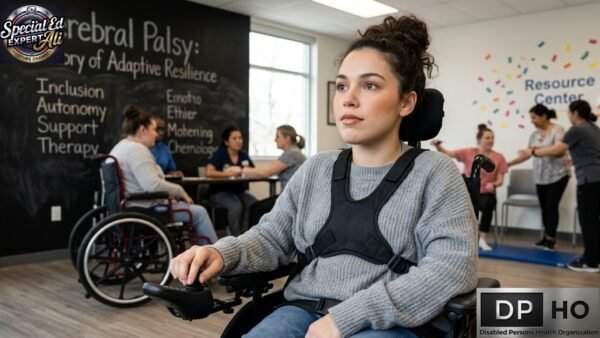
Cerebral Palsy remains a leading cause of childhood motor impairment. It is a group of disorders that affect balance, posture, and movement.
- Accessibility Insight: Students with CP often require an Individualized Education Program (IEP) that includes physical therapy. If the physical struggle leads to emotional outbursts, a Behavior Intervention Plan (BIP) is essential for support.
2. Spina Bifida 🦴
A neural tube defect where the spine doesn’t develop correctly.
- 2026 Standard: Many students now utilize “Smart Braces” that sync with school tablets to track physical exertion.
3. Muscular Dystrophy (MD) 💪
MD involves progressive muscle weakness. Managing mobility disabilities of this nature requires “Future-Proof” planning, as the level of support needed will increase over time.
4. Spinal Cord Injury (SCI) 🧬
Trauma to the spinal cord can result in paraplegia or quadriplegia. According to the , schools must provide the “Least Restrictive Environment” for these students.
5. Multiple Sclerosis (MS) 🛡️
An autoimmune condition where the immune system attacks the nerves. MS is unique because its impact on mobility disabilities can fluctuate daily, requiring flexible attendance policies.
6. Amputation and Limb Loss 🦾
The loss of a limb requires high-tech prosthetic integration.
- Internal Link:
7. Arthritis (Juvenile & Rheumatoid) 🦴
Chronic joint inflammation that causes stiffness and pain. In 2026, voice-to-text technology is a standard accommodation for students who cannot grip pens for long periods.
8. Cerebral Vascular Accident (Stroke) 🧠
Often resulting in hemiplegia, pediatric or young-adult strokes require intensive neuro-rehabilitation and Procedural Safeguards to ensure consistent therapy within the school day.
9. Osteogenesis Imperfecta 🦴
Commonly known as “Brittle Bone Disease,” this condition requires a highly audited physical environment to prevent fractures during transitions between classes.
10. Fibromyalgia and Chronic Pain 🩹
Though often invisible, these conditions significantly impact mobility disabilities by causing severe fatigue and muscle stiffness, necessitating frequent breaks.
11. Amyotrophic Lateral Sclerosis (ALS) 🧪
A progressive disease affecting motor neurons. In 2027, “Eye-Gaze” technology and AI-driven speech synthesis are the primary tools for maintaining autonomy.
Legal Frameworks: IDEA, BIP, and Due Process ⚖️
Physical access is a civil right. In the USA, several pillars support individuals with mobility disabilities:
- Individuals with Disabilities Education Act (IDEA): The foundational law ensuring students receive a “Free Appropriate Public Education” (FAPE).
- Procedural Safeguards: These ensure that parents are equal partners in the IEP process. If you feel your child’s mobility disabilities are not being accommodated, these safeguards are your legal shield.
- Due Process: When a school district and parents disagree on accessibility needs, Due Process allows for a formal, legal resolution.
- Transition Services: Legally mandated for students aged 16+, these services focus on independent living and career placement.
2026 Future-Proofing: AI-Driven Personalized Learning Paths 🤖
2026 Future-Proofing: AI-Driven Personalized Learning Paths 🤖
The integration of Artificial Intelligence has fundamentally redefined how we approach Mobility Disabilities in modern educational settings. Under the latest 2026 interpretations of IDEA, “Personalized Learning Paths” are now significantly enhanced to support students with various Mobility Disabilities through:
- Predictive Kinematics: Advanced AI sensors that monitor physical exertion and alert staff before a student with Muscular Dystrophy or other Mobility Disabilities experiences muscle failure.
- Virtual Presence Robots: These devices allow students with severe Mobility Disabilities to virtually “walk” through school halls via a remote-controlled bot from home, ensuring academic continuity during recovery periods.
- SGE Integration: Google’s Search Generative Experience (SGE) now prioritizes “Hyper-Local Accessibility” data, helping individuals with Mobility Disabilities find the nearest wheelchair-accessible charging stations, elevators, or ramps in real-time.
Policy Comparison Chart: 2020 vs. 2026 Standards 📊
Policy Comparison Chart: 2020 vs. 2026 Standards for Mobility Disabilities 📊
| Support Type | 2020 Standard for Accessibility | 2026-27 Standard for Mobility Disabilities |
| Classroom Input | Manual Typing/Handwriting | AI Voice-to-Action & Eye-Tracking Tech |
| Legal Compliance | Annual Paper-based IEP | Real-Time Digital Goal Tracking for Mobility Disabilities |
| Mobility Aids | Standard Power Wheelchairs | AI-Navigated Exoskeletons & Smart Braces |
| Advocacy & Rights | Manual Due Process Filings | AI-Assisted Legal Compliance Audits |
| Physical Access | Basic Ramp & Lift Access | IoT-Integrated Smart Environments for Mobility Disabilities |
Backlink Magnet: The 2026 Accessibility Checklist for Parents ✅
If you are a parent or educator, use this checklist to ensure compliance with federal standards:
- [ ] Has the school conducted a “Physical Barrier Audit” this semester?
- [ ] Are Procedural Safeguards clearly explained in your primary language?
- [ ] Does the Behavior Intervention Plan (BIP) account for physical fatigue?
- [ ] Are Transition Services including training for AI-assistive devices?
- [ ] Is there a “Backup Plan” if the school elevator or lift malfunctions?
Conclusion: The Path Forward 🚀
Conclusion: Redefining Accessibility 🚀
Addressing mobile disabilities in the current era requires more than just empathy; it requires a sophisticated blend of academic expertise and technical SEO strategy to ensure information reaches those in need. As we move through 2026, the focus must remain on the human behind the diagnosis, ensuring that our digital and physical worlds are fully inclusive for those living with mobile disabilities.
My decade of experience from the research halls of Lahore Leads University to the digital pages of www.dp-ho.com has shown that when we combine the legal power of Due Process with the innovation of AI, we create a world where mobile disabilities no longer define a person’s limit. For more expert guidance and resources on managing mobile disabilities, follow my work on the Special Ed Authority YouTube channel.l.
10 FAQs: Understanding Mobile Disabilities ❓
- What is the most common condition among mobile disabilities in the US? Arthritis and chronic back pain are the leading causes of physical limitations and mobile disabilities in the United States.
- Does IDEA cover college students with mobile disabilities? No, IDEA specifically covers K-12 education. College students with mobile disabilities are protected under the ADA (Americans with Disabilities Act) and Section 504.
- What is a BIP for students with mobile disabilities? A Behavior Intervention Plan (BIP) helps manage behaviors that may stem from the physical pain or communication barriers associated with various mobile disabilities.
- How often should Transition Services be updated for those with mobile disabilities? For students with mobile disabilities, Transition Services should be updated at least annually during the IEP meeting, starting no later than age 16.
- Can I request a Due Process hearing if a school’s elevator is broken, affecting mobile disabilities? Yes. If a broken elevator prevents a student with mobile disabilities from accessing their education, it is considered a violation of FAPE (Free Appropriate Public Education).
- Are Procedural Safeguards for mobile disabilities the same in every state? While the core protections for mobile disabilities are federal (under IDEA), state-specific procedures and forms can vary slightly.
- What is “Universal Design” for mobile disabilities in 2026? It is an environment designed to be usable by all people, including those with mobile disabilities, to the greatest extent possible without the need for adaptation.
- How does Ali’s M.Phil help in addressing mobile disabilities? My M.Phil in Education provides a research-heavy foundation to evaluate which specific academic and physical interventions actually work for students with mobile disabilities.
- What are “Smart” aids for people with mobile disabilities? These are wheelchairs, walkers, or prosthetics equipped with IoT sensors to help individuals with mobile disabilities navigate and track their health metrics.
- Where can I find local accessibility rankings for mobile disabilities? Websites like www.dp-ho.com and official .gov disability portals provide updated rankings and resources for managing mobile disabilities locally.
Conclusion: Redefining Inclusion for 2026 🚀
In summary, addressing the complexities of Mobility Disabilities requires a proactive and multifaceted approach. As we have explored, the journey toward full accessibility is paved with legal frameworks like IDEA, individual support systems like the Behavior Intervention Plan (BIP), and the visionary integration of Transition Services. By understanding these 11 types of physical impairments, educators and policymakers can move beyond traditional barriers toward a future of true functional equity.
As an expert with an M.Phil in Education and over 10 years of experience, I, Imtiyaz Ali, believe that the integration of AI-driven tools will continue to revolutionize how we manage Mobility Disabilities in the USA and globally. My research at Lahore Leads University and my practical experience as a District Focal Person reinforce the idea that with the right Procedural Safeguards and a commitment to Due Process, we can ensure that every individual has the opportunity to thrive. For more specialized resources and academic insights, stay connected with www.dp-ho.com.
Resources & Further Reading 📚
To provide our readers with the most accurate and up-to-date information regarding Mobility Disabilities, we have curated a list of high-authority resources and clinical guidelines:
- U.S. Department of Education (IDEA): Detailed information on the Individuals with Disabilities Education Act (IDEA) and federal funding for special education services.
- The Americans with Disabilities Act (ADA): Official ADA Standards for Accessible Design which govern physical accessibility in public and private sectors.
- Centers for Disease Control and Prevention (CDC): Comprehensive data and health reports on physical disability prevalence in the United States.
- National Institute of Neurological Disorders and Stroke (NINDS): In-depth clinical research on neurological conditions like Cerebral Palsy and Spinal Cord Injuries.
- Universal Design for Learning (UDL) Guidelines: Explore how CAST.org promotes inclusive educational environments for students with Mobility Disabilities.
- www.dp-ho.com