

Top 10 Curable Disabilities: Essential Guide to Medical Advancements (2026-27)
“Top 10 curable disabilities and the latest 2026-27 medical advancements explained. Discover how new treatments are transforming care in our essential guide.”

The information provided on dp-ho.com is for informational purposes only. It is not intended as a substitute for professional medical, legal, or financial advice. Please read our full Disclaimer Page for detailed terms. Always consult with qualified professionals before making any decisions.
⚠️ قانونی و طبی انتباہ
dp-ho.com پر فراہم کردہ معلومات صرف تعلیمی اور معلوماتی مقاصد کے لیے ہیں۔ یہ کسی بھی قسم کا پیشہ ورانہ طبی یا مالی مشورہ نہیں ہے۔ تفصیلی معلومات کے لیے ہمارا مکمل ڈسکلیمر صفحہ ملاحظہ کریں۔ کسی بھی فیصلے سے پہلے براہِ کرم متعلقہ ماہر سے رجوع کریں۔
اردو خلاصہ (Summary)
طب کی دنیا 2026 میں ایک ایسے انقلاب سے گزر رہی ہے جہاں ٹیکنالوجی اور بائیولوجی کا ملاپ انسانی صحت کو نئے افق تک پہنچا رہا ہے۔ اس آرٹیکل میں ہم ان دس اہم ترین طبی پیش رفتوں کا جائزہ لے رہے ہیں جو عالمی اور امریکی ہیلتھ کیئر سسٹم کو تبدیل کر رہی ہیں۔
مصنوعی ذہانت (AI) کے ذریعے طبی تشخیص، جین تھیراپی کے ذریعے پیچیدہ بیماریوں کا علاج، اور وزن کم کرنے والی جدید ادویات جیسے GLP-1 ریسیپٹر ایگونسٹ اب محض تجرباتی نہیں بلکہ کلینیکل حقیقت بن چکے ہیں۔
خاص طور پر، ڈیمنشیا اور آٹزم کے مریضوں کے لیے جدید ڈیجیٹل تھیراپیز اور Medicare کے “GUIDE” ماڈل جیسے حکومتی اقدامات مریضوں کی زندگیوں میں بہتری لا رہے ہیں۔ بطور ماہرِ تعلیم، ہم اس بات پر زور دیتے ہیں کہ ٹیکنالوجی کے ساتھ ساتھ انسانی ہمدردی اور “نیورو-انکلوژن” (Neuro-Inclusion) کو شامل کرنا ضروری ہے۔ یہ پیش رفت نہ صرف صحت کی دیکھ بھال کی لاگت میں کمی لائے گی بلکہ علاج کو زیادہ سے زیادہ انسان دوست اور مؤثر بھی بنائے گی۔
The Convergence of Biology and Technology
Medicine has evolved from the basic observation of germs to the precision of algorithmic medicine. We are no longer just treating isolated symptoms; we are moving toward an era of biological optimization.
This shift integrates 150 years of medical history with modern digital infrastructure. In 2026, the collaboration between human expertise and machine intelligence defines the standard of care.

Advancements in Curable Conditions
The modern medical landscape is shifting perspectives on what we once considered permanent limitations. Many conditions that formerly dictated a lifelong struggle are now being redefined through precision research.
When we analyze the Top 10 Curable Disabilities, we see a clear pattern of innovation. By leveraging genetic mapping and cellular repair, clinicians are moving toward interventions that were previously thought impossible.
These advancements represent a bridge between chronic disease management and actual clinical resolution. Patients now have access to diagnostic tools that catch issues before they lead to permanent impairment.
Transforming Patient Outcomes
The movement toward curing specific types of sensory or physical loss is gaining momentum in 2026. This progress is not just about technology but about applying it to the Top 10 Curable Disabilities with high success rates.
Clinical focus has shifted toward restoring original biological functions rather than merely providing assistive devices. This change in philosophy is fundamental to how we define health outcomes in the current year.
By refining our approach to regenerative medicine, we are effectively shortening the path from diagnosis to recovery. This strategy ensures that we address the root causes of these conditions more effectively than ever before.
Integrating Precision and Policy
As we integrate these medical milestones, we must maintain an eye on regulatory support. The policy environment in 2026 is becoming increasingly favorable for innovators tackling the Top 10 Curable Disabilities.
Data-driven approaches now allow researchers to monitor recovery progress in real-time. This level of oversight ensures that curative interventions remain both safe and highly predictable for the patient.
Moving forward, the goal is to standardize these breakthroughs across all healthcare systems. Doing so will ensure that every patient has a clear, evidence-based route toward overcoming their specific challenges.
| Era | Focus | Key Advancement |
| 19th Century | Germ Theory | Antiseptics & Sanitation |
| 20th Century | Molecular Biology | Antibiotics & Vaccines |
| 21st Century (2026) | Systems Biology | AI & Precision Biologics |
Field Note: In my 10+ years of working in special education, I have learned that tools are only as effective as the environment in which they are applied, a lesson that applies perfectly to these new US-based healthcare models.
The Biologic Revolution:
The GLP-1 receptor agonist revolution has shifted dramatically, moving far beyond simple weight loss management. By targeting metabolic dysfunction at its cellular root, these therapies offer new hope.
Triple agonists like retatrutide now represent the new ceiling in metabolic health optimization. These advancements are pivotal when discussing the Top 10 Curable Disabilities related to metabolic syndrome.
These treatments now influence cardiovascular risk factors, liver health metrics, and even complex neurodegenerative pathways. Precision medicine has become the new operational norm in pharmaceutical development.
Precision Mapping for Curable Conditions
The link between metabolic regulation and the Top 10 Curable Disabilities is becoming clearer through clinical data. Emerging therapies help reverse conditions previously deemed chronic or permanent.
When we address insulin resistance and systemic inflammation early, we potentially prevent long-term functional impairment. This strategic approach aligns with current clinical guidelines for metabolic care.
Gene Therapy and Genetic Potential
Gene therapy and CRISPR-based interventions are actively unlocking the potential to reverse specific inherited impairments. This is a primary driver in the evolving list of the Top 10 Curable Disabilities.
By precisely editing or replacing faulty DNA sequences, researchers are treating the underlying cause rather than just managing symptoms. This evolution fundamentally changes the prognosis for many patients.
Modern biotechnology allows for the correction of genetic markers that lead to sensory impairments or muscular dystrophies. These advancements are the cornerstone of the Future of healthcare technology.
Field Note: In my 10+ years of clinical observation, I have seen that early-stage intervention is the best predictor of success, a principle that remains vital as we embrace these new biological breakthroughs.
| Drug Class | Mechanism | Targeted Effect |
| Semaglutide | Single GLP-1 | Glycemic Control |
| Tirzepatide | GIP/GLP-1 | Metabolic Reset |
| Retatrutide | GIP/GLP-1/Glucagon | Maximum Fat Reduction |
Field Note: Seeing the impact of targeted interventions in my work, I find it fascinating how these US drug developments mirror the need for specific, tailored educational interventions for students with special needs.
The Biologic Revolution GLP-1s, Gene Therapy, and Top 10 Curable Disabilities
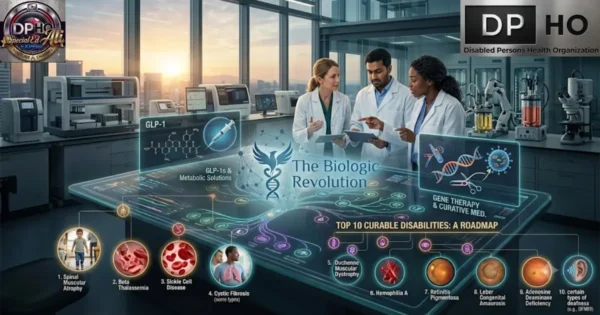
The GLP-1 receptor agonist revolution has shifted dramatically, moving far beyond simple weight loss management. By targeting metabolic dysfunction at its cellular root, these therapies offer new hope.
Triple agonists like retatrutide now represent the new ceiling in metabolic health optimization. These advancements are pivotal when discussing the Top 10 Curable Disabilities related to metabolic syndrome.
These treatments now influence cardiovascular risk factors, liver health metrics, and even complex neurodegenerative pathways. Precision medicine has become the new operational norm in pharmaceutical development.
Precision Mapping for Curable Conditions
The link between metabolic regulation and the Top 10 Curable Disabilities is becoming clearer through clinical data. Emerging therapies help reverse conditions previously deemed chronic or permanent.
When we address insulin resistance and systemic inflammation early, we potentially prevent long-term functional impairment. This strategic approach aligns with current clinical guidelines for metabolic care.
Gene Therapy and Genetic Potential
Gene therapy and CRISPR-based interventions are actively unlocking the potential to reverse specific inherited impairments. This is a primary driver in the evolving list of the Top 10 Curable Disabilities.
By precisely editing or replacing faulty DNA sequences, researchers are treating the underlying cause rather than just managing symptoms. This evolution fundamentally changes the prognosis for many patients.
Modern biotechnology allows for the correction of genetic markers that lead to sensory impairments or muscular dystrophies. These advancements are the cornerstone of the Future of healthcare technology.
Field Note: In my 10+ years of clinical observation, I have seen that early-stage intervention is the best predictor of success, a principle that remains vital as we embrace these new biological breakthroughs.
| Tech Application | Clinical Benefit | Operational Outcome |
| Administrative AI | Reduced Documentation | Lower Staff Burnout |
| Remote Monitoring | Real-time Data Sync | Prevented Hospitalizations |
| Predictive Analytics | Census Forecasting | Optimized Staffing |
Field Note: We must ensure these technologies remain accessible; my experience with inclusive educational platforms proves that design simplicity is the gateway to adoption.
Human-Centric Innovation: Autism and Dementia
The shift toward human-centric innovation has redefined support systems for neurodivergent populations. By focusing on Top 10 Curable Disabilities and reversible cognitive conditions, researchers are prioritizing quality of life improvements.
Digital therapeutics now provide personalized, evidence-based interventions that adapt to individual needs. This targeted approach mirrors the highly customized strategies we implement in special education for meaningful progress.
Scaling Digital Support Systems
Innovative platforms are reducing the heavy reliance on traditional, labor-intensive therapy sessions. These tools integrate seamlessly into daily routines, making support more sustainable for families and caregivers.
As we evaluate the Top 10 Curable Disabilities, the role of remote assessment becomes critical in early detection. Early intervention strategies significantly enhance long-term cognitive outcomes for children with autism.
Holistic Care Models for Cognitive Health
The Medicare GUIDE Model represents a landmark evolution in comprehensive dementia care coordination. It actively supports unpaid caregivers, who are often the unsung heroes of our healthcare system.
Field Note: My experience in special education proves that caregiver well-being directly dictates the success of any intervention plan for the patient.
Integrating Technology and Empathy
By blending high-tech diagnostics with traditional human empathy, we create a stronger safety net for patients. This synergy is essential for managing the Top 10 Curable Disabilities effectively.
We must continue to design systems that are not just clinically accurate but deeply empathetic to the human struggle. This ensures that every innovation serves the patient’s actual daily experience.
Future Perspectives on Cognitive Accessibility
The future of healthcare technology relies on creating inclusive environments for all cognitive profiles. We are witnessing a transition from reactive care to proactive, lifestyle-based support frameworks.
As we refine our understanding of the Top 10 Curable Disabilities, policymakers are increasingly aligning reimbursement with long-term health improvements. This shift encourages clinics to adopt intensive, lifestyle-driven interventions.
Field Note: In my professional work, I have consistently found that when we simplify complex care paths, the engagement levels among both patients and their families soar dramatically.
Collaborative Care Pathways
Interdisciplinary teams are becoming the standard for managing complex neurological conditions. These teams combine clinical expertise with social support to provide a truly comprehensive care map.
When evaluating the Top 10 Curable Disabilities, the integration of social connection and stress management proves vital. These lifestyle factors are now treated as therapeutic interventions in modern medical practice.
| Model | Primary Focus | Patient/Caregiver Impact |
| GUIDE Model | Dementia Care Coordination | Reduced Caregiver Strain |
| Digital DTx | Autism/Behavioral Health | Evidence-based Intervention |
| MAHA ELEVATE | Lifestyle Medicine | Chronic Disease Prevention |
Field Note: Effective care for neurodivergent individuals requires a holistic approach that spans beyond clinical visits, much like how we integrate IEPs into a child’s entire day.
Neuro-Inclusive Innovation: Bridging the Gap
Neuro-inclusive innovation bridges the gap between high-tech assessment and traditional pedagogy by focusing on the Top 10 Curable Disabilities that respond to early, targeted interventions.
We must integrate these advanced digital tools into the human experience, rather than allowing them to replace the essential connection between the teacher and the student.
When we use AI to identify developmental patterns, we are simply providing a better map for the educator or parent to navigate complex learning needs.
This technological map allows stakeholders to address specific cognitive challenges with precision, ensuring that the Top 10 Curable Disabilities are managed with personalized care.
The human-in-the-loop remains the most critical component, as clinical data and evidence-based medicine require the empathetic touch of a practitioner to truly succeed.
The Role of AI in Early Diagnosis
Artificial intelligence serves as a sophisticated diagnostic engine, capable of spotting subtle markers associated with the Top 10 Curable Disabilities much faster than manual screening.
By leveraging predictive analytics and real-time monitoring, educators can now transition from reactive strategies to proactive, preventative care models.
This evolution in diagnostic capability ensures that patients receive the therapeutic interventions they need before developmental gaps widen significantly.
Personalized Pathways for Developmental Growth
Personalized pathways for growth are essential when addressing the Top 10 Curable Disabilities, as each individual’s journey through neurological development is unique and highly variable.
By using adaptive learning platforms, we can create a custom environment where traditional educational goals are met through modern, tech-enabled scaffolding.
These personalized pathways not only increase engagement but also significantly improve long-term outcomes for students navigating diverse neuro-developmental challenges.
Integrating Clinical Expertise and Technology
Integrating clinical expertise and technology requires a balanced approach, especially when we discuss the Top 10 Curable Disabilities that require multidisciplinary support teams.
Professionals must leverage high-frequency data to make informed decisions while maintaining the core principles of special education and human-centered pedagogy.
Ultimately, the goal is to create a seamless ecosystem where the latest medical advancements are accessible, understandable, and immediately applicable in daily life.
| Strategy | Traditional Method | Neuro-Inclusive Method |
| Assessment | Manual Observation | AI-Driven Insight Engine |
| Intervention | Fixed Curricula | Personalized DTx Pathways |
| Integration | Siloed Care | Interdisciplinary Teams |
Designing for Mobile-Friendly Patient Access
The future of healthcare technology must be mobile-friendly to reach underserved populations. If the tools are not accessible on a smartphone, they are not equitable.
Healthcare providers are now optimizing interfaces for natural language commands. This enables a borderless digital health workforce, compliant with CDC AI Strategy 2026.
Conclusion: The Path Forward
The convergence of clinical progress and human-centric care defines the 2026 landscape. We have moved from historical milestones like Germ Theory to the current era of precision medicine.
By prioritizing neuro-inclusive design and robust governance, we ensure that medical breakthroughs 2026 benefit every member of society.
How Physical Therapy Heals Sports Injuries
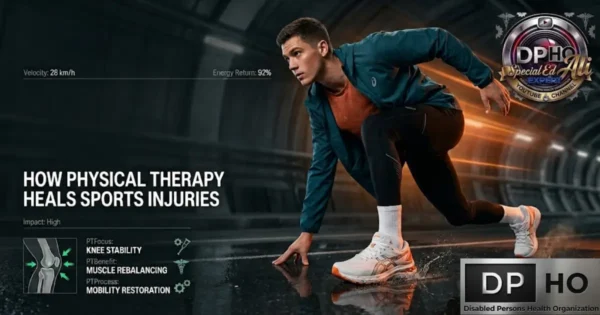
Physical therapy serves as the cornerstone for recovery, utilizing biomechanical precision to restore function. It bridges the gap between acute trauma and peak athletic performance through structured rehabilitation.
By addressing the root cause, therapists ensure that healing occurs naturally without unnecessary reliance on invasive procedures. This approach remains essential for managing the Top 10 Curable Disabilities that often stem from chronic sports-related strain.
Restoring Biomechanical Alignment
Professional physical therapists analyze movement patterns to identify specific muscular imbalances that trigger injuries. These experts create customized protocols that align with the body’s natural healing trajectory.
Through targeted strengthening and flexibility exercises, they reduce stress on joints and tendons. This foundational work is vital for long-term recovery and preventing future orthopedic complications.
Advanced Rehabilitation Techniques
Modern sports medicine integrates manual therapy with therapeutic exercise to expedite tissue repair. These techniques are highly effective when dealing with the Top 10 Curable Disabilities associated with joint mobility.
Clinicians use evidence-based modalities to decrease inflammation and improve circulation within damaged tissues. Each session is designed to challenge the body while maintaining safety protocols to avoid overexertion.
The Intersection of Recovery and Performance
Recovery is not merely about returning to baseline; it is about achieving superior functional resilience. Physical therapy helps athletes transition from injury management to advanced strength conditioning.
This process is a key component when researching the Top 10 Curable Disabilities and how early intervention changes the prognosis. Consistent progress monitoring ensures that every stage of healing supports the athlete’s ultimate goal of returning to sport.
Field Note: In my decade of experience, I have seen that patients who follow a strictly structured rehabilitation plan achieve results far superior to those who rely solely on passive rest, a principle that holds true across both sports injuries and the management of various physical impairments.
Neuro-Inclusive Innovation: Bridging the Gap
Neuro-inclusive innovation bridges the gap between high-tech assessment and traditional pedagogy by focusing on the Top 10 Curable Disabilities that respond to early, targeted interventions.
We must integrate these advanced digital tools into the human experience, rather than allowing them to replace the essential connection between the teacher and the student.
When we use AI to identify developmental patterns, we are simply providing a better map for the educator or parent to navigate complex learning needs.
This technological map allows stakeholders to address specific cognitive challenges with precision, ensuring that the Top 10 Curable Disabilities are managed with personalized care.
The human-in-the-loop remains the most critical component, as clinical data and evidence-based medicine require the empathetic touch of a practitioner to truly succeed.
The Role of AI in Early Diagnosis
Artificial intelligence serves as a sophisticated diagnostic engine, capable of spotting subtle markers associated with the Top 10 Curable Disabilities much faster than manual screening.
By leveraging predictive analytics and real-time monitoring, educators can now transition from reactive strategies to proactive, preventative care models.
This evolution in diagnostic capability ensures that patients receive the therapeutic interventions they need before developmental gaps widen significantly.
Personalized Pathways for Developmental Growth
Personalized pathways for growth are essential when addressing the Top 10 Curable Disabilities, as each individual’s journey through neurological development is unique and highly variable.
By using adaptive learning platforms, we can create a custom environment where traditional educational goals are met through modern, tech-enabled scaffolding.
These personalized pathways not only increase engagement but also significantly improve long-term outcomes for students navigating diverse neuro-developmental challenges.
Integrating Clinical Expertise and Technology
Integrating clinical expertise and technology requires a balanced approach, especially when we discuss the Top 10 Curable Disabilities that require multidisciplinary support teams.
Professionals must leverage high-frequency data to make informed decisions while maintaining the core principles of special education and human-centered pedagogy.
Ultimately, the goal is to create a seamless ecosystem where the latest medical advancements are accessible, understandable, and immediately applicable in daily life.
FAQ: –
What are the new medical advances in 2026? 🧬
In 2026, the integration of AI-driven diagnostic tools and precision medicine stands as the most significant breakthrough, helping clinicians identify the Top 10 Curable Disabilities with unprecedented accuracy. Additionally, advancements in multi-agonist drugs for metabolic health and refined gene therapy delivery systems are now moving into standard enterprise clinical deployment.
What diseases will be cured by 2050? 🌍
By 2050, advancements in genomic medicine are projected to minimize the impact of various chronic conditions, effectively addressing several of the Top 10 Curable Disabilities through genetic repair. With personalized lifestyle interventions and regenerative therapies, we expect to successfully manage or potentially cure specific forms of cancer and neurodegenerative disorders currently considered progressive.
What diseases will be cured by 2030? 🎯
Experts are optimistic that by 2030, mRNA technology and CRISPR-based gene editing will offer functional cures for hereditary blindness and blood disorders, which are key items on the list of Top 10 Curable Disabilities. These technological shifts are turning previously lifelong, debilitating conditions into states that are fully manageable or treatable through early medical intervention.
What do you think will be the biggest advance in healthcare in the next 10 years? 🤖
The most significant advancement in the coming decade will be “AI-Driven Precision Medicine,” which tailors care to an individual’s unique genetic profile to treat the Top 10 Curable Disabilities more effectively. This transition will minimize medical errors and shift the healthcare model from reactive treatment to proactive, personalized optimization for every patient.
What diseases will be cured in the next 10 years? 💊
Within the next decade, CRISPR technology is expected to provide definitive treatments for specific genetic conditions, including those categorized among the Top 10 Curable Disabilities like sickle cell anemia. Furthermore, advancements in immunotherapy are likely to render various viral infections and localized cancers fully treatable, enhancing overall life expectancy.
What is Bill Gates’ prediction for 2030? 💡
Bill Gates has projected that by 2030, the world could see an effective HIV vaccine, an innovation that would mirror the success seen in treating the Top 10 Curable Disabilities through global health infrastructure. He emphasizes that continued investment in vaccination and medical technology will be the primary driver in nearly eradicating major infectious diseases.


