
Explore the transformative Role of Artificial Intelligence in Disabilities (2026-27). Special education expert Ali (M.Phil) discusses AI-driven assistive technology, personalized learning tools, and the future of inclusion in the USA and Saudi Arabia.
The Role of Artificial Intelligence in Disabilities: A Vision for 2026-2027
As a Special Education expert with over a decade of experience, I have witnessed the transition from traditional classrooms to digital integration. The years 2026 and 2027 mark a pivotal shift where Artificial Intelligence is no longer just an “assistant”—it is the backbone of global accessibility and inclusion.
The Evolution of the IEP through Artificial Intelligence
In 2026-27, the Individualized Education Program (IEP) has fundamentally evolved. Traditional manual tracking is being replaced by Artificial Intelligence-driven Adaptive Learning Platforms that automate data collection.
- Real-Time Student Analysis: These smart systems analyze a student’s interaction in real-time, automatically adjusting the difficulty of a math problem or the visual layout of a reading task based on unique sensory needs.
- Preventing Student Burnout: Current Artificial Intelligence tools for Special Education teachers focus on predictive analytics to identify and prevent student exhaustion before it happens.
Breaking the Silence: Advanced Communication Tools
For students with Hearing Impairment (H.I.)—a field close to my heart—the barriers are dissolving thanks to advanced neural networks and Artificial Intelligence.
- Real-time Sign-to-Speech: Artificial Intelligence models can now translate complex American Sign Language (ASL) into high-fidelity natural speech, including emotional tone for seamless conversations.
- The AAC Revolution: Augmentative and Alternative Communication (AAC) devices now use Eye-Tracking Artificial Intelligence that is 99% more accurate than older models, enabling communication at the speed of thought.
- Linguistic Accessibility: For the deaf, Artificial Intelligence provides immediate captions, while text-to-speech engines produce personalized natural voices for those with speech impediments.
Sensory, Physical, and Cognitive Accessibility
Artificial Intelligence is augmenting human senses to provide alternative ways to perceive and navigate the world.
- Tools for Visual Impairment: Artificial Intelligence smart cameras and wearables provide 3D spatial maps, identifying objects, people, and obstacles in real-time.
- AI-Enhanced Mobility: Robotic exoskeletons utilize Artificial Intelligence and Deep Learning to mimic natural human gait for those with physical disabilities.
- Cognitive Augmentation: For individuals with memory impairments, Artificial Intelligence serves as a digital cognitive assistant, reducing cognitive load and promoting independence.
Early Identification and Precision Diagnosis
One of the most impactful roles of Artificial Intelligence is the early detection of neurodevelopmental conditions.
- Autism Spectrum Disorder (ASD): Artificial Intelligence identifies early markers of ASD by analyzing gaze, social reciprocity, and speech patterns in infants.
- Neuroimaging & Prediction: Artificial Intelligence excels at analyzing MRI scans to detect Multiple Sclerosis or quantify Alzheimer’s progression. Smart insoles even use Artificial Intelligence to detect gait changes that precede falls in Parkinson’s patients.
Read More: CAST (Universal Design for Learning)
Global Impact: USA & Saudi Arabia (Vision 2030)
In 2026, the intersection of Artificial Intelligence and special education has created a bridge between the West and the Middle East.
- The USA Landscape: The focus has shifted to “Inclusive Artificial Intelligence Ethics,” prioritizing algorithms free from bias and ensuring Universal Design for Learning (UDL).
- Saudi Arabia’s “Year of AI”: Under Vision 2030, the Kingdom is embedding Artificial Intelligence literacy into the national curriculum. There is a skyrocketing demand for the “Special Ed AI Specialist” experts who can bridge the gap between tradition and technology.
Navigating the Future, Synergy and Dignity
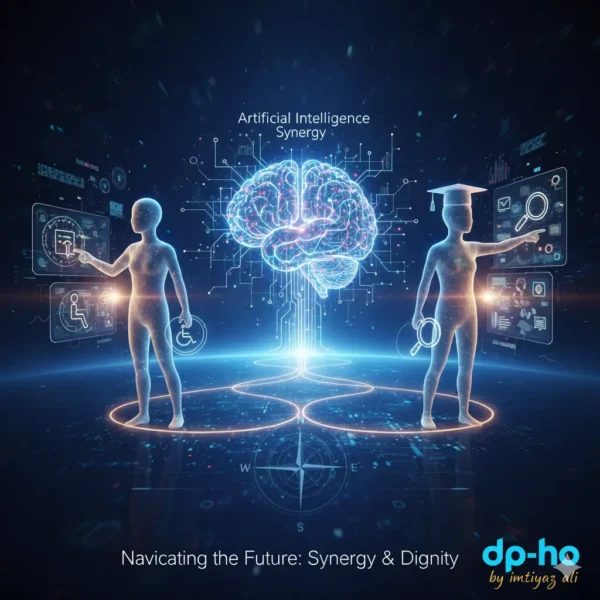
For fellow educators, the mission is clear: we must ensure that Artificial Intelligence empowers rather than replaces the human element.
Critical Focus Areas for 2026-2027:
- AI-Teacher Synergy: Artificial Intelligence provides the data; we provide the empathy.
- Algorithmic Dignity: Ensuring models do not reflect historical biases against disability.
- Data Privacy: Protecting the sensitive data of our learners.
The Global Impact: Leading the Way in the USA and Beyond
As I prepare for my doctoral studies and evaluate the educational landscape in Saudi Arabia, it is clear that Vision 2030 is heavily investing in next-generation technology for social good. The demand for “Special Ed Tech Specialists” is skyrocketing as classrooms move toward digital transformation.
For schools in the USA and the Middle East, the primary focus has shifted to Inclusive Ethics in Automation. We must ensure that the machine-learning algorithms used to teach our children are free from bias and respect the dignity of every individual learner.
Read More: PubMed study (2026)
Key Takeaways for Educators (2026-27)
- Embrace Digital Literacy: Teachers must move beyond basic hardware and learn to use smart systems for curriculum modification.
- Prioritize Data Sovereignty: With the rise of automated platforms comes more data; protecting student privacy remains my top priority.
- The Human-Machine Synergy: Advanced software provides the data, but as a “Special Ed Expert,” I provide the empathy and human connection that no algorithm can replicate.
About the Author: I am Imtiyaz Ali, a Special Education expert with an M.Phil and over 10 years of professional experience. Through my platform Special Ed Authority and my website www.dp-ho.com, I aim to bridge the gap between Artificial Intelligence, technology, and disability to foster a more inclusive world.

Frequently Asked Questions (2026-27 Edition)
1. What are the top trends in Special Education for 2026-27?
The focus has shifted from simple classroom access to Hyper-Personalized Learning Pathways. This includes the widespread adoption of adaptive curriculum tools that adjust in real-time, immersive virtual reality for social skill building, and a heavy emphasis on inclusive ethics to ensure digital tools treat all learners with dignity.
2. How is Saudi Vision 2030 impacting the Special Education job market?
Saudi Arabia is currently building one of the world’s largest inclusive digital ecosystems. There is an unprecedented demand for “Special Ed Tech Specialists” who can integrate advanced assistive tools into the national curriculum. This is a primary goal for educators looking to relocate to the Middle East during this “Year of Innovation.”
3. What skills should a “Special Ed Authority” prioritize today?
Beyond traditional pedagogical skills, experts now need Digital Fluency. This includes the ability to use automated data collection for IEPs, expertise in configuring smart wearables for students, and the “human-touch” skill of providing empathy-driven support that technology cannot replicate.
4. How are “Smart Wearables” changing the classroom for visually impaired students?
By 2027, smart glasses have moved from experimental to standard equipment. They now provide real-time 3D spatial mapping, allowing students to navigate unfamiliar school hallways independently and instantly convert printed textbooks or handwritten notes into high-quality natural speech.
5. Can digital tools help in the early identification of neurodevelopmental disorders?
Yes. Current systems analyze behavioral patterns, gaze tracking, and speech prosody to flag early markers of conditions like ASD or speech delays. This allows for interventions to begin much earlier than was possible a decade ago, significantly improving long-term outcomes.
6. What is “Inclusive Ethics,” and why does it matter?
As we use more automated systems to track student progress, we must ensure the underlying code is free from bias. Inclusive ethics ensures that a student’s disability or cultural background (such as those in the USA or Pakistan) doesn’t result in unfair grading or limited opportunities by a machine.
7. How does real-time transcription benefit the Deaf and Hard of Hearing?
Advanced speech-to-text systems now offer near-zero latency. In a 2027 classroom, a teacher’s lecture is instantly captioned on a student’s tablet or smart glasses, including “sound notifications” that alert the student to ambient cues like a school bell or a peer’s whisper.
8. What role do robotic assistants play in physical disability support?
Modern robotic exoskeletons and smart prosthetics utilize deep learning to mimic natural human movements. These “smart mobility” tools are becoming more lightweight and affordable, allowing students with severe motor impairments to participate more fully in physical school activities.
9. How is student data privacy handled with all this new technology?
Data sovereignty is the top priority for 2026. Schools are adopting “Cybersecurity as Student Safety” frameworks, ensuring that the sensitive physiological and behavioral data collected by assistive devices is encrypted and managed under strict international privacy laws.
10. How can I stay updated on these rapidly changing technologies?
Platforms like Special Ed Authority and my website www.dp-ho.com provide ongoing insights. Staying connected with global research and observing the implementation of these tools in tech-forward regions like Saudi Arabia and the USA is the best way to remain at the forefront of the field.