

Cinema Redefines Disability
1. Introduction
The portrayal of diverse abilities on the big screen is shifting, as modern cinema redefines disability by moving away from stereotypes and towards authentic human experiences.
2. Industry Trends
In recent years, we have seen how Hollywood and international cinema redefines disability, giving actors with lived experiences the platform they deserve to tell their own stories.”
3. Impact on Society
“The way cinema redefines disability has a profound impact on social inclusion, helping the general public understand that a disability is just one part of a person’s identity, not the whole story.”
4. Educational Perspective
“As a special education expert, I believe that when cinema redefines disability through accurate storytelling, it becomes a powerful tool for global awareness and empathy.”
5. Conclusion
“Ultimately, the evolution of storytelling ensures that cinema redefines disability as a symbol of resilience and diversity rather than a limitation.”
Discover The Ultimate Guide: How Bollywood Cinema Redefines Disability Awareness, 2026-27. Explore transformative film narratives, authentic representation, and how media drives global inclusion. Written by Special Education expert Imtiyaz Ali, this guide bridges the gap between cinema and social change.
Raising Global Awareness Through the Screen
When we talk about how Bollywood Cinema Redefines Disability Awareness, 2026-27, we see a powerful shift in storytelling. Today, raising awareness about disabilities through Hollywood and Bollywood screens is more crucial than ever. Besides the 26 films mentioned in this post, many other movies highlight and raise awareness about various disabilities.
A Resource for Professionals & Families
Professionals connected to special children or their families should definitely watch these films. This guide on how Bollywood Cinema Redefines Disability Awareness, 2026-27 proves that media is a beneficial tool for special individuals and their families to find inspiration and societal acceptance.
The Early Era: “Dosti” (1960)
This cinematic journey begins in 1960 with the masterpiece film “Dosti”. This gem introduced audiences to Ramu, a young boy whose world is tragically upended when he loses his parents and both his legs are amputated.
A Bond Beyond Physical Barriers
Devastated and facing an uncertain future, Ramu finds himself navigating a new reality. It is in this vulnerable state that he forges an extraordinary bond with Mohan, a boy who is blind. Their friendship is a prime example of how Bollywood Cinema Redefines Disability Awareness, 2026-27, by showing that strength lies in companionship.
As they embark on life together, they form a powerful team where Ramu’s mobility complements Mohan’s senses. Their story proves that true strength lies not in the absence of challenges, but in unwavering support.
“Koshish” (1972), A Heartwarming Tale of Resilience
In 1972, the film “Koshish” was released, further showing how Bollywood Cinema Redefines Disability Awareness, 2026-27 through realistic storytelling. It depicts a deaf and mute couple trying to adjust to parenting and societal attitudes despite a lack of social flexibility.
It remains a heartwarming story that highlights the struggles and triumphs of deaf-mute parents, setting a high standard for inclusive cinema.
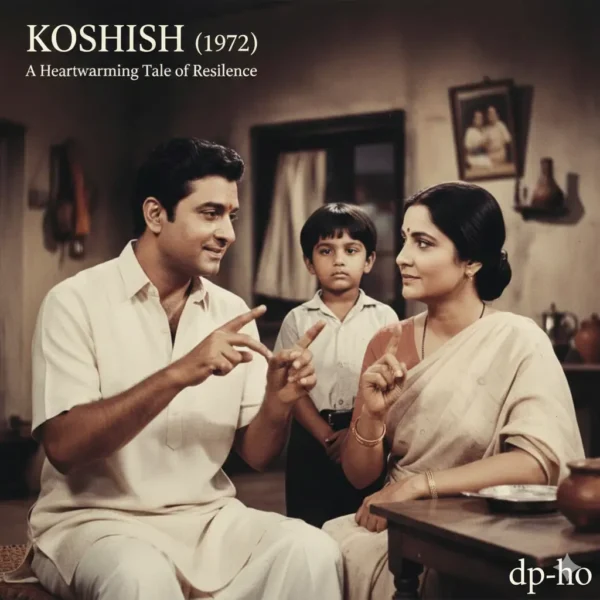
The year 1972 brought forth the poignant film “Koshish” (Effort), a groundbreaking movie that depicted the lives of a deaf and mute couple navigating the complexities of marriage and parenthood. More than just a love story, “Koshish” was a profound exploration of their relentless efforts to adjust to a world often unforgiving in its lack of flexibility.
The film meticulously showcased the unique challenges they faced in communicating, raising a child, and simply existing within a society that was largely unaccustomed to and unprepared for their needs. Despite the numerous hurdles, their unwavering love for each other and their child, coupled with their sheer determination, made for a truly heartwarming story that resonated deeply with audiences. “Koshish” served as an important early step in bringing the experiences of individuals with hearing and speech impairments to the forefront of Indian cinema.
The year is 1979 and the film’s name is “Sargam.” A hearing-impaired girl uses her extraordinary dancing ability as her strength to overcome societal inequalities. She proves her abilities, putting her disability aside.
“Sargam” (1979): Dancing Beyond Barriers
The year 1979 saw the release of “Sargam,” a film that told the inspiring story of a young hearing-impaired girl. Rather than succumbing to the limitations imposed by her disability or by society, she harnessed her truly extraordinary dancing ability as her greatest strength.
In a world that often failed to accommodate or even acknowledge individuals with disabilities, she faced significant societal inequalities. Yet, through the sheer power and beauty of her dance, she found a voice that transcended words. The film beautifully depicted her journey as she not only overcame these barriers but also unequivocally proved her abilities, demonstrating that talent and determination could shine brighter than any perceived limitation. She truly put her disability aside, allowing her remarkable spirit and skill to speak for themselves.
The year is 1980 and the film’s name is “Sparsh.” It’s a love story that features a school for blind children.
“Sparsh” (1980): A Love Story Unfolding in a World of Sight
The narrative beautifully explored the emotional depths and complexities of relationships when one or both partners navigate the world without sight.
It was a pioneering film for its time, not only for its central romance but also for bringing the daily lives, challenges, and aspirations of visually impaired children into the mainstream consciousness, providing a glimpse into their world that was both sensitive and enlightening.
Bhairavi (1996): A Study on Artistic Resilience
The year 1996 brought forth the film “Bhairavi”, a compelling narrative that perfectly illustrates how Bollywood Cinema Redefines Disability Awareness, 2026-27 by shifting the focus from disability to extraordinary ability. The story centers on a blind but remarkably talented woman who possesses a truly magical voice.
Sensory Empowerment & Talent
In the world of special education, we often talk about compensatory skills. In the context of how Bollywood Cinema Redefines Disability Awareness, 2026-27, this film highlights that sensory impairments do not limit artistic genius; they often refine it. Her gift was a rare quality that captivated everyone who heard it.
From Grief to Global Expression
Despite her immense talent, her life takes a profound turn with the tragic passing of her parents. Left to navigate the world independently, she bravely decides to embrace her unique identity.
It is through this journey that she truly uses the magic of her voice to bring her talent to the world, transforming personal grief into powerful artistic expression. “Bhairavi” remains a cornerstone in understanding how Bollywood Cinema Redefines Disability Awareness, 2026-27, demonstrating that resilience and empowerment are the true markers of success.
The year 1996 brought forth the film “Bhairavi”, a compelling narrative that perfectly illustrates how Bollywood Cinema Redefines Disability Awareness, 2026-27 by shifting the focus from disability to extraordinary ability. The story centers on a blind but remarkably talented woman who possesses a truly magical voice.
The Magic of a Voice Unveiled
Her gift was more than just a skill; it was a rare quality that captivated everyone who heard it. In the context of how Bollywood Cinema Redefines Disability Awareness, 2026-27, this film highlights that sensory impairments do not limit artistic genius.
Despite her immense talent, her life takes a profound turn with the tragic passing of her parents. Left to navigate the world independently, she bravely decides to embrace her unique identity.
Transforming Grief into Artistic Expression
It is through this journey that she truly uses the magic of her voice to bring her talent to the world, transforming personal grief into powerful artistic expression. “Bhairavi” remains a cornerstone in understanding how Bollywood Cinema Redefines Disability Awareness, 2026-27, demonstrating resilience and empowerment.
As a Special Education expert, I believe films like these are essential because they show that a profound gift, even in the face of adversity, can illuminate one’s path and touch countless lives globally.
“Tera Mera Saath Rahen” (2001): A Bond Forged in Love and Challenge
The year 2001 brought to the screen the heartfelt film “Tera Mera Saath Rahen” (Let Our Lives Be Together), starring Ajay Devgn and Sonali Bendre. This movie offered a poignant look into the lives of two brothers, specifically focusing on the challenges and triumphs faced when one sibling lives with both intellectual and physical disabilities.
Ajay Devgn’s character, the hero, navigates the complexities of caring for his brother, whose conditions require significant support.
The film meticulously portrays the deep, unwavering relationship between the two brothers, showcasing the emotional journey, the societal pressures, and the personal sacrifices involved.
“Tera Mera Saath Rahen” was an important film for its time, shedding light on the realities of living with disability within a family context and emphasizing the power of unconditional love and dedication.
“Iqbal” (2005): The Silent Roar of a Cricketer’s Dream
Then, in 2005, the powerful film “Iqbal” graced the screens, delivering a truly inspiring story of ambition and resilience. The movie vividly depicts the struggle of a hearing-impaired cricketer from a small village, whose passion for the sport burns brighter than any challenge he faces.
“Iqbal” is not just about cricket; it’s a profound narrative about how he achieves success by overcoming societal inequalities. The film meticulously portrays the prejudices, lack of opportunities, and communication barriers he encounters on his journey.
Despite being dismissed and underestimated, Iqbal, with the unwavering support of his sister and a grizzled ex-cricketer, trains relentlessly and defies expectations. His story is a testament to the fact that talent and determination know no bounds, and that with enough passion, one can silence the doubts of the world and make their dreams a roaring reality.
“Black” (2005): A Masterpiece of Resilience and Connection
Also in 2005, a cinematic masterpiece emerged that deeply moved audiences: the film “Black.” This powerful drama drew inspiration from the incredible life of Helen Keller, a beacon of perseverance who overcame immense challenges.
The film featured stellar performances by Rani Mukerji and Amitabh Bachchan as the central characters, bringing to life a deeply emotional narrative. Mukerji portrayed a young girl who was simultaneously deprived of hearing, speech, and sight from an early age.
“Black” painstakingly depicted her isolated world and the monumental struggle to communicate. A key element of the film, true to Keller’s story, was the method of communication with her: through the touching of her hands or lips, a tactile language that slowly but surely unlocked her mind and allowed her to connect with the world and her dedicated teacher.
The film was a profound exploration of human potential, the power of mentorship, and the triumph of the spirit over seemingly insurmountable odds.
“Main Aisa Hi Hoon” (2005): A Father’s Fight for His Daughter
The year 2005 saw Ajay Devgn deliver a compelling performance in “Main Aisa Hi Hoon” (This is How I Am), a film that brought the sensitive topic of autism to the forefront. Devgn portrayed a single father affected by autism, offering a rare and insightful glimpse into the life of someone navigating parenthood while living with the condition.
The central conflict of the story revolves around a poignant custody case for his daughter. As his ability to be a fit parent is questioned due to his autism, the film poignantly depicts his struggle and determination to prove his capabilities.
Through his unwavering love and unique approach to fatherhood, he ultimately proves that he can indeed take care of her, challenging societal prejudices and highlighting the diverse forms that capable parenting can take. “Main Aisa Hi Hoon” was a significant step in fostering understanding and empathy towards individuals on the autism spectrum.
“Pyare Mohan” (2006): A Bittersweet Tale of Friendship
The year 2006 brought to screens the film “Pyare Mohan,” a story that delved into the complexities of friendship with a unique, bittersweet flavor. The film centered around two inseparable friends, one blind and the other hearing-impaired.
“Pyare Mohan” beautifully explored their daily lives, showcasing the challenges and triumphs that came with their individual disabilities, yet emphasizing how their bond allowed them to navigate a world not always designed for them. It wasn’t just a narrative of overcoming obstacles; it was a touching portrayal of their shared experiences, their laughter, their tears, and the deep emotional connection that bound them together, making their journey both heartwarming and poignant.
“Taare Zameen Par” (2007): Illuminating Learning Disabilities
When 2007 arrived, the Indian cinematic landscape was profoundly impacted by the release of “Taare Zameen Par” (Stars on Earth), a film that became an instant super hit and a cultural phenomenon.
More than just an entertaining movie, it served as a much-needed spotlight on learning disabilities, a topic previously under-discussed and often misunderstood in mainstream society.
The film’s groundbreaking significance lay in its portrayal of learning disabilities not as a lack of intelligence, but as different ways of perceiving and processing information. It boldly highlighted that learning disabilities are, in fact, the number one disability globally, even above autism, a revelation that surprised many and sparked widespread conversations.
“Taare Zameen Par” masterfully demonstrated the immense challenges faced by children with these conditions in conventional schooling systems.
Crucially, it didn’t just present the problem; it also offered compassionate and effective strategies on how to school and parent these children, emphasizing individualized attention, understanding, and the recognition of diverse talents.
The film’s immense success was a testament to its powerful message, forever changing the discourse around learning differences in India and beyond.
The “Taare Zameen Par” Effect on Indian Education Policy
Overview: Before 2007, Dyslexia and other Specific Learning Disabilities (SLD) were largely misunderstood in South Asian households, often mistaken for “laziness.”
The Intervention: The film Taare Zameen Par (2007) acted as a massive awareness campaign. As a Special Education expert, I categorize this as a “Cinematic Intervention” that redefined how Bollywood Cinema Redefines Disability Awareness, 2026-27.
Real-World Impact:
- Policy Change: Shortly after the film’s success, the Central Board of Secondary Education (CBSE) in India updated its regulations to provide more time and visual aids for students with learning disabilities.
- Diagnosis Surge: Hospitals and clinics reported a significant increase in parents seeking professional help for children struggling with reading and writing, moving away from corporal punishment.
- Classroom Inclusion: Teachers began adopting “Activity-Based Learning”—the same methodology I explored in my M.Phil research—to support diverse learners.
Conclusion: This case study proves that when Bollywood Cinema Redefines Disability Awareness, 2026-27, it doesn’t just entertain; it creates a more accessible world for special children.
“Apna Asmaan” (2007): Irrfan Khan’s Tender Portrayal of a Child’s Dream
Again, the year is 2007, a prolific period for cinema exploring diverse human experiences, and it brought us the film “Apna Asmaan” (Our Sky). This movie is particularly notable for featuring the excellent acting of the late Irrfan Khan, whose nuanced performance added immense depth to the narrative.
“Apna Asmaan” tells the compelling and tender story of a mildly autistic child and his passionate pursuit of dreams. The film delicately portrays the unique challenges and joys of a child on the autism spectrum, emphasizing his inner world and aspirations.
It’s a journey that is truly worth watching, not just for Irrfan Khan’s masterful portrayal but for its sensitive and insightful depiction of neurodiversity and the universal desire to reach for one’s own sky.
“Paa” (2009): A Child’s Quest for His Father
The year 2009 introduced audiences to the deeply moving film, “Paa” (Father). This unique and poignant story centered on Auro, a remarkable twelve-year-old child affected by progeria, a rare genetic condition that causes rapid aging.
Auro, portrayed with incredible depth by Amitabh Bachchan, lived with the physical realities of being much older than his chronological age, yet possessed the innocent curiosity of a young boy. His deepest desire was to learn about his father, a figure kept shrouded in mystery by his mother. The film beautifully navigates Auro’s quest for identity and belonging, exploring the complex dynamics of family secrets and unconditional love, all set against the backdrop of his extraordinary condition.
“My Name Is Khan” (2010): Understanding Asperger’s Through Rizwan Khan
The year 2010 saw the highly anticipated release of “My Name Is Khan,” a landmark film that took a significant step in depicting neurodivergence on the mainstream Indian screen. In a powerful and critically acclaimed performance, Shah Rukh Khan portrayed Rizwan Khan, a character explicitly depicted with Asperger’s Syndrome.
At the time of the film’s release, Asperger’s Syndrome was a distinct diagnosis. However, it’s important to note that this syndrome has now been included within the broader diagnosis of Autism Spectrum Disorder (ASD) in modern diagnostic manuals (like the DSM-5).
The film meticulously showcased Rizwan’s unique way of perceiving and interacting with the world. It delved into his literal interpretation of language, his challenges with social cues, his highly focused interests, and his strong sense of justice, all characteristic traits associated with what was then known as Asperger’s.
“My Name Is Khan” wasn’t just a love story; it was a journey that aimed to foster greater understanding and empathy for individuals on the autism spectrum, emphasizing their inherent goodness and capacity for deep connection, even amidst societal misunderstandings and global turmoil.
The film’s widespread reach made it a crucial educational tool, sparking conversations about neurodiversity across India and beyond.
Also released in 2010, the second film, “Guzaarish,” portrays the struggle with quadriplegia and subsequent success.
The year is 2012, and the film’s name is “Barfi.” A hearing-impaired young man falls in love with an autistic girl. They demonstrate how their abilities triumph over their disabilities.
The year is 2014, and a film about a young girl affected by cerebral palsy is made, “Margarita with a Straw.” It’s a must-watch film.
The year is 2015, and the film’s name is “Dhanak.” The sister of a blind boy from Rajasthan helps her brother meet Shah Rukh Khan. The love between siblings and a sweet journey captivates the heart.
The year is 2017. The film’s name is “Ajab Singh Ki Gajab Kahani.” An IRS officer who partially loses his hearing and sight in an accident.
Also in 2017, the second film, “Kaabil,” was released. It beautifully portrays the story of a blind couple.
The year is 2018, and the film’s name is “Hichki.” It’s the story of a teacher affected by Tourette syndrome and how she inspires rebellious students towards education.
In 2019, a neurologist returns to India from America. She learns about music therapy and works with special children, showing her connection with them.
The year is 2023, and the film’s name is “Ghoomer.” A female cricketer loses her arm. It’s a story of starting to bowl with one hand and achieving extraordinary success, demonstrating how a disability acquired at any point in life cannot keep us from our goal.
The year is 2024, and the film’s name is “Srikanth.” It’s the story of a blind boy who didn’t let his disability become a weakness and became a successful businessman.
Again, the year is 2024, and it’s Nawazuddin Siddiqui’s film, “Rautu ka Raz.” It’s an investigation into the murder of the principal of a school for blind children, and it depicts the lives of blind children very closely.
And finally, this year, 2025, “Sitare Zameen Par” has been released. It’s a beautiful film about how to live with intellectual disability and various types of fear. It shows the success of a basketball team with Down syndrome, autism, and intellectual disability.
Discover how modern media is transforming societal perceptions. This guide, authored by Imtiyaz Ali (M.Phil Special Education), explores the revolutionary ways Bollywood Cinema Redefines Disability Awareness, 2026-27 and drives global inclusion.
The Shift Toward Authentic Representation
The portrayal of diverse abilities on the big screen is undergoing a radical shift. Today, cinema redefines disability by moving away from pity-based stereotypes toward authentic human experiences. For professionals and families, these films serve as a vital resource for disability advocacy and understanding.
Case Study: The “Taare Zameen Par” Effect
| Impact Category | Before 2007 | After 2007 (The Result) |
| Dyslexia Awareness | Often ignored or labeled as laziness. | Recognized as a specific learning disability. |
| Policy Change | Limited accommodations in schools. | CBSE introduced extra time & scribes. |
| Social Stigma | High shame for parents. | Shift toward “Activity-Based Learning.” |
Cinematic Milestones: A Historical Timeline
1. Dosti (1960) – The Power of Companionship
This journey begins with the masterpiece “Dosti”. It introduced audiences to Ramu (physical disability) and Mohan (visual impairment). Their bond is a prime example of how Bollywood Cinema Redefines Disability Awareness, 2026-27, proving that mutual support is the ultimate strength.
2. Koshish (1972) – Breaking the Silence
“Koshish” was a groundbreaking exploration of the lives of a deaf and mute couple. It meticulously showcased their resilience in a world lacking accessibility. This film remains a cornerstone in understanding how Bollywood Cinema Redefines Disability Awareness, 2026-27, by highlighting the need for social flexibility.
3. Sargam (1979) – Artistic Empowerment
In “Sargam”, a hearing-impaired girl uses her dancing talent to overcome societal barriers. This narrative illustrates how Bollywood Cinema Redefines Disability Awareness, 2026-27, by shifting focus from “limitations” to “extraordinary abilities.”
4. Bhairavi (1996) – Sensory Resilience
Centered on a talented blind singer, “Bhairavi” shows that sensory impairments do not limit artistic genius. This film is crucial for disability awareness as it demonstrates how personal grief can be transformed into a global artistic voice.
Frequently Asked Questions (FAQs)
1. How has Bollywood’s portrayal of disability evolved over time? Bollywood has moved from stereotypical portrayals—like pity or comedic relief—to more nuanced depictions. In the context of how Bollywood cinema redefines disability awareness, 2026-27, modern films now show characters as complex individuals with agency, shifting the narrative from “curing” a disability to celebrating the person’s contributions to society.
2. What are some landmark films that significantly raised disability awareness? Landmark films such as Koshish (1972), Black (2005), and Taare Zameen Par (2007) are pivotal examples. These movies laid the foundation for how Bollywood cinema redefines disability awareness, 2026-27, by highlighting diverse conditions like dyslexia, deaf-blindness, and autism for a global audience.
3. Beyond general awareness, how do these films impact societal perceptions? Films demystify disabilities by showcasing specific characteristics and challenges. By fostering empathy and challenging misconceptions, these cinematic stories are the primary reason how Bollywood cinema redefines disability awareness, 2026-27, leads to actual policy changes and better inclusive practices in schools and workplaces.
4. Are Bollywood films now focusing on showing diverse types of disabilities? Yes, there is a growing trend to represent a wider spectrum, including intellectual disabilities and rare genetic conditions like Progeria (Paa). This expansion is a key part of how Bollywood cinema redefines disability awareness, 2026-27, ensuring that neuro-diversity and cerebral palsy gain mainstream visibility.
5. How do films contribute to challenging the “pity” narrative? Modern cinema is moving away from “inspiration porn” or treating characters as objects of pity. Instead, by presenting characters with full, complex lives—including relationships and professional ambitions—how Bollywood cinema redefines disability awareness, 2026-27, ensures that impairment does not define a person’s entire identity.
6. Is Bollywood doing enough to cast actors with disabilities in disability roles? While “cripping up” (able-bodied actors playing disabled roles) is still common, there is growing advocacy for authentic casting. A major milestone in how Bollywood cinema redefines disability awareness, 2026-27, is the increasing pressure to cast actors with lived experiences to ensure genuine representation.
7. How do these films address social barriers faced in India and globally? Many films explicitly highlight societal prejudices and the lack of accessibility. By showcasing these systemic hurdles, how Bollywood cinema redefines disability awareness, 2026-27, encourages viewers to advocate for better infrastructure and inclusive social behavior.
8. What role do family dynamics play in these cinematic depictions? Family dynamics are central, exploring the support systems and emotional challenges involved in raising a child with special needs. Understanding these relationships is vital to how Bollywood cinema redefines disability awareness, 2026-27, as it reflects the reality of millions of families.
9. What are the upcoming trends for disability representation towards 2026 and 2027? The trend is moving towards integrated representation where disabled protagonists appear in mainstream genres. This future-forward approach is exactly how Bollywood cinema redefines disability awareness, 2026-27, by involving disability consultants for accuracy and prioritizing independent living themes.
10. How can professionals use these films as a resource for special education? As an M.Phil expert, I recommend these films to educators and therapists as a tool for sensitization. By using media as a bridge, we see how Bollywood cinema redefines disability awareness, 2026-27, making it easier for professionals to explain complex social inclusion concepts to families.
About the Author

Imtiyaz Ali is a distinguished Special Education Expert and researcher with an M.Phil in Special Education from Lahore Leads University. With over 10 years of professional experience in the field, he has dedicated his career to advocating for inclusive education and digital health accessibility.
As the founder of the website www.dp-ho.com and the YouTube channel Special Ed Authority, Ali provides high-authority insights into disability rights, assistive technology, and the evolving landscape of inclusive media. His research on Activity-Based Learning of Mathematics and his deep understanding of hearing impairment make him a leading voice in the disability sector.
Beyond his academic contributions, Ali is an active advocate for how Bollywood Cinema Redefines Disability Awareness, 2026-27, bridging the gap between cinematic representation and real-world social change.