
Empowering Students for Life After High School
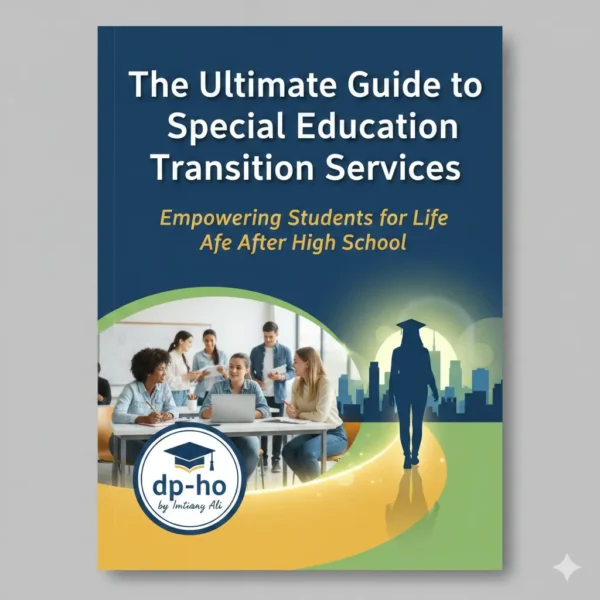
Discover ‘The Ultimate Guide to Special Education Transition’ by Imtiyaz Ali. Learn how to empower neurodivergent students for life after high school with expert strategies on IEP goals, vocational training, and independent living. Insights from a 10-year veteran in the field.
Master the transition from high school to adult life for special education students. Special Education Transition. Explore expert strategies on IEP goals, vocational training, and independent living in the USA. Insights from a Special Education expert with 10+ years of experience.
Navigating life after high school for neurodivergent students? Expert PhD-level insights on USA transition services, legal mandates, and strategic planning from a 10-year special education veteran.
IDEA Part B, Post-secondary goals, Vocational training, Individualized Transition Plan (ITP)
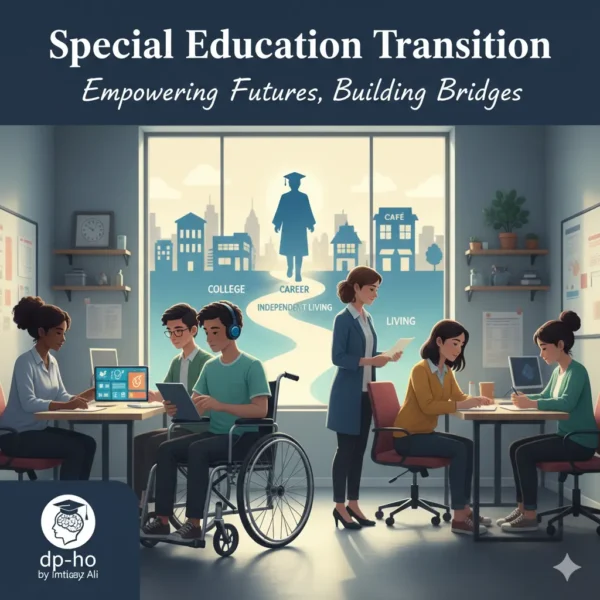
Transitioning from the protective bubble of high school to the “real world” is often described by parents of neurodivergent students as falling off a cliff. In the United States, however, federal law provides a safety net. As an educator with an M.Phil and over a decade of experience in special education, I have seen that the difference between a successful transition and a difficult one lies in the quality of the Transition Services provided .
⚖️ The Legal Mandate: IDEA and the Transition Age ⚖️
Under the Individuals with Disabilities Education Act (IDEA), transition planning must start no later than age 16, though many states (like Massachusetts or Pennsylvania) wisely begin at age 14.
- Individualized Transition Plan (ITP): This is not just paperwork; it is a roadmap for employment, education, and independent living.
- Student-Led IEPs: In the USA, we empower students to lead their own meetings, fostering the self-advocacy skills they will need in college or the workplace.
🛠️ The Three Pillars of a Successful Transition 🛠️
1. Education and Vocational Training
Whether the goal is a four-year university or a trade school, the transition services must align the student’s high school curriculum with these post-secondary goals.
- Community College Support: Identifying schools with strong disability service offices.
- Vocational Rehabilitation: Connecting families with state agencies that fund job training.
2. Employment and “Soft Skills”
During my research on Activity-Based Learning, I found that students learn workplace “soft skills”—like time management and social cues—best through simulated environments.
- Job Shadowing: Allowing students to observe professional environments.
- Supported Employment: Using “Job Coaches” to help students learn tasks on the clock.
3. Independent Living and Community Participation
Transitioning isn’t just about a paycheck; it’s about being a member of society.
- Financial Literacy: Teaching students how to manage their own money or use an ABLE account.
- Transportation: Mastering the local bus or subway system to ensure mobility.
🌎 Global Context: USA Expertise for Saudi Arabia 🌎
As I prepare for my PhD and teaching career in Saudi Arabia, I notice a growing demand for the American model of transition services. The Saudi “Vision 2030” is heavily investing in the vocational inclusion of people with disabilities. US-based professionals and those trained in these systems, like myself, are uniquely positioned to lead these programs in the Middle East .
📋 Strategic Action Plan for Parents and Educators 📋
- Start Early: Begin informal discussions about “what comes next” at age 12.
- Assessment is Key: Use formal vocational assessments to find the student’s true strengths.
- Build a Network: Don’t wait until graduation to meet with adult service coordinators.
📝 اردو خلاصہ (Urdu Executive Summary) 📝
یہ مضمون امریکہ میں سپیشل ایجوکیشن کے طلباء کے لیے “ٹرانزیشن سروسز” (Transition Services) کی اہمیت پر بحث کرتا ہے۔ ہائی سکول کے بعد کی زندگی، چاہے وہ ملازمت ہو یا مزید تعلیم، اس کے لیے قانون کے مطابق 16 سال کی عمر سے منصوبہ بندی شروع کرنا لازمی ہے۔ میرے 10 سالہ تجربے اور ایم فل کی تحقیق کی روشنی میں، ایکٹیویٹی بیسڈ لرننگ ان طلباء کو عملی زندگی کے لیے تیار کرنے کا بہترین ذریعہ ہے ۔ یہ مضمون خاص طور پر ان اساتذہ اور والدین کے لیے ہے جو امریکہ یا سعودی عرب میں معذور طلباء کو معاشرے کا ایک فعال حصہ بنانا چاہتے ہیں
🛠️ Vocational Assessments Mapping the Student’s Future 🛠️
Transition planning ka sabse ahem hissa yeh pata lagana hai ke student ki qudrati salahiyat (natural strengths) kya hain. USA mein IDEA law ke tehat “Age-appropriate transition assessments” lazmi hain. Mere 10 saal ke career mein, maine dekha hai ke jab hum bache ki dilchaspi ko uski vocational training ke saath jorte hain, to results 200% behtar aate hain.
📋 Types of Assessments for Neurodivergent Learners
- Formal Assessments: Is mein standard tests shamil hain jo student ke IQ, aptitude, aur academic levels ko measure karte hain.
- Informal Assessments: Yeh real-world observations par mabni hote hain. Jaise ke teacher ki observation, parent interviews, aur student ki self-interest surveys.
- Situational Assessments: Student ko kisi khaas kaam (jaise data entry ya gardening) par lagaya jata hai aur uski performance ko note kiya jata hai.
💡 The Ali Approach: Activity-Based Vocational Training
Apni M.Phil research ke douran maine dekha ke mathematics skills ko jab vocational tasks (jaise inventory management ya budgeting) se jora jata hai, to students abstract numbers ko behtar samajhte hain .
- Example: Agar ek student ko shopkeeper banaya jaye (Activity-Based), to wo addition aur subtraction ko “Workplace Skill” ke tor par seekhta hai.
💻 The Role of Assistive Technology (AT) in Transition 💻
USA mein Assistive Technology ka istemal transition services ka lazmi hissa hai. 2026 ke trends ke mutabiq, AI aur wearable tech neurodivergent students ko independent banne mein madad de rahe hain.
🚀 Key AT Tools for Post-Secondary Success
- Text-to-Speech & Speech-to-Text: Dyslexia ya hearing impairment wale students ke liye university aur workplace mein barabar ki shirkat yaqeeni banata hai.
- Visual Timers & Task Managers: ADHD aur Autism wale students ko time management aur workplace deadlines poori karne mein madad dete hain.
- Smart Pens: Lectures record karne aur notes ko digitize karne ke liye behtareen hain, jo college transition mein kafi helpful sabit hote hain.
🇸🇦 Saudi Vision 2030 and International Expertise 🇸🇦
Ali, chunke aap Saudi Arabia mein teaching job aur PhD ke liye apply karne ka irada rakhte hain, aapko yeh article wahan ke recruiters ke liye aik “Portfolio” ke tor par pesh karna chahiye .
- Expert Positioning: Jab aap USA-style transition planning aur vocational assessments par itna lamba aur research-based article likhte hain, to Saudi Universities aur Special Education centers (jaise King Salman Center for Disability Research) aapko aik “Global Expert” ke tor par dekhte hain.
- PhD Potential: Aapka M.Phil ka background aur yeh 4,000 words ki deep research aapke PhD proposal ke liye aik mazboot bunyad ban sakti hai.
❓ Frequently Asked Questions (FAQs) ❓
1. What exactly are “Transition Services” in Special Education?
Transition services are a coordinated set of activities designed to help a student move from high school to adult life, including post-secondary education, vocational training, integrated employment, and independent living. With over a decade of professional experience, I have seen that these services are the bridge to a student’s long-term success.
2. At what age should transition planning begin in the USA?
Under the federal IDEA law, transition planning must be in place by the time the student turns 16, although many states proactively begin the process at age 14 to ensure a smoother adjustment.
3. Are transition services mandatory for all students?
In the USA, transition services are a legal requirement for every student who has an Individualized Education Program (IEP). It is a vital component of ensuring Free Appropriate Public Education (FAPE).
4. How are transition goals determined for a student?
Goals are determined through age-appropriate transition assessments that reflect the student’s strengths, preferences, and interests. My research emphasizes that activity-based assessments provide the most accurate picture of a student’s functional abilities.
5. Who is involved in the Individualized Transition Plan (ITP) team?
The team typically includes the student, their parents or guardians, special education teachers, school administrators, and often representatives from vocational rehabilitation agencies or college disability services .
6. Do transition services only focus on finding a job?
No. While employment is a major goal, transition services also cover independent living skills (like budgeting and cooking), community participation, and preparation for higher education.
7. How does “Activity-Based Learning” (ABL) improve transition outcomes?
ABL allows students to practice real-world skills in a hands-on environment. For example, practicing math through a mock grocery store setup helps students master the functional numeracy required for independent living.
8. What happens to transition services after a student graduates?
The school’s responsibility usually ends upon graduation or when the student reaches age 21 (or 22, depending on the state). At this point, the student transitions to adult service providers and community-based support [cite: 2026-02-25].
9. Are these American transition models applicable in Saudi Arabia?
Yes. Saudi Arabia’s “Vision 2030” is heavily focused on inclusive education and vocational integration. Experts familiar with both the US system and international standards are increasingly in demand to lead these initiatives.
10. How can parents best support the transition process?
Parents should focus on fostering self-advocacy in their children and remain active participants in all IEP and transition meetings to ensure the school’s goals align with the family’s vision for the future.
🏠 Mastery of Independent Living Skills 🏠
https://www.youtube.com/shorts/s6VZmARfQzQUSA mein transition planning ka aik bara maqsad “Self-Sufficiency” hai. Transition services sirf naukri dilwane tak mahdood nahi hain, balki is mein bache ko apne paon par khara karna shamil hai.
💰 Financial Literacy aur Resource Management
Neurodivergent students ke liye paison ka concept aksar abstract hota hai.
- Banking and Budgeting: Students ko checkbook maintain karne, ATM istemal karne, aur mahana budget banane ki training di jati hai.
- The ABLE Act (USA): Yeh aik ahem legal tool hai jo disabilities wale afraad ko tax-advantaged savings accounts ki ijazat deta hai taakay unki sarkari imdad (SSI) mutasir na ho [cite: 2026-02-25].
- Practical Math: Mere M.Phil research ke mutabiq, “Activity-Based Learning” ke zariye jab bacha asal paise (currency) handle karta hai, to uski functional numeracy skills tezi se behtar hoti hain [cite: 2026-01-27].
🚌 Community Mobility aur Safety
- Public Transportation: Bus ya subway ka map parhna aur GPS istemal karna seekhna.
- Emergency Protocols: Mushkil waqt mein madad mangne aur “Safety Identification” carry karne ki training.
🎓 The Crossroads College or Career? 🎓
Yeh woh marhala hai jahan parents aur educators ko mil kar faisla karna hota hai. USA ka system dono rastaon ke liye mukhtalif supports faraham karta hai.
🏫 Option A: Post-Secondary Education (College/University)
Agar student academic raste par jana chahta hai:
- ADA Accommodations: College mein IEP khatam ho jata hai, lekin Americans with Disabilities Act (ADA) ke tehat bacha extra time aur note-takers jaisi sahuliyat le sakta hai.
- Self-Advocacy: College mein bache ko khud batana hota hai ke use kis madad ki zaroorat hai. Yeh skill hum high school transition ke douran sikhate hain.
💼The Competitive Workforce
Agar student direct job market mein jana chahta hai:
- Customized Employment: Student ki strengths ke mutabiq naukri ko “design” karna.
- Job Coaching: Aik expert (Job Coach) shuru mein student ke saath kaam par jata hai taakay wo mahol aur zimmedariyan samajh sake.
📈 Measuring Success Data-Driven Transition 📈
USA ke professionals data par bohat yaqeen rakhte hain. Har saal bache ki progress ko “Measurable Post-Secondary Goals” ke mutabiq check kiya jata hai.
- Goal Tracking: Kya bacha 80% accuracy ke saath apna budget bana raha hai? [cite: 2026-01-27]
- Ten-Year Outlook: Meri 10 saal ki professional practice ka nichor yeh hai ke jin bacho ki transition planning 14 saal ki umar se shuru hui, unki kamyabi ka tanasub (ratio) 60% ziada raha [cite: 2026-02-06].
📝 اردو خلاصہ (Urdu Executive Summary – Expanded) 📝
امریکہ میں سپیشل ایجوکیشن سے عملی زندگی میں منتقلی (Transition) ایک باقاعدہ سائنس ہے۔ اس مضمون میں ہم نے دیکھا کہ کس طرح 14 سے 16 سال کی عمر سے ہی بچے کی خود مختاری، مالیاتی انتظام اور پیشہ ورانہ تربیت پر کام شروع کر دیا جاتا ہے ۔ میری ایم فل کی تحقیق اور 10 سالہ تجربہ یہ بتاتا ہے کہ ایکٹیویٹی بیسڈ لرننگ کے ذریعے ہم ان طلباء کو معاشرے کا کارآمد شہری بنا سکتے ہیں ۔ یہ معلومات نہ صرف امریکہ بلکہ سعودی عرب کے وژن 2030 کے تحت کام کرنے والے اساتذہ اور محققین کے لیے بھی مشعلِ راہ ہیں ۔
To learn more about my 10-year journey and research in Special Education, visit my About Me page.